
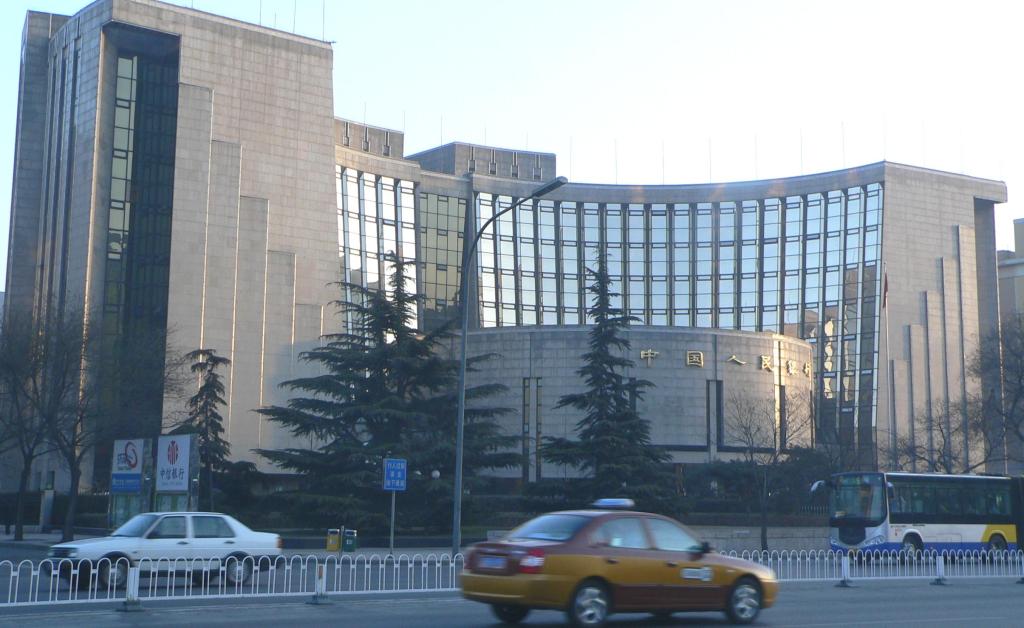
China will confront a unique set of economic challenges in 2025. In the past two years, the world’s second largest economy saw a lukewarm COVID-19 recovery, a property crisis and a private business crackdown—all while facing an aging population crisis.
Substantive monetary easing measures are expected from the upcoming National People’s Congress (NPC), a committee that officializes the economic priorities of the Chinese government each year. In 2025, easing measures will aim to revive consumer confidence by cutting interest rates.
With the NPC less than a month away, additional tariffs imposed by U.S. President Donald Trump complicate the outlook for the Chinese currency. China’s central bank, the People’s Bank of China (PBOC), may be forced to devalue the yuan, as the country faces downward pressures from monetary easing and tariffs. A currency devaluation will have important implications for Southeast Asian export economies. All eyes will be on announcements from the NPC and the PBOC in the coming weeks.
The PBOC will likely cut rates
China’s post-pandemic recovery was a weak one. The government induced real-estate slump had far-reaching consequences, devaluing an asset that makes up nearly two-thirds of Chinese household savings, cratering consumer confidence. This fundamental weakness is making its mark, producing zero inflation, depressed employment, an undervalued equities market and an ultra-low yield bond market. The necessity of quantitative easing and clarity of monetary policy by the PBOC therefore cannot be overstated. The market expects it, senior PBOC officials signal it, and the central government intends it.
Preliminary measures of easing were implemented in September and October 2024. On the fiscal side, the central government sponsored a significant domestic appliance trade-in scheme to encourage spending. On the monetary side, it directed the PBOC to free up 1 trillion yuan of liquidity within the capital market via lowering reserve requirements. These measures injected significant albeit short-lived confidence in the market, which led to the biggest rallies in the equity market post-COVID, before falling into the reds again.
Devaluation of the yuan?
To complicate the matter, China is facing an unprecedentedly protectionist United States. The fresh tariff announcement on China—an additional 10% for now—puts downward pressure on the yuan against the US dollar. This is on top of the unavoidable devaluation pressures from potential monetary easing, a side effect from lower interest rates which depresses demand for the yuan.
The PBOC’s over $3 trillion foreign reserve war chest may not be enough to hold off these dual pressures to maintain its exchange rate target, with most major banks forecasting the dollar/yuan exchange rate at the 7.6 mark by the end of 2025. The Chinese government may not want to artificially prop up the yuan either, as its devaluation would be an effective way of boosting the export sector, effectively shielding its manufacturing industry from tariffs.
What will this mean for Southeast Asia?
Broadly speaking, there are two effects. On one hand, a weaker yuan would enhance the competitiveness of Chinese exports. This would place pressure on Southeast Asian manufacturers to reduce costs to remain competitive, squeezing profit margins and affecting industries already grappling with high input costs and supply chain disruptions. Certain industries will feel the pinch more than others.
Consider consumer EV manufacturing, an industry of rapid growth in countries like Vietnam. Companies like Vinfast (VFS), the Vietnamese EV maker, will likely face greater competition from an expansive list of established Chinese manufacturers. Other emerging industries in Southeast Asia may struggle to get off the ground.
However, the situation also offers opportunities for Southeast Asian economies that export intermediate goods to China. A cheaper yuan makes Chinese goods and services more affordable for foreign consumers. This could stimulate demand for Chinese manufacturing and anyone within its supply chain, especially in consumer goods, technology, and raw materials. Countries like Vietnam, Thailand, and Malaysia, which have significant trade links with China, could ride the wave of cheap Chinese exports in establishing themselves within the Chinese-led supply chain.
Image credit: Flickr/Yongxinge
Ian Wan
Ian, a Beijing native, will be joining J.P. Morgan’s Global Corporate Banking division later this year. He brings experience from Tencent (腾讯), Mackenzie Investments and academic institutions across China and Canada, holding a deep interest in the Chinese economy, markets, and society. Ian enjoys tutoring and teaching undergraduates at the University of Toronto’s Department of Economics. Ian loves auctions and barbecues.
 Sino-Southeast Initiative