
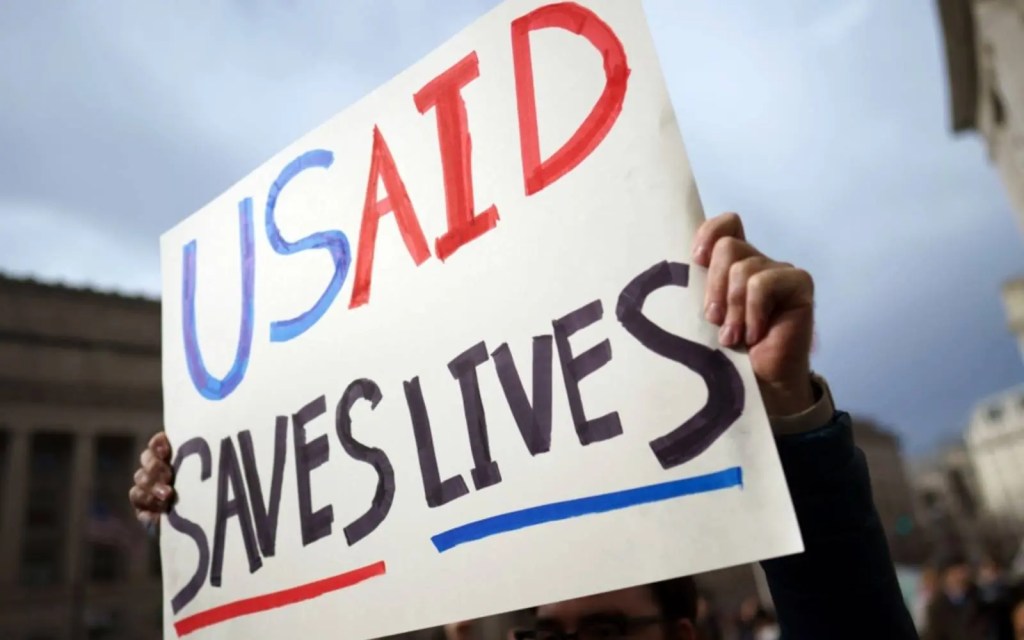
On January 20th 2025, President Trump signed an executive order initiating a 90-day suspension of US foreign development assistance programs to reassess their alignment with American interests. This was soon after accompanied by the dismantling of the United States Agency for International Development (USAID), the government agency responsible for foreign aid and development assistance to promote democratic institutions, growth, and humanitarian relief across the developing world.
The repercussions are evident in Southeast Asia, where the sudden withdrawal of US aid has sent shockwaves through the region. While Washington claims the 90-day freeze is merely a temporary reassessment of American interests, the real-world consequences are already unfolding. The aid pause has not only disrupted crucial humanitarian efforts but has also created a vacuum that Beijing is eager to fill. As the United States retreats from its long-standing role as a development partner, China is seizing the opportunity to expand its influence in the region. This shift marks a strategic blunder that could accelerate America’s decline as a dominant power in Southeast Asia.
The immediate fallout: humanitarian and civil society consequences
The freeze has had particularly dire consequences for Myanmar, where US funding has played a crucial role in supporting refugees, independent media, and pro-democracy activists. As of February, healthcare centers serving tens of thousands of Myanmar refugees along the Thai border have been forced to shut down due to the loss of funding from the US International Rescue Committee. Meanwhile, within Myanmar itself, US-backed HIV treatment programs have been suspended, cutting off essential medical care for thousands. The situation is equally dire for civil society organizations that provide shelter and safe houses for activists fleeing the military junta. With US financial support vanishing overnight, these groups now face an existential crisis.
The Philippines, another key American ally in the region, also stands to lose vital aid for disaster relief, education, and healthcare programs. In 2024 alone, USAID allocated $180 million to the country for governance and civil society programs, including efforts to combat the country’s growing HIV epidemic. While Philippine officials have downplayed the impact, arguing that the freeze is temporary, the long-term ramifications remain unclear.
Perhaps most symbolically, the funding pause has also halted demining programs in Vietnam, Laos, and Cambodia—countries still littered with unexploded ordnance from past US military interventions. This decision is not just a humanitarian failure but also a profound diplomatic misstep, as it signals a disregard for historical responsibilities. In Cambodia, the US had been funding roughly 30% of ongoing demining efforts, but as of February, those operations have ground to a halt. In response, Beijing swiftly stepped in, pledging $4.4 million in additional funding to the Cambodian Mine Action Centre (CMAC), surpassing last year’s US contributions.
A gift to China
The most consequential impact of this aid freeze is not merely humanitarian but geopolitical. The suspension has effectively handed China a golden opportunity to expand its influence, particularly in countries where US aid has historically played a stabilizing role.
Unlike Washington’s grant-based assistance, Beijing’s approach is rooted in infrastructure loans under the Belt and Road Initiative (BRI). However, China has recently sought to complement its economic outreach with soft power efforts, including increased foreign aid. From 2015 to 2022, Beijing provided Southeast Asia with USD 50.5 billion in aid—overwhelmingly in the form of loans—while the US disbursed $8.9 billion, mostly in grants. While China’s development financing often comes with debt risks, its willingness to step in where the US pulls back enhances its strategic leverage.
For example, in Myanmar, China’s response to the aid freeze has been immediate. In January, Beijing announced a new tranche of investment for infrastructure projects, reinforcing its already deep economic ties with the military junta. Meanwhile, in Cambodia, China’s additional demining funding is likely to strengthen its position as Phnom Penh’s most reliable external backer. In a region where political loyalty is often transactional, the message is clear: China is a more dependable partner than the United States.
The long-term consequences: a strategic miscalculation for the US
Washington’s decision to pause foreign aid is based on a fundamental misreading of its importance as a tool of influence. While some US policymakers may see foreign assistance as a costly giveaway, the reality is that it provides America with invaluable diplomatic leverage. In many Southeast Asian nations, US aid has been the primary counterweight to China’s economic dominance. By freezing aid, Washington is effectively undercutting its own allies and weakening democratic institutions in favor of authoritarian-leaning regimes.
Furthermore, this decision risks exacerbating instability in Southeast Asia at a time when US strategic interests are already under pressure. In Myanmar, the withdrawal of aid could embolden the military junta, while in Cambodia, Vietnam, and the Philippines, it sends a signal that US engagement is unreliable. Even in countries that do not rely heavily on American aid, the freeze serves as a stark warning that Washington’s commitments can change overnight. This unpredictability weakens US credibility and pushes regional leaders to hedge their bets with China.
The US aid freeze represents a self-inflicted wound that threatens to accelerate America’s strategic decline in Southeast Asia. While Washington reassesses its foreign assistance priorities, Beijing is wasting no time filling the gaps. If the US fails to reverse course and reinstate critical funding, it risks ceding even more influence to China in a region that remains central to global economic and security interests. If Washington wants to compete with China in the long run, it must recognize that diplomacy isn’t just about military alliances—it’s also about who shows up in times of crisis. Right now, China is showing up. The US is not.
Image credits: EPA Images
 Sino-Southeast Initiative