
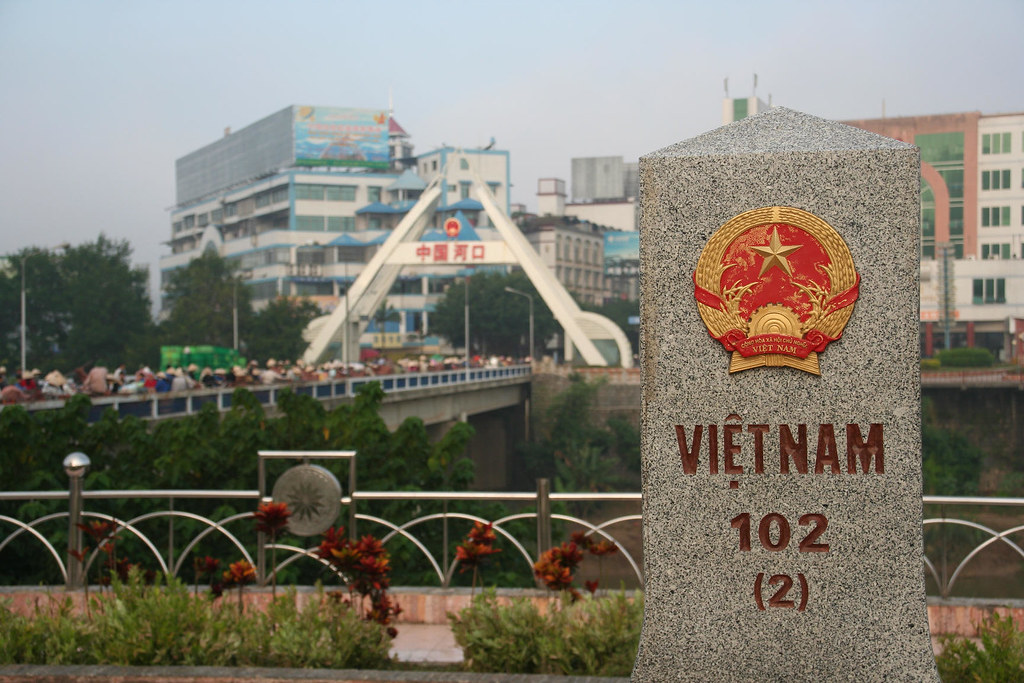
As we return to regional politics and relations focused on ideas of isolationism, regional rivalry and geopolitical control, nationalism is once again becoming a dominant trend of international politics across many regions and political ideas. In an attempt to understand how truly underlying such ideas of nationalism are on regional geopolitics and geopolitical organization, a recent re-reading of Benedict Anderson’s Imagined Communities, a key work on nationalism’s history and impacts on international relations, turned an eye to the significance of conflicts often forgotten, especially those between China, Vietnam, and Cambodia in the Third Indochina War.
While the countries may seem well aligned today, in the period from 1975-1979 things looked a lot different. In fact, this regional conflict formed the first large-scale conventional war between revolutionary Marxist regimes. Considering how regional alliances have shifted from then to today, in a look back at Vietnam this article will embrace Anderson’s idea that Marxist states are highly nationalist in both form and substance and examine how nationalism impacts regional international relations.
Hereby, following the end of the Vietnam War (1955-1975), the Vietnamese Communist Party (VCP) harnessed Vietnam’s international relations (IR) history to promote nationalist and anti-colonial policies of “Vietnamese” identity at the expense of, significantly, Vietnam’s ethnic Chinese diaspora. These nationalist policies directly impacted Vietnam’s relations with China, heightening geopolitical tensions and re-ordering regional IR through the outbreak of war.
Beginning with an analysis of Anderson’s theories on nationalism, Vietnamese colonial oppression and Marxism, the influence of historical international relations on the development of post-war Vietnamese nationalism, being harnessed by the VCP in the 1970s to unite Vietnam, will be evaluated. Focusing on the promotion of this nationalism through educational and cultural policies and relations with the Chinese diaspora, Vietnamese nationalism´s impacts in the sphere of international relations and regional security in context of the Sino-Soviet split will be highlighted, with nationalism contributing directly to the outbreak of Vietnam’s invasion of Cambodia (1978) and China’s invasion of Vietnam (1979).
Vietnamese nationalism and conflicts in Indochina 1975-1991 have often been studied individually or in context of the Vietnam War or Sino-Soviet split. Historiography by SarDesai and Canh focuses on American legacies in the region, arguing that each regional conflict emerged out of individual tensions between Vietnam and its respective neighbours, whilst Morris’ arguments focus on larger Cold War geopolitical tensions. However, connecting the national and international aspects into a study of, specifically, Sino-Vietnamese relations and how their deterioration emerged out of a history of heightened IR remains largely unexplored. Whilst Morris connects Vietnamese and Chinese political culture in his study of Vietnam’s invasion of Cambodia, this is as far as historiography goes. Morris further fails to connect the conflict with the Chinese minority, whilst Path’s analysis fails to look beyond it. Connecting the development of 1970s Vietnamese nationalism with its historical IR context and implications thereof remains complex as the Vietnamese nation continues to evolve, sparking constant historiographical re-defining.
Benedict Anderson & the Rise of Vietnamese Nationalism
International relations strongly shaped late-1970s Vietnamese nationalism in context of Vietnam’s history as a nation consistently dominated by an oppressive foreign power (first China, then France). The VCP focused on this IR history to promote national unity in defence of a common hegemonic threat (China), harnessing Vietnamese colonial history and Marxist ideology to shape a new and pragmatic vision of nationalism, centred on uniting a nation previously divided through the presentation of a united enemy.
Anderson focuses extensively on the French colonial era’s influence in shaping modern Vietnamese nationalism. French colonial rule saw the introduction of new styles of governance, administration, and social structure, tying the colony together through central civil service training programs and the Hanoi lycée. As Vietnamese elites learnt Western ideas of governance and administration, they also – inadvertently – began to form the centre of a lasting Vietnamese national community and identity. Since national elites were trained in centralized schools, which further taught a newly formalised version of the Vietnamese language, national networks were created, connecting the colony and providing a tool for Vietnamese national reflection that would last into its era of independence. The history of Franco-Vietnamese IR thus set the path for the development of 1970s Vietnamese nationalism, whilst French efforts to disrupt Sino-Vietnamese ties only contributed to what was to come.
Understanding Vietnamese peoples’ IR history as subjects of colonialism and oppression, incited reflection amongst national elites. Understanding their international history and importance as a nation, a lasting desire for an independent Vietnamese nation emerged, especially following the local Vietnamese defence from Japanese occupation during World War Two. Having resisted the re-establishment of French rule in the First Indochina War and fought for national ideology in the Second Indochina War; attempting to unite a nation that had seen war almost continuously between 1940 (the Japanese invasion) until 1975, the VCP thus harnessed its history within IR to build a new sense of nationalism and bring Vietnam out of hardship and division.
To do so, the VCP looked back even further than the French era, to the centuries of Chinese semi-colonialism. The holder of the Dragon Throne wielded power in Vietnam for centuries, and was, Anderson reminds us, the reason for the naming of Vietnam as such, rather than the preferred Nam-Viet. Drawing on the ideological foundation built when fighting French colonial oppression, as well as French efforts to antagonize Sino-Vietneamse relationships, the VCP in the 1970s focused the people’s view on the country’s most enduring hegemon: China. Thus Vietnamese nationalism moved to centre around heroes of the past who stood up in defence of Vietnam: from the likes of the Trung sisters, who led riots against the Chinese 40-43 C.E., or national hero Tran Hung Dao in 1300, to Ho Chi Minh’s fight for Vietnamese independence once and for all. Historical IR thus strongly shaped the VCP’s nationalistic approach to its construction of a new national Vietnamese identity in the 1970s, harnessing a rich history of national resistance against Chinese oppression, an approach with implications beyond Vietnam’s borders.
Anderson integrates the VCP’s focus on colonial-historical nationalism with its state-led Marxism. Marxist states including Vietnam, he argues, come to embrace nationalism as the pathway to solidify national strength when the ideologies of Marxism themselves cannot. When a socialist Marxist state could not appeal to all Vietnamese, the 1970s VCP embraced nationalism as a tool to build a national support base, to legitimize and entice support for policies which the general population would have faced with general disinterest. Thus, as Moise argues, the after-the-fact mobilization of popular nationalism in the language of self-defence was essential for the VCP’s building of a national support base for their domestic and foreign policy. The VCP, in essence, acted as a nationalist movement with Marxist elements.
The VCP thus benefited from its international relations history in the form of French colonial structures and a national history of resistance against oppressors by defining a collective memory of true Vietnamese nationalism encapsulated within heroic resistance against Chinese aggression in its post-unification rule.
Manifestations of Postwar Vietnamese Nationalism
The VCP’s creation of a unique blend of nationalism in the 1970s built on a collective memory of Vietnamese IR shaped by Chinese oppression was promoted in VCP post-war educational policy, as well as in social, political, and economic policies targeting Vietnam’s ethnic Chinese minority. Chinese ideological challenges to the regime in Hanoi further enhanced ideological tensions leading to a significant straining of Sino-Vietnamese (international) relations.
Policies of National Unification & Education
Educational reforms across Vietnam focused on creating a “new culture and … new socialist man”, specifically through the eyes of Vietnam’s “glorious” IR history, and positioned the VCP as the successor to the heroes that fought for Vietnamese independence against Chinese hegemony. In the 1970s, the VCP further revived and promoted Vietnamese cultural traditions and festivals, presenting itself as the continuation of the enduring national moral authorities. These reforms were nationally implemented through the closure of private schools and a class-based educational system, aiming for the ideological and political “revival” of the entire nation. Anti-China rhetoric, rooted in historical IR as a unifying tool for the nation, went beyond the Vietnamese education system; the general public was often confronted with the threat of future Chinese aggression. It was instilled within the population that they must embody the spirit of the heroes of the past and defend their nation against an increasingly aggressive Chinese regime. Official Vietnamese history thus focused overwhelmingly on historical IR and national resistance against Chinese invaders.
As Vietnamese anti-China rhetoric grew, the VCP’s leadership increasingly feared a formal Chinese intervention, especially during the Cultural Revolution. As Beijing’s tone reverted to one of a subservient Vietnam, as indicated by PRC Foreign Ministry Records, labelling Hanoi as ‘revisionist’ due to its close ties with the USSR, the VCP accelerated the anti-China rhetoric’s spread. Propaganda focused on the “threat from the North”, rallying the Vietnamese to defend their national sovereignty against the Chinese. Vietnamese Government records together with Chinese letters of protest showcase subsequent acts of physical assault and destruction of Chinese experts’ and representatives’ property. Whilst these cases were relatively moderate, they demonstrated the extent to which anti-China rhetoric in Vietnam had grown as a result of propaganda rooted in historical IR and had begun to significantly strain contemporary Sino-Vietnamese relations.
The Chinese Diaspora in Vietnam
The most significant target of Vietnamese anti-China rhetoric was the Chinese diaspora, commonly found near the border to Yunnan (China), as the VCP saw Chinese residents in Vietnam as the most important channel of Chinese influence in Vietnam. Following the dismissal of the remaining China-friendly members of the VCP’s Central Committee in 1976, the VCP ramped up policies of forced assimilation, aiming to shift the diaspora’s loyalty from China back to Vietnam. Vietnamese resentment towards this generally wealthy minority further exasperated these policies, especially as the VCP – building up to its Doi Moi policies of economic legitimacy – focused on national economic prosperity as a key tool for national unification and VCP party legitimization. The seizure of land owned by the Chinese diaspora was further justified in light of their classification as “class enemies”, making their expropriation part of the national transformation to socialism. Assimilation policies included the closure of Chinese schools and prohibiting the teaching and use of the Chinese language, as well as the forced resettling of ethnic Chinese across the ethnically Vietnamese south, and bringing ethnic Vietnamese into “new economic zones” near the economically prosperous Sino-Vietnamese border. As Sino-Vietnamese relations tensed in consequence, Hanoi replaced dual China-Vietnam citizenship with a singular – Vietnamese – citizenship. The Cultural Revolution further enhanced tensions and Hanoi’s targeted policies, as the Chinese Embassy began actively encouraging the diaspora to protest against the Vietnamese leadership’s ‘revisionism’, actions highlighted by both sides at the UN. Chinese ideological pressures thus motivated Hanoi to push its anti-China nationalist ideology even further, resulting in an endless cycle of escalating tensions. With bilateral tensions increasing and negotiation attempts failing, Hanoi’s policies of assimilation continued, culminating in a mass exodus of the remaining Chinese diaspora across the border.
Thus, the VCP harnessed historical IR and promoted a national fight against Chinese aggression by educating the general public, formally and informally, of the Chinese threat past and present. However, the explicit targeting of the Chinese diaspora directly strained Sino-Vietnamese relations significantly. Historical IR’s influence on 1970s VCP nationalism now itself contributed to new IR tensions.
Implications: Vietnamese Nationalism & International Relations
The emergence of such strongly manifested anti-Chinese nationalism in Vietnam, emphasised by fears of possible Chinese aggression, had a significant impact beyond the ideological re-ordering of Sino-Vietnamese relations on regional-geopolitical IR. These impacts were enhanced in context of the Sino-Soviet split, whereby Vietnamese-Soviet alignment and fear of gradual encirclement led to the Vietnamese invasion of Cambodia, and Chinese frustrations towards Vietnam resulted in increasing border clashes, culminating in China’s 1979 invasion of Vietnam.
Sino-Vietnamese Border Tensions & the Chinese Invasion of Vietnam
Worsening Sino-Vietnamese relations were most directly reflected in the increased border skirmishes along the Sino-Vietnamese border. Already during the final stages of the Vietnam War (1974), China and Vietnam jostled for territorial control, for example over the Paracel islands (occupied by China against Vietnamese protests in January 1974). However, Vietnam’s treatment of the ethnic Chinese minority and an encouragement of both Chinese and Vietnamese regional officials to “defend their ‘fatherland’” led to the rise of increasing border skirmishes beginning in 1974, clashes growing rapidly from 121 interactions in 1974 to 1108 clashes in 1978. As evidenced by communications between Le Duan, Deng Xiaoping, Pham Dong and Zhou Enlai, negotiations to resolve these border conflicts failed. As tensions escalated, China grew frustrated with Hanoi’s use of local authorities to manage the dispute – a deliberate move by Hanoi to directly involve the local population (rather than the state) in Vietnam’s defence – seeing it as an active desire by Hanoi for provocations to continue. The direct implication of Vietnamese nationalism on Chinese policy, together with Vietnam’s decision to invade its ally Cambodia outlined below, thus pushed China to the brink. Deng consequently felt a “need to teach the Vietnamese a lesson” about power, and the decision to pursue a short punitive war (27 days) emerged in direct consequence of continuous Vietnmease provocations. In its 1979 invasion, Beijing aimed to directly contradict the VCP’s promotions of Vietnamese nationalism and remind Hanoi that China remained the unchallengeable regional power.
The Sino-Soviet Split & Vietnam’s Invasion of Cambodia
Beyond a re-odering of relations with China peaking in violent border conflicts and a punitive invasion, Vietnamese nationalism also impacted Vietnam’s position in the struggle for South-East Asia in context of the Sino-Soviet split. Despite long-term successful Sino-Vietnamese cooperation during the 1950s-60s, during the Vietnam War the VCP began to build closer ties with the USSR, due to Beijing’s hesitancy to support North Vietnam against US forces and their subsequent labelling of the VCP as “revisionist” communists. The USSR in contrast was highly forthcoming in its material and military support for the regime, replacing China as Vietnam’s primary arms supplier by 1965. Close Moscow-Hanoi ties continued post-1975 and Vietnam welcomed over 6000 Soviet advisors by 1977 before formally joining COMECON in 1978. However, whilst Soviet-Vietnamese ties grew stronger, Beijing successfully began courting the other nations of South-East Asia. Bejing established close political and economic ties with both communist Laos and Cambodia, ties that were especially visible through Beijing’s public stances of support for their independence as actors within the communist world, as well as increased military and financial aid.
In context of deteriorating Sino-Soviet relations, the growing ties between China, Laos and Cambodia became a major concern for Hanoi, as already fearing Chinese aggression, these placed Vietnam in a dangerous position: encirclement. Threats of possible aggression were now all too real for Vietnam, as China’s allies now made an attack on Vietnam from all sides a realistic possibility. This only heightened Hanoi’s anti-China nationalist rhetoric, pushing Vietnam even closer to the USSR. As the VCP leadership observed the continued deterioration of Sino-Vietnamese relations, they concluded that the only way to maintain Vietnamese national stability and safety was through an attack. The result was an act of ‘self-defence’: the Vietnamese invasion of Cambodia. The VCP leadership was so entrenched in its own ideology of looming Chinese aggression that it resorted to the principle of “attack is the best defence”. There thus exists direct continuity between escalating Vietnamese nationalism and the outbreak of an invasion that would come to draw in Laos and China, plunging the region into a Third Indochina War.
Vietnamese nationalism rooted in fears of Chinese aggression thus severely contributed to the reordering of South-East Asian IR. Tensions with Beijing and mounting Sino-Vietnamese border tensions strongly contributed to Vietnamese fears of encirclement in the broader geopolitical context, pushing Vietnam onto a path of aggression with Cambodia which would unleash the conflicts of the Third Indochina War.
The impacts of Vietnamese anti-China nationalism, rooted in Vietnamese IR history, on South-East Asian international relations is thus undeniable. Nationalism directly led to a drastic shift in Sino-Vietnamese relations as well as two key geopolitical conflicts. Whilst determining whether the VCP’s goal of creating a united Vietnam was successful requires further investigation, the takeaway for today remains that nationalism can be – and arguably is today – a force with an astounding impact on foreign policy. Domestic targeting and international policy shifts as a result of nationalism are a norm, the VCP exemplifies Anderon’s case of Marxist-nationalism built on international relations history rooted in national unity against a foreign aggressor, and its intense manifestation across Vietnam, and towards the Chinese diaspora especially, significantly re-ordered South-East Asian IR. Beyond border clashes and worsening Sino-Vietnamese tensions, the role of Vietnamese nationalism in the outbreak of the Third Indochina War is undeniable. This understanding of the interconnectedness between Vietnamese nationalism and South-East Asian geopolitics further inspires the continued study of Chinese — but also Cambodian and Laotian — nationalism in shaping this conflict, beyond the general lens of the Sino-Soviet split, as well as the consequences of the conflict lasting to this day. But beyond the impacts of nationalism at the time, I think it is very much safe to say that the trends of nationalism’s impact on regional international relations remains ever-present not only in Southeast Asia and China, but also increasingly internationally. And finally, as we continue to see lingering tensions in — albeit improved — Sino-Vietnamese relations to this day, we are reminded that history is not, George Dutton reminds us, a chronological story, but rather continuously draws connections across time and ideology. With that, we can be sure that nationalism is here to stay, and we should never think of it as a mere domestic issue, it will always have impacts beyond our expectation.
Image Credits: Flickr
Paul Meyer
Paul is a foreign policy and international trade professional, currently working as Director – U.S. Trade Policy for the German Chamber of Industry and Commerce in Berlin on issues of bilateral trade and national and European economic policy. Having lived in China for over eleven years, affairs in the region have always been of close professional interest. Paul graduated from the University of Toronto with a Hons. BA in Public Policy, International Relations and Economics in 2024.
 Sino-Southeast Initiative