
Written in conjunction with Paul Meyer. You can read Part II here.
Industrial policy has recently regained prominence in policymakers’ minds, and not in small part due to China. Whilst industrial policy has always been contentious in an era dominated by capitalist market economies rather than state planning economies, its success in East Asia in the 1980s in tandem with a growing literature on market failure and increasing global competition has put industrial policy back on the agenda. As the World Trade Organization (WTO) warns of increasing distortions of competition, China’s driving role in inciting competition has become undeniable.
This is Part I in a two-part series analyzing the arguments behind industrial policy; its rationale, application, and results in China; as well as the impact of China’s successful industrial policymaking on the increasingly competitive global outlook. This part presents a historical overview of industrial policy in China, arguing it as a continuous adaptation to the requirements of both domestic conditions and global needs, garnering various levels of success across post-reform periods.
Industrial policy is hereby defined as government policy aimed at altering the sectoral structure of an economy under some level of market competition. This encompasses both vertical (sectoral) policies such as sectoral tax credits and subsidies, as well as horizontal (cross-sectoral) policies such as infrastructure development and educational policy.
China’s industrial policy story is interesting both in rationale and result. A sudden rise in industrial policy’s proliferation by the late 2000s put China into the international spotlight, prompting Naughton to declare that “industrial policy [in China] essentially did not exist before 2006”. However, Chinese attempts to implement industrial policy are as old as the reforms, taking various aims, forms, and levels of success in the decades since.
This section will trace the chronological evolution of China’s industrial policy in three periods, 1978-2006, 2006-2015, 2015-Present, outlining its different rationales, implementation, and results, demonstrating its continuous adaptation to domestic and global environments. Whilst the 1978 “Reform and Opening Up” and the 2015 “Made in China 2025” create distinct policy breaks, the break in 2006 is a more ambiguous compromise between early changes in industrial policy’s trajectory since 2004 and the watershed shift in 2008/09. Naughton’s evaluation of the 16 megaprojects supports 2006 as a useful but less than definitive separation.
Between 1978 and 2006, Section 1 argues that facing suboptimal market conditions, political fluctuations, and inconsistent execution, attempts at industrial policy largely did not achieve their desired effects nor cumulate into any sustained and cogent strategy. From 2006 to 2015, Section 2 argues that an increasing proliferation of industrial policies aimed at “catching up” to the advanced economies was consistent with the traditional industrial policy arguments, creating more substantial, sustained, and coordinated effort with clear results in the 2010s. Looking at 2015 onward, Section 3 argues that a new batch of policy programs experimented with a refocusing of industrial policy, aimed at boosting new industries at the technological frontier to “leapfrog” over, rather than “catch up” to, the advanced economies. This new approach gambles on the next decades being ones of technological breakthroughs, taking a risk in expending significant investments and drawing global ire for the potential gains in emerging industries.
1. A Struggle for Control: 1978-2006
With the lack of market forces in pre-reform material balancing, reforms brought new possibilities for industrial policy through gradual marketization. Observing Japan’s industrial policy successes, the Chinese leadership sought to replicate their use of industrial policies, however, with largely nonperforming results.
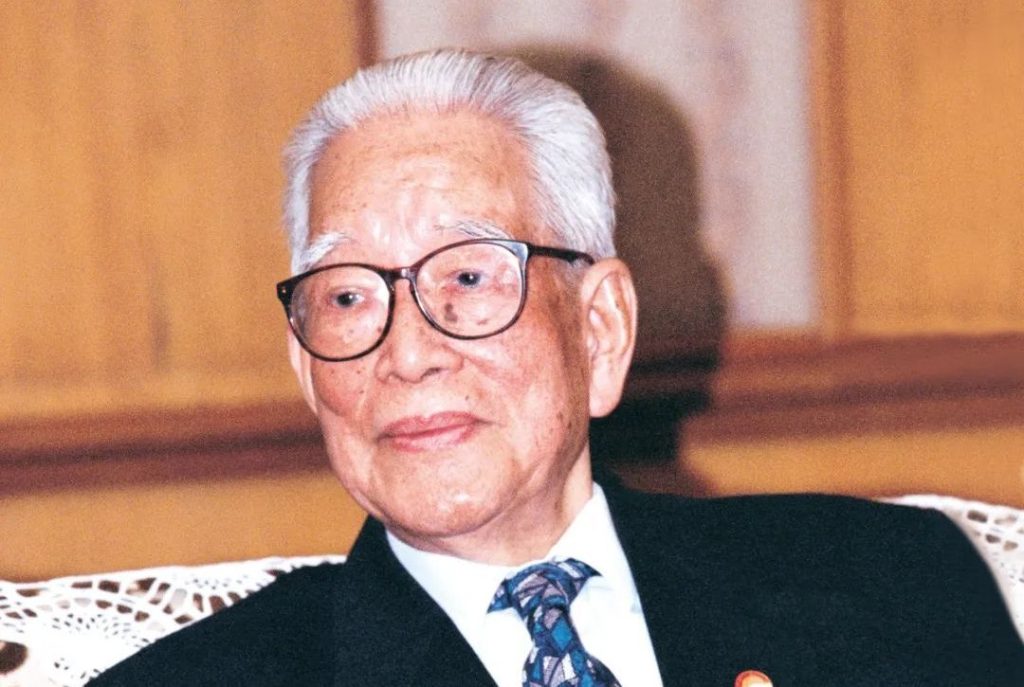
The seeds of industrial policy were sown early on, with the first industrial association launched in 1979 by the head of the State Economic Commission (SEC; State Economic and Trade Commission (SETC) since 1993) Yuan Baohua, who toured Japan extensively. Japanese influence persisted throughout the 1980s and 90s, but a Japanese style success was not realized until 20 years later. Whilst industrial policy initiatives were pursued, they were costly, scattered in time, limited in coverage, and never cumulated into a coherent cross-sectoral national campaign.
The Rationale: A Step Back
The market conditions prior to and during early reforms are a crucial consideration when defining industrial policy’s successes, as its aim of influencing economic structure, when taken to the extremes, result in a planned economy. This first period of reform thereby constitutes a de-facto retreat from an industrial policy extreme, rather than a step forward from a mostly free market. Policy reforms were thus treated as an instrument to dampen marketization and retain state control over enterprises, rather than to pursue active free market sectoral transformations.
With this in mind, industrial policy simultaneously appealed to both the conservative and reformist factions of the Chinese leadership. For the conservatives (the planners), industrial policy was a defensive safeguard from rapid marketization, maintaining state control over core industries and the ability to material balance between the sectors. For the reformists (the marketizers), policies introducing enterprise autonomy and market forces serve as transitional stopgap measures overseeing the gradual decrease of government intervention en route to a free market.
Further, industrial policy had the potential to resolve the reforms’ economic and political challenges of redundancy and termination. Market competition challenged inefficient SOEs and dissolved outdated official posts, threatening regime continuity with mass unemployment and cadre redundancies. Industrial policy provided opportunities to restructure the inefficient and employ the redundant in newly established industrial associations. It was thus attractive for its potentially dampening effect on unemployment and catalyzing effect in creating new patronage resources, allowing for the sustenance of central power through formal and informal control over enterprise activities, stabilizing and strengthening the existing bureaucratic hierarchy.
The Results: A Necessary Failure
Whilst the larger policy objectives were broadly accomplished during early reforms, industrial policy itself was both a political and an economic failure.
Politically, the existence of three competing industrial policy institutions with competing missions, strategic preferences and objectives, the State Planning Commission (SPC), the SEC and the State Structural Reform Commission (SSRC), created an environment inconducive to the formation of a coordinated national industrial policy strategy. The programs and initiatives that were launched were largely individual and lacked consistent top-level support. This was the case especially for more market-oriented attempts supported by Premier Zhao Ziyang and the SSRC-affiliated Economic Structural Reform Institute (ESRI). With Zhao’s fall from power, the ESRI’s approach of indirect guidance and emphasis on state and enterprise separation lost top-level support. Economically, a step back from Chinese total planning was very different from a step forward in government guidance of Japanese market competition, creating incoherencies between Chinese policy and its Japanese model. The unsuccessful attempts were consequently the result of lacking enterprise decision autonomy and market pressure, with large SOEs dominating major industries plagued with remnants of planning era hierarchical structure and protectionism.
Recognizing the political and economic prerequisites for the successful implementation of industrial policy, a new generation of Chinese leaders lead by Premier Zhu Rongji paused the initiation of new cross-sectoral programs in 1994. Focusing on building up the preconditions, the SETC was elevated to become the singular national coordinator of industrial policy, while a top-level report rejected imperative planning and affirmed indirect guidance as the key tenet of industrial policy. This resolved both the political problem by centralizing decision making power and the economic problem by decentralizing enterprise decision making autonomy in context of marketization. This decade of seemingly dormant industrial policy usage under Zhu was thus an especially important period for industrial policy in China, as it resolved the issues and created the conditions necessary for the successful implementation of policy programs in the next period.
2. A Capitalization of Past Experiences: 2006-2015
A new administration under General Secretary Hu Jintao and Premier Wen Jiabao ushered in a new era of industrial policy in China. The new administration had a clear vision for industrial policy, setting a clean slate by dismantling the SETC and calling on the former Planning Commission, renamed the National Development and Reform Commission (NDRC) to become the new coordinator of industrial policy. From as early as on as 2004, sectoral and cross-sectoral projects were being launched, persisting throughout the period.
The most notable and measurable industrial policies of this period were the so-called megaprojects, sector-specific goal-driven vertical industrial policy projects backed directly by the central government. The 16 megaprojects identified by Naughton are mostly engineering based, targeting specific sectors with both civilian and military usage. These projects were supported and funded by the Medium- and Long-Term Program of Science and Technology (MLP) of 2006, and gained momentum through the Strategic Emerging Industry (SEI) program of 2010, marking a clear and significant break from former period.
The Rationale: A Step Forward
The subsequent wave of both sectoral and cross-sectoral long term industrial policy programs was, intentionally or not, the result of long preparations according to the Japanese model, realizing the dreams of the original reformers from two decades ago. This period of Chinese industrial policy fits the common East Asian narrative of industrial policy, aiming to catch up to the advanced economies in existing industries through a combination of sectoral and cross-sectoral projects. Industrial policy programs extracted latecomer advantages, lowering the cost of productivity gains by replicating the advanced economies in key industries with potential Chinese comparative advantage.
The GFC made industrial policy particularly attractive for a Chinese central government looking for a channel through which mass economic stimulus could be delivered. The opportunity that the GFC brought was reciprocal, as it gave the central government an opening to inflict structural changes to the economy without overheating it, and industrial policy a chance to break out of the traditional mold without much domestic or international push back. On an ideological level, the catastrophic failure of the advanced market economies during the GFC rebuked the Reagan-Thatcher era suppression of industrial policy, giving the Chinese a green light to explore their alternative system of “government-led, market-driven” growth through industrial policy.
The Result: A Natural Success
The Hu-Wen decades resulted in much economic dynamism, especially in manufacturing industries that leveraged China’s high labor endowment, giving China the informal title of the “World’s Factory”. Although the term overstates the importance of exports to the Chinese economy, it does outline the fulfillment of industrial policy’s objectives. Gauging programs’ direct and spillover effects, however, remains difficult as their confluence makes assessing individual programs’ impact virtually impossible, whilst the Chinese economy’s general vibrancy obscures the separation of market-led and government-led growth. The 16 megaprojects thus serve as effective proxies for industrial policy’s overall effectiveness, delivering notable results in programs such as the Beidou Navigation System, C919 passenger aircraft, and space exploration projects, broadcasted as signs that China was now technologically on par with the West.
Having overcome the struggles of previous eras, industrial policy programs in this period succeeded more naturally. The Hu-Wen administration inherited an economy that was closer to the Japan of 20 years ago than ever before. Market forces were present in most sectors, legal and institutional frameworks were more developed, labor market imbalances has been largely resolved by the “Xiagang” policy of the early 90s, and SOE reforms were largely completed allowing for enterprise decision autonomy, creating an overall hospitable environment for cross-sectoral long-term industrial policy programs. Politically the NDRC’s re-empowerment as the sole coordinator of industrial policy continued the bureaucratic structure established by the SETC. This reorganization of policy authority was complemented by the rise in ranks of long-time industrial policy advocates, lending substantial political support to the success of industrial policy programs.
3. A New Approach to Industrial Policy: 2015-Present
With the launch of “Made in China 2025”, a new chapter of Chinese industrial policy began. Further solidified by the “Innovation-driven Development Strategy” (IDDS), industrial policy was more cross-sectoral, technological, and focused on the technological frontier. The policy makers established Industrial Guidance Funds (IGFs), using their specialized nature to target specific enterprises, fulfilling their early, mid-to-late financing needs throughout the business cycle and hence aimed for “government-led, market-driven” investment growth in targeted sectors.
It is tempting to correlate this change in approach with the arrival of the Xi administration, much like how the arrival of the Hu-Wen administration brought a revitalization to industrial policy. However, this new approach was more a reorganization and integration of previous efforts than a complete revamp of industrial policy. The 2010 SEI plan had already aligned industrial policy programs towards supporting indigenous technological innovation. The IDDS reoriented SEI’s focus from industries with a technological gap to five key industries at the technological frontier: IT, High-quality Industrial Equipment, Bio Pharmaceuticals, New Energy Vehicles and Digital Media. The SEI plan was coordinated with other initiatives under the IDDS, utilizing IGFs to allocate 61% of the period’s overall industrial investment into high tech industries.
The Rationale: The New Great Leap
The objective of this new chapter is often described as “Leapfrogging”, whereby China aims to directly compete with the advanced economies through investments in the industries at the technological frontier. This strategy is based on the assumption that the world is on the cusp of another technological revolution, with the rise of new general-purpose technologies in manufacturing, communication, artificial intelligence and more. China can therefore reap the benefits of this opportunity to bring massive gains in productivity to its economy, potentially creating economic parity with or surpassing the advanced economies.
Assuming that a technological revolution is on the horizon, this approach is fitting of China’s current economic state. The compatibility is three-fold: One, investment driven growth has largely replaced productivity growth since the early 2010s, making the Chinese economy more sensitive to the instruments of investment guidance used as industrial policy. Two, the sectoral focus coincides with China’s transition from an intermediate to a final goods exporter, allowing China to move up the value chain facing diminishing labor market dividends. Third, potential gains in terms of productivity driven growth directly addresses the slowdown in productivity growth, delivering the jolt that the Chinese economy needs to escape the middle-income trap.
The Result: A Calculated Risk
It is hard to determine the results of this new period of experimental industrial policy. The policies are both too recent and there are major data measuring problems. However, what can be said is that the rationale behind this new approach to industrial policy is highly risky, its goals facing several potential challenges. First, the investments assume an imminent technological revolution released by the mass applicability of a few key general-purpose technologies. The validity of this assumption, both in terms of the technologies’ future prospects and general-purpose spillover effects, are still in doubt. Second, investment-led methods of industrial policy perpetuate the dominance of investments in growth, nudging the economy away from the necessary shift from local government investment-led to household consumption-led growth. Third, initiatives taken remain similar in nature to those before, being distortionary top-down science and technology policies that could inhibit investment and resource allocation to efficient new firms. More than 80% of IGFs are controlled by inexperienced local governments, deterring private investor’s participation in the IGFs and hence the entry of new and efficient firms.
Further, as China increasingly competes with other advanced economies, China’s new approach to industrial policy has garnered responses of banning technological transfers, refusal of market entry and ought right industrial policy competition, topics that will be discussed further in Part II. This creates a hostile environment for Chinese exports, potentially diminishing the results of the previous period’s more conventional policy approach. An example is the case of COMAC, a megaproject aimed at developing a narrow-body C919 and wide-body C929 airliner in competition to the Airbus-Boeing duopoly. Although designed and assembled in China, critical systems such as avionics and propulsion are still dependent on suppliers from advanced economies, thus a potential target for export restrictions. Further, the C919 has yet to obtain any certification outside of China, a further entrance barrier to the lucrative European and North American airliner markets. The Brazilian Embraer case emphasizes the susceptibility of the passenger aircraft business to industrial policy competition and government involvement, with its profitability not taking off until the firm’s privatization. China may be able to circumvent the demand constraints faced by Embraer for C919 by directing domestic firms’ passenger aircraft purchasing decisions, yet it will be limited in its ability to support the C929 through domestic demand as transnational service will be critical to the success of a wide-body aircraft.
Image credits: Official Archive Photo of Yuan Baohua 袁宝华
Ian Wan
Ian, a Beijing native, will be joining J.P. Morgan’s Global Corporate Banking division later this year. He brings experience from Tencent (腾讯), Mackenzie Investments and academic institutions across China and Canada, holding a deep interest in the Chinese economy, markets, and society. Ian enjoys tutoring and teaching undergraduates at the University of Toronto’s Department of Economics. Ian loves auctions and barbecues.
Paul Meyer
Paul is a foreign policy and international trade professional, currently working as Director – U.S. Trade Policy for the German Chamber of Industry and Commerce in Berlin on issues of bilateral trade and national and European economic policy. Having lived in China for over eleven years, affairs in the region have always been of close professional interest. Paul graduated from the University of Toronto with a Hons. BA in Public Policy, International Relations and Economics in 2024.
 Sino-Southeast Initiative