
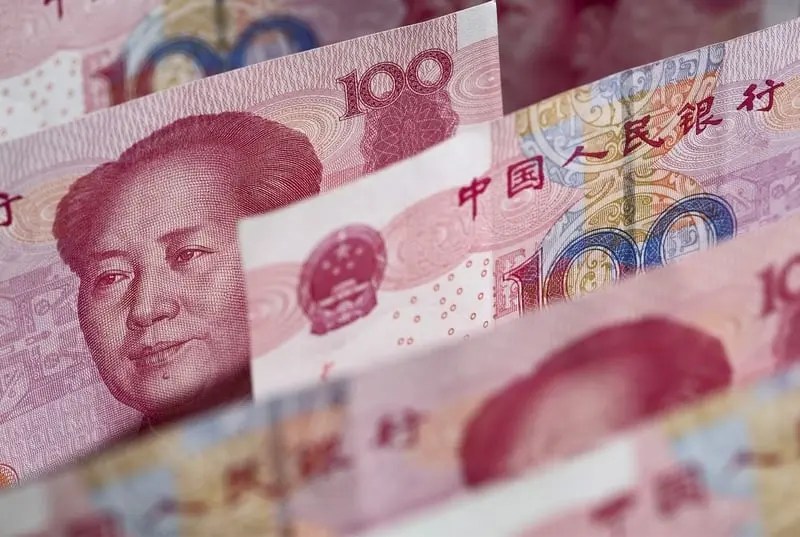
As security concerns increasingly influence economic policymaking, the rise of investment screening measures is one way this shift is taking shape. While the United States and Europe have already implemented such measures extensively, Canada is still charting its course in response to potential risks posed by Chinese foreign direct investment (FDI). How Canada addresses this key geopolitical question—and what tools it employs in doing so—will be important to watch, especially given its strong commitment to free trade.
Canada stands at a geopolitical inflection point where the imperatives of economic openness and national security are colliding more forcefully than ever before. In recent years, growing awareness of state-directed economic coercion, foreign interference, and the strategic targeting of critical industries by authoritarian regimes—chief among them, the People’s Republic of China (PRC)—has prompted a serious reassessment of how foreign investment is managed and screened. What was once viewed predominantly through an economic lens is now increasingly understood as a critical matter of sovereignty, security, and democratic integrity.
This reassessment is not occurring in isolation. It reflects a broader shift across liberal democracies, as nations grapple with the realization that economic tools can be wielded for geopolitical ends. In this context, Canada is exploring a fundamental recalibration of its investment screening processes to better guard against the systemic risks posed by foreign entities that may be acting on behalf of state interests.
The Strategic Context: A Rising China and the Weaponization of Capital
China’s economic rise has transformed the global order, but it has also introduced a new set of challenges for countries that previously welcomed foreign capital with few restrictions. The PRC’s unique model—combining authoritarian governance with state-directed capitalism—has facilitated a strategic use of outbound investment to acquire technologies, infrastructure, and data that serve its long-term national objectives. These acquisitions often come through companies that, while ostensibly private, remain under the influence of the Chinese Communist Party (CCP) through a variety of legal, political, and institutional mechanisms.
For countries like Canada, the risks are multifaceted. Investments originating in China increasingly target sectors that are foundational to future prosperity and national security, including artificial intelligence, quantum computing, biotechnology, and critical minerals. At the same time, the opacity of Chinese corporate structures and the legal obligations Chinese companies face to support state intelligence operations raise serious concerns about transparency, control, and strategic intent.
This growing discomfort is set against the backdrop of an international system where authoritarian regimes are increasingly willing to use economic coercion to punish political dissent or resistance. China’s imposition of trade restrictions on Australia, its targeting of Lithuanian exports, and its use of cyber operations to advance strategic goals are only some examples of a willingness to blur the lines between economic activity and geopolitical influence. For open economies like Canada, the costs of unguarded exposure are becoming increasingly apparent.
Investment Screening in Canada: A Framework Under Strain
Canada’s existing investment review mechanisms, largely governed by the Investment Canada Act, were not designed for an era of state-influenced global capital. While the Act permits national security reviews in addition to assessments of net benefit, its structure has not kept pace with the complexity and subtlety of modern threats. Several critical weaknesses have emerged.
One of the primary concerns is the reactive nature of the current system. Reviews are often triggered after a transaction has closed or when it reaches a high-value monetary threshold. This approach limits the government’s ability to act preemptively and creates vulnerabilities in fast-moving sectors like tech and clean energy, where sensitive assets can be transferred quickly and with little visibility.
Compounding this issue are threshold limitations. Smaller transactions, particularly in early-stage companies with significant intellectual property, frequently fall below the radar of the current regime. Yet these investments may still pose considerable risks, especially when they provide foreign investors with access to strategic technologies or influence over business decisions.
The issue of indirect control is also increasingly relevant. Modern investment structures often involve minority stakes, board seats, or veto rights that do not amount to formal control but nonetheless enable strategic influence. These arrangements are particularly common in venture capital and private equity and may escape scrutiny under existing definitions of control.
Another major limitation is the lack of systematic integration of national security intelligence into the review process. Intelligence agencies may not be formally engaged early enough to flag risks, and the screening process lacks predictive tools to identify concerning patterns of foreign activity. Moreover, the absence of a public framework outlining sensitive sectors or risk factors contributes to uncertainty among investors and may lead to the inadvertent approval of risky transactions or the deterrence of legitimate ones.
The Policy Response: Toward a More Robust and Strategic Screening Regime
In light of these growing concerns, Canada is considering a wide-ranging reform of its investment screening policies to better reflect contemporary threats. The proposed approach is not merely about tightening controls but about building a smarter, more strategic system that can distinguish between benign and malign investments and act accordingly.
Central to this strategy is the introduction of mandatory pre-notification requirements for investments in designated sensitive sectors. These would likely include critical minerals, artificial intelligence, quantum technologies, biotechnology, cybersecurity, and certain types of infrastructure. By requiring advance notice of all proposed transactions in these areas—including those involving minority interests—Canada would gain the ability to intervene early, assess risk more thoroughly, and block or condition deals before they pose a threat.
Another key reform involves expanding the legal definition of “control” to capture the nuanced ways in which influence can be exercised without outright ownership. The inclusion of board representation, access to sensitive data, and special voting rights would ensure that the review process reflects the realities of modern corporate governance and financial structuring.
To prevent risky transactions from slipping through based on size, Canada is also considering the elimination or significant lowering of monetary thresholds for review, especially for investors originating in high-risk jurisdictions such as China. This would ensure that even small but strategically significant deals can be assessed on their merits.
The proposed reforms go beyond legal changes to include substantial operational enhancements. A more formalized process for integrating intelligence from agencies like the Canadian Security Intelligence Service (CSIS) and the Communications Security Establishment Canada (CSE) into the investment review workflow is a central component. This would include early-warning mechanisms, data sharing protocols, and increased analytical capacity to evaluate risk based on geopolitical context, corporate linkages, and sectoral vulnerabilities.
Stronger enforcement mechanisms are also on the table. These would provide the government with expanded powers to compel disclosure, impose administrative penalties for non-compliance, and unwind completed transactions when risks become apparent after the fact. Legal tools would be complemented by more transparent public guidance on the types of investments likely to trigger concern, modeled on practices seen in the United States and other allied jurisdictions.
Balancing Risk, Openness, and Sovereignty
The adoption of a more assertive investment screening regime inevitably raises questions about trade-offs. There is a risk that overly broad or unpredictable measures could chill legitimate foreign investment, particularly in capital-intensive sectors like cleantech, where Canadian firms often rely on external funding. Canada must therefore ensure that any reforms are applied transparently and proportionately, with a clear focus on national security and economic resilience—not protectionism.
Diplomatic repercussions are also a serious consideration. Canada’s relationship with China is already strained, and further restrictions on Chinese investment could provoke retaliatory actions. These may come in the form of trade barriers, regulatory harassment of Canadian firms in China, or more covert forms of pressure. Managing this risk will require diplomatic agility, strong alliances, and a coherent narrative about Canada’s sovereign right to safeguard its critical interests.
Implementing the new regime will also place greater demands on government capacity. Reviews will become more complex, frequent, and politically sensitive, requiring a robust cadre of legal, economic, and intelligence professionals. New institutional structures may be needed to manage this workload while maintaining the timeliness and predictability that investors expect.
A Global Movement: Aligning with Trusted Partners
Canada’s move toward enhanced investment screening is part of a broader international trend. Allies such as the United States, Australia, Germany, the United Kingdom, and Japan have all modernized their regimes to better address the risks of foreign state-linked investment. These countries have expanded review criteria, enhanced intelligence integration, and increased their capacity to assess deals with strategic implications.
Alignment with this emerging global norm offers several benefits. It allows for coordinated assessments of risk, intelligence sharing on known threat actors, and the prevention of “forum shopping” by malign investors seeking the path of least resistance. It also reinforces a collective commitment among liberal democracies to defend the rules-based international order from authoritarian encroachment.
Defending the Future
The changing nature of global investment flows demands a new approach. In a world where authoritarian states use capital as a tool of influence and coercion, economic security cannot be treated as separate from national security. Canada’s proposed reforms reflect an urgent need to protect its most vital assets—its innovation ecosystem, its critical infrastructure, its data, and its sovereignty.
This is not a call to retreat from globalization but to engage with it more strategically. By building a smarter, more secure investment screening system, Canada can continue to welcome the world’s capital while defending its values, interests, and long-term independence. The stakes are high, but so too is the opportunity to shape a resilient, forward-looking economic policy for the 21st century.
Image credits: Bloomberg
Paul Meyer
Paul is a foreign policy and international trade professional, currently working as Director – U.S. Trade Policy for the German Chamber of Industry and Commerce in Berlin on issues of bilateral trade and national and European economic policy. Having lived in China for over eleven years, affairs in the region have always been of close professional interest. Paul graduated from the University of Toronto with a Hons. BA in Public Policy, International Relations and Economics in 2024.
 Sino-Southeast Initiative