
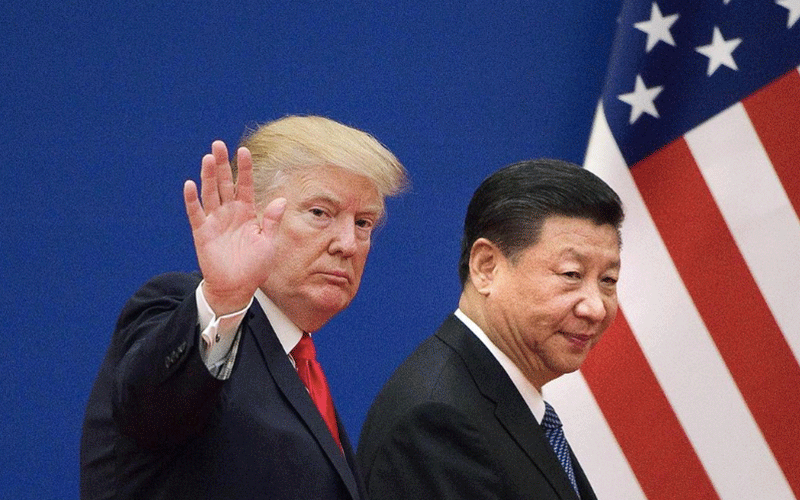
The hardened stance of President Trump’s second administration toward China—manifested in aggressive tariff threats, export controls, and trade investigations—closely echoes the US trade strategy of 2018–2020. Then, what began with duties on several billion dollars of imports swiftly escalated into an unprecedented tit‑for‑tat tariff war that rattled global markets, exposed the limits of the WTO’s dispute‑resolution mechanisms, and reshaped the economic calculus for firms and consumers around the world. Recent trade escalations underscore that unresolved grievances from Trump’s first term—ranging from the bilateral trade deficit to intellectual property concerns—remain central to US trade policy. By revisiting the origins and impacts of the trade conflict under Trump’s first term, we gain vital perspective on why past measures faltered and how they inform current debates over strategic decoupling, multilateral cooperation, and a rules‑based trading order.
In July 2018, the US imposed duties on approximately US$34 billion worth of Chinese imports, marking the beginning of the US-China trade war. President Trump, referring to China’s unfair trade practices as “the greatest theft in the history of the world,” would apply tariffs on hundreds of billions of dollars on Chinese imports between 2018 and 2019 until the eventual signing of the Phase One Agreement in January 2020. Such trade restrictions came in direct contravention of the US’ long standing reputation as a bastion of free trade and would trigger retaliatory tariffs and the use of non-trade barriers by China. In his second administration, President Trump has maintained and expanded these measures—imposing fresh duties, tightening export controls on advanced technologies, and blacklisting Chinese firms—to further constrain Beijing. China has, again, responded with its set of retaliatory measures. In this article, we examine the origins and consequences of the US-China trade war under the first Trump administration to inform the trade context in which we find ourselves today. Overall, the trade war can be best understood to have had a net negative impact for both countries in the aggregate, underscored by important distributional consequences both within and across countries. More fundamentally, the trade war raises the critical question as to whether a fair multilateral trading system can be upheld by mechanisms like the World Trade Organization (WTO), which appear inadequate in enforcing a consistent set of rules and resolving trade disputes during such episodes.
China’s entry into the WTO in 2001 marked a watershed moment in the development of the global economic system. 15 years of accession negotiations would reflect both the challenge of reconciling China’s state-driven economy with WTO global trading rules, and the international community’s insistence on reforms that China ought to adopt. Indeed, in joining the WTO, China committed itself to a broad set of economic reforms in relation to areas such as tariff and non-tariff measures, intellectual property (IP) and state-owned enterprises. While US-China relations had been growing steadily since 1979, China’s accession to the WTO marked a critical juncture in guaranteeing “permanent normal trade relations”, providing certainty to both American and Chinese firms that they could export to and import from each other. US imports of Chinese goods thus rose from approximately US$100 billion to US$400 billion between 2001 and 2023. With this surge in trading volumes came lower prices for domestic consumers and firms. Between 2007 and 2010, the average US household was found to have benefited from a US$1500 increase in purchasing power, owing to Chinese imports. Therefore, it is curious as to why, despite such benefits, the Trump administration would choose to antagonize trade with China. Such grievances might be hard to reconcile only by considering the aggregate statistics, which reflect immense benefits Chinese imports have brought the US consumer. Deconstructing the origins of the trade war requires an examination of the distributional consequences accompanying such trade, and complaints about ostensibly unfair Chinese trade practices.
In an influential paper by David Autor, David Dorn, and Gordon Hanson (2013), the so-called “China shock” —that of inexpensive trade imports from China—was estimated to have been responsible for the loss of 1 million manufacturing job losses and 2.4 million jobs overall in the US. Industries such as textiles and electrical appliances, in which China exhibits a comparative advantage, were particularly affected, and reflected in the fact that locales in the Deep South and South Atlantic were hardest hit. The effects of Chinese imports were thus highly distributional in nature, impacting certain industries and geographies far more than others. Indeed, areas hardest hit in the South comprised a bloc of discontent voters and can explain Trump’s frequent refrain to reduce the bilateral trade deficit and take back manufacturing jobs lost to China during the 2016 presidential campaign.
While the average American consumer benefited from cheaper goods, the fact that US labor markets were affected at the rate and scale at which jobs were lost underscores the importance that the distributional effects of trade can have on policy, regardless of whatever the net benefits might be in the aggregate. In fact, the benefits to the US consumer of Chinese imports are well-documented and understood. Studies have found that benefits to the US consumer brought by lower prices far outweigh any job losses Chinese imports might have brought. Trade with China is estimated to have increased the average US consumers’ purchasing power by more than US$400,000 for each displaced job, which had an average annual salary of around US$40,000. Further, according to standard trade theory, such job losses represent the market’s correcting mechanism at work and imply that the displaced workers ought to move to industries in which the US is comparatively more efficient. Despite these considerations, the distributional effects of trade on certain portions of the electorate underscores the importance politics plays in the process of formulating policy. Ultimately, the bilateral trade deficit and loss of manufacturing jobs can explain Trump’s core motive to antagonize China and raise tariffs, echoing his views on Japanese imports in the 1980s.
Also important in understanding the origins of the trade war is what the US views as the negative spillovers of Chinese policies regarding IP theft, forced technology transfer, state subsidization and currency manipulation. A congressional report estimates that the cost of IP theft to the US economy lies between US$225 billion and US$600 billion a year. China accounts for 87% of counterfeit goods seized coming into the US and is characterized as being deeply committed to industrial policies to maximize the acquisition of foreign information and technology, making it ostensibly the “world’s principal IP infringer.” Particularly important in this regard are attempts by China to acquire sensitive technologies from the US through forced technology transfer. American companies, required to share their technologies and knowhow as a pre-condition for gaining access to the Chinese market, pose serious national security risks. Further, IP-intensive, high-technology jobs have a greater multiplier effect on employment and potential to drive long-term growth. China’s ability to steal information in nascent industries like biotechnology and artificial intelligence could undermine the US’ advantages in innovation.
The pervasiveness of China’s subsidization of both state and non-state enterprises is frequently cited as another reason for US tariffs. The resort to subsidization is said to be a key feature of China’s “state capitalism”, especially under President Xi, who is characterized as having rejected the reform era’s marketization process in favor of greater centralization. Subsidies and other forms of state support to industries such as renewable energy, artificial intelligence and advanced manufacturing are extended to create “national champion” companies like BYD, Geeley and SAIC Motor, all of which were probed by the European Commission for receiving subsidies. A renewed supply of Chinese exports to the US in 2024, especially in EVs and other green technologies was further referred to as a “second China shock,” enabled in no small part due to generous state subsidization.
Another long-standing grievance by US administrations is that China has been manipulating its currency, devaluing the Yuan to give Chinese manufacturers an advantage when exporting to foreign markets. In August 2019, the US Treasury would formally designate China as a currency manipulator, upon which Trump and his advisors had suggested they would impose import restrictions to the degree of the currency undervaluation that resulted. Note, however, that while China is widely acknowledged to have been an active currency manipulator between 2003 and 2014, labeling them as such in 2019 would have been more so a reflection of politics than the changing economic reality confronting China in recent years (of large outflows of private capital that threaten RMB devaluations). Accordingly, China should no longer be considered a currency manipulator, according to American economist Fred Bergsten. Regardless of the accuracy of such designations, the Trump administration’s decision to frame China’s currency interventions as sufficient grounds to raise tariffs reflect an underlying pessimism in trade with China more broadly, reinforcing criticisms of the bilateral trade deficit and loss in manufacturing jobs.
Recent escalations in US-China trade tensions date to Trump’s first round of tariffs on solar panels and washing machines in January 2018, although not specifically targeting China. Over the next few months, the US would impose a range of tariffs, notably on steel and aluminum products under “national security grounds”, affecting not only China but various trade partners including Canada and Mexico. In response, China would respond with six waves of retaliatory tariffs, with both nations adopting a “tit-for-tat” strategy, mirroring each other’s policies. The Chinese government adopted a strategy of “reciprocal retaliation”, where the first several waves of tariffs were reciprocal in import value, while for the later waves, reciprocal in import share. The magnitude of the resulting trade war is most visible in its effects on US and Chinese consumers and firms, as well as the reallocation of trade on third party countries.
Consumers and firms were particularly hard hit by the imposition of tariffs, owing to a complete pass-through of tariffs. Empirical work has found that tariff-inclusive import prices rose one-for-one with tariff changes, in the US. A similar result is found for the impact of Chinese tariffs on US imports. Both the US and China imposed tariffs on 67% of imported intermediate goods and capital goods from each other, respectively. This complete pass-through is particularly interesting taken in context of standard trade theory. Assuming the US and China are large enough economies to affect world prices for imports, we would expect import prices to fall with the imposition of tariffs (i.e., an incomplete pass-through). The complete pass-through thus implies that both the US and China face elastic supply, whereby exports could be reallocated with relative to ease to other destinations to substitute for decreased demand from each other, respectively. As consumers and firms bear the entirety of the tariff incidence via higher prices and higher input costs, growth suffers in the aggregate. The trade war is estimated to have resulted in lower aggregate incomes for both the US and China. US consumers and firms who purchase imports were estimated to have lost US$51 billion from domestic and retaliatory tariffs by major trading partners. Further, we note that while US protection favored electorally competitive counties, farmers in the US were particularly hard hit by Chinese retaliatory tariffs, which disproportionately targeted agriculture, revealing the heterogeneous effects tariffs had across sectors.
Here, it is worth noting that the extent to which domestic consumers are affected is determined not only by the passthrough of tariffs, but also via pass-through from the retailer. Cavallo et. al (2021) find that for retail goods like electronics and household goods, consumer prices in the US were barely affected. Instead, retailers are found to have absorbed a significant share of the increased cost, resulting in lower profit margins. A closer examination of China’s retaliatory tariffs reveals similar patterns. While the pass-through of tariffs on Chinese import prices is almost complete, the rise in domestic consumer prices is small relative to the pass-through into import prices. Nonetheless, retaliatory Chinese tariffs can explain around 13.1% to 20.6% of CPI variations across provinces in China. By May 2019, tariffs culminated in a deadweight loss of about US$1.5 billion, a sizable but modest figure relative to an US$8.2 in deadweight loss suffered by the US by end-2018, as the US “bore virtually all of the cost of its 2018 import tariffs.” Post-2018 data continue to reinforce the conclusion that US tariffs were borne almost entirely by US firms and consumers. Fundamentally, while tariffs may affect the prices received by retailers and consumers differentially, a complete pass-through nonetheless implies that the incidence of the tariff ultimately falls with the domestic economy.
A closer examination of retaliatory tariffs reveals an important channel through which exporters are affected. US exporters are found to have significantly decreased export prices, on average, in response to tariffs: a 10% tariff on US exports reduces ex-tariff export prices by about 3.3%. Importantly, such a finding implies that retaliatory tariffs had meaningful incidence on the US. The same result is not found to hold for foreign exporters in response to US tariffs. This disparity arises from the fact that foreign retaliatory tariffs targeted undifferentiated and agricultural goods, mainly from China, which are highly substitutable and exhibit elastic demand. A much greater proportion of affected Chinese exports to the US are differentiated goods, explaining the smaller decrease in Chinese export prices in response to US tariffs.
An important dimension of foreign retaliation not yet discussed is the role of non-tariff barriers. Unlike tariffs, non-tariff barriers can be especially effective as an opaque and unofficial means of selectively targeting select importers. It is documented that in 2018 and 2019, non-tariff barriers increased primarily for non-state importers of agricultural goods from the US, while it was roughly unchanged for state importers. The ability to selectively target certain importers enables the government to adopt a nuanced approach to weighing its trade objectives. In the case of China, variation in the use of tariff versus non-tariff products can be explained by the government’s dual agenda of wanting to punish the US by blocking imports, while protecting the profits of state-owned enterprises. Ultimately, like tariffs, non-tariff barriers incur serious welfare losses on the domestic economy, especially as non-tariff barriers do not generate tariff revenues and result in import misallocation when selectively applied to some firms and not others. While Chinese trade barriers between 2018 and 2019 lowered welfare in China by about US$41 billion, 92% of this loss is estimated to come from non-tariff barriers. Overall, non-tariff barriers were responsible for half of the import reductions from the US, but almost all the welfare loss suffered by China due to the trade war.
Compounding the specific losses that trade and non-trade barriers have on the average consumer and firm, we finally note the costs of heightened policy uncertainty, a direct and far-reaching consequence of the trade war. Trade uncertainty can negatively impact growth by influencing producers’ decisions to begin exporting, and through a general impact on investment. In the aggregate, such uncertainty effects have been estimated to have depressed investment in the US by 1-2% and have negative impacts on global GDP. More immediately, the costs of uncertainty are likely reflected in significant falls in US and Chinese equity markets during important trade policy announcements. Together, losses from the trade war largely reflect standard trade theory—of distortionary barriers that induce reductions in bilateral trade, higher prices for consumers and firms, and efficiency losses that, together, stifle economic growth. Nonetheless, trade barriers carry with them immense redistributive effects, and while creating losers, can benefit certain actors.
An obvious set of winners of the trade conflict are countries to which trade was diverted to. Bystander countries on average, beyond increasing exports to the US, were able to take advantage of the trade war by increasing exports to the rest of world in products affected by higher US-China tariffs. The trade war can thus be seen to have created net trading opportunities. Mexico, Thailand, Vietnam and South Korea are among the largest export “winners”, exploiting opportunities in product markets with declining participation by the US or China. An explanation for why certain countries were able to better capitalize upon such trade opportunities than others is that they could have likely, early in the trade war, invested in new plants and infrastructure in anticipation of the reallocative consequences of the trade war.
Domestically, we might expect US manufacturing to have been a key beneficiary, as they represent the very stakeholder US tariffs were originally intended to protect. In line with our preceding discussion, while tariffs can positively influence employment via import protection, they also result in rising input costs and foreign retaliation. Importantly, a study by economists Aaron Flaaen and Justin Pierce (2024) find that the latter two channels more than offset the first and show that the tariffs are associated with relative decreases in US manufacturing employment. They further find that the broader labor market also suffered because of tariffs, with more tariff-exposed counties found to exhibit relatively higher increases in unemployment and declines in labor force participation. Here, we observe that the efficacy of tariffs as a traditional policy instrument to promote and protect domestic manufacturing is constrained in a context of highly globalized supply chains and foreign retaliation. Further limiting the positive effects of import protection on US manufacturers is evidence that foreign exporters of steel like Japan and South Korea are found to have decreased steel prices substantially in response to US tariffs. That the US-China trade conflict was unable to protect the very “victims” of Chinese trade it had sought out to protect serves as a damning indictment of the US’ protectionism. In January 2020, the Phase One Agreement was signed, putting a pause to the trade conflict. While a key part of the deal was China’s pledge to buy an extra US$200 billion of US exports before end-2021, the ensuing pandemic and recession ultimately meant China was unable to fulfil the agreement. In addition, while the agreement led to progress on issues of contention including IP and technical trade barriers, the tariffs ultimately remained in effect, and the agreement did little to reduce uncertainty. In retrospect, the US’ decision to launch tariffs can be understood as an ill-suited, unjustified policy that inflicted net losses to the US, China, and the global economy.
Even without the benefit of hindsight, it is difficult to interpret the original reasons articulated for the trade war as well-justified from an economic perspective. Putting aside the consideration that it was well-understood even before the trade war that the US’ actions would trigger retaliatory tariffs and hurt domestic manufacturing, Trump’s argument to reduce the bilateral trade deficit overlooks a wider understanding of the US’ bilateral trade balance. That is, while US tariffs led to a lower bilateral deficit with China, its overall trade deficit did not decrease. As trade imbalances are largely driven by macroeconomic fundamentals, the aggregate trade deficit should not significantly change. Indeed, because of Trump’s tariffs, the US saw its deficit increase with Europe, Mexico, Japan, South Korea, and Taiwan.
While issues surrounding IP protection, forced technology transfer and state subsidization are legitimate grievances against China, it is still difficult to see how Trump’s tariffs were a justifiably appropriate and proportionate response. While there is a lack of clear-cut policy alternatives the US could have employed to deal with these grievances, the ability to revive and bolster alternative trading agreements like the Trans-Pacific Partnership (TPP), in part designed to weaken China’s regional influence, could provide US strategic leverage on such issues. As articulated by Bob Corker, former chairman of the US Senate Committee on Foreign Relations, the US should collaborate multilaterally to constrain China’s access to certain technologies and set up limited agreements, instead of trying to decouple altogether through unilateral tariffs. The various welfare loss and spillover effects tariffs induce, as discussed previously, cannot be reasonably understood as an appropriate policy instrument in this context.
Here, it is worth acknowledging certain institutional inadequacies of the WTO that render it an ineffective dispute resolution mechanism during such trade conflicts. While the WTO can be judged an overwhelming success in promoting international trade, it lacks the ability to enforce and arraign violations in a trading system ultimately framed by independent, sovereign states. China’s IP theft and forced technology transfer violate WTO trading rules, while unilateral tariffs clearly run contrary to the WTO’s “most favored nation” principle. However, China is certainly not alone in violating such rules. The US, for instance, has yet to comply with the WTO ruling in a cotton subsidies complaint by Brazil. In 2019, the WTO’s dispute settlement mechanism was de facto ended by the US, discontent with how WTO litigation affected the US’ use of trade remedies. Such a move further undermines the ability for the WTO to facilitate disagreements in the limited contexts in which it has proven effective, particularly important when considering that evidence shows that China has a relatively strong record of compliance in response to WTO litigation. Dispute resolution through such multilateralism thus appears a far preferable alternative to engaging China than the use of unilateral tariffs.
Looking back on the US‑China trade war under Trump’s first administration highlights a stark truth: unilateral tariffs, while politically expedient, proved an ill‑fitting instrument to address complex grievances over IP theft, forced technology transfer, and state subsidization. Rather than securing long‑term gains, they inflicted net losses, weakened the WTO’s authority, and prompted only partial concessions. As the second administration charts its course, policymakers would do well to embrace multilateral frameworks and strategic alliances—tools that can more effectively balance economic interests with national‑security priorities. In doing so, the hard‑won insights of the 2018–2020 episode can guide a more sustainable, rules‑based engagement with China.
Image credits: AFP
 Sino-Southeast Initiative