
The US is intensifying its restrictions on China’s access to advanced semiconductors, exemplified by the recent ban on chips like Nvidia’s H20, marking a significant escalation in a sustained campaign to curb China’s AI and semiconductor advancements. While these export controls impede China’s technological progress, they are unlikely to halt it. China’s focus on practical AI applications and strong state backing reveals itself as a formidable second mover—with demonstrated capacity to adapt, innovate within constraints, and rapidly close technological gaps through state coordination and market scale. Counting China out of the AI race would be a strategic miscalculation.
The Trump administration’s recent ban on exporting Nvidia’s H20 and AMD’s MI308 semiconductor chips to China represents the latest escalation in America’s sustained campaign to restrict Chinese access to advanced semiconductor technology. This policy deepens export restrictions that began intensifying in 2018 under the first Trump administration and have continued since. However, this latest move marks a crucial shift: previous controls, while impactful, still permitted American semiconductor firms to engage with the Chinese market using modified, compliant products. Now, even Nvidia’s H20 chip—a processor specifically engineered to comply with earlier US export regulations—is prohibited from being exported to China, eliminating roughly a tenth of Nvidia’s China-related income and underscoring a progressively stricter American stance on technology controls directed at adversaries.
Amid these evolving policies and the resulting market uncertainty, three fundamental trends continue to define the trajectory of the US-China AI competition.
Export Controls: Hindering, But Not Halting, China’s Advance
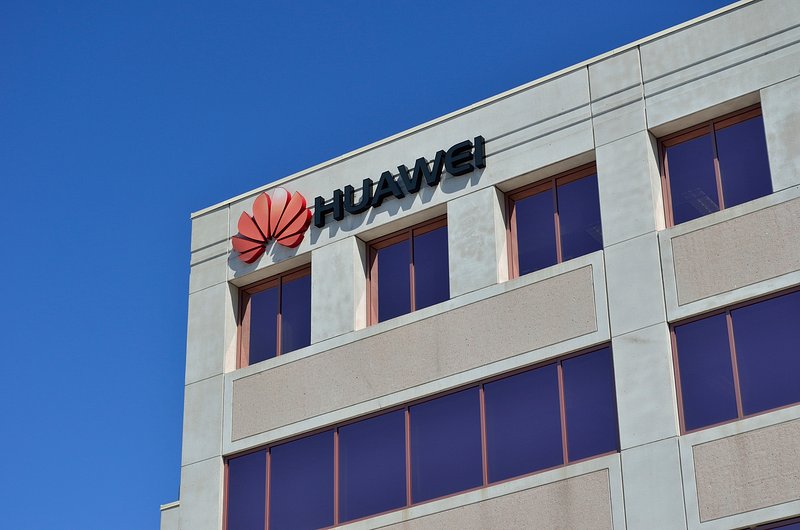
American export controls have demonstrably slowed aspects of China’s technological advancement, but they function more as speed bumps rather than insurmountable barriers. Treating these measures as capable of halting China’s tech development would be a “fool’s errand.” Huawei’s experience illustrates both the effectiveness of these restrictions and China’s determination to overcome them. After being placed on the US entity list during Trump’s first term, which barred American companies and those using US technology from supplying it, Huawei suffered severe business impacts. Being cut off from crucial suppliers like TSMC for advanced chips and Google’s Android ecosystem, the company was forced to pivot toward domestic chip production and alternative operating systems.
Huawei’s first significant post-ban chip, the Kirin 9000s in the 2023 Mate 60 Pro, uses SMIC’s 7nm technology. While this represents an achievement for China’s domestic chip-maker SMIC, it lags considerably behind chips like Apple’s 3nm A18 processor made by TSMC. In semiconductor manufacturing, smaller nanometer values indicate more advanced technology with better power efficiency and computational density. This technological gap creates meaningful performance differences in processing speed and energy consumption.
The software front presented similar challenges. Without access to Google’s Android ecosystem, especially the Play Store, Huawei developed HarmonyOS. Only in 2024 did HarmonyOS Next achieve complete independence from Android code by relying solely on native applications. Despite five years of intensive development, users often describe the experience as functional but incomplete—“a well-constructed house that isn’t furnished”—highlighting that while Huawei’s speed of adaptation is commendable, a significant technological disparity persists.
This dynamic of overcoming imposed constraints extends into China’s AI development. To illustrate, DeepSeek’s limited access to the most advanced Nvidia chips presents a substantial challenge for its AI development. Nevertheless, its parent company High-Flyer still developed the DeepSeek R1 reasoning model, which rivals the most advanced models made by American companies like OpenAI and Anthropic. This demonstrates how Chinese ingenuity can find pathways forward within imposed constraints. The case of Huawei and the “DeepSeek moment” reveals both the effectiveness of export controls in creating tangible obstacles and the creative resilience endemic to Chinese technology firms navigating adversity.
China’s Pragmatic Play: Prioritizing AI Application
Rather than prioritizing breakthroughs in fundamental research that often preoccupies Western tech discourse such as artificial general intelligence (AGI), Chinese firms are advancing rapidly in AI adoption across three key sectors: public administration, consumer technology, and industrial infrastructure.
Local governments are actively embedding AI into daily operations. Examples include Shenzhen officials using DeepSeek to analyze surveillance footage for missing persons and Nanchang police utilizing AI tools to help resolve property disputes in divorce cases. These implementations go beyond pilot programs; they represent systematic integration of AI into governance structures. This governmental embrace provides both a reliable customer base and invaluable real-world testing grounds for emerging AI applications, creating a symbiotic relationship between public institutions and technology developers.
The private sector shows an equal, if not greater, commitment to AI integration. Chinese manufacturers are systematically deploying AI systems to enhance worker safety protocols, increase production line flexibility, and enable sophisticated mass customization, fundamentally reshaping traditional manufacturing paradigms. Investment patterns confirm this strategic priority: mobile and collaborative AI equipment adoption is projected to grow 20% annually through 2027, while the market for AI-powered quality inspection anticipates a remarkable 33% compound annual growth rate from 2022 to 2027. These figures reflect substantial capital allocation towards practical AI implementation.
Investment bank Goldman Sachs forecasts that China will exceed 30% AI adoption across its industries by 2030 and achieve comprehensive implementation within 15 years, promising a fundamental transformation of the economy’s productive capacity. Echoing the adage that amateurs discuss capabilities while experts focus on adoption, China’s emphasis on integration may prove highly consequential in generating tangible economic value as AI transitions from a research frontier to an economic engine.
AI at the Forefront: State Support and Public Acceptance Drive High-Tech Transformation
The “DeepSeek moment” serves as a visible indicator of China’s broader high-tech transformation, signaling unwavering government commitment to fostering innovation through regulation, policy, and direct investment. While China’s overall economy faces significant headwinds, particularly in the real estate sector, high-tech manufacturing continues to expand at a notable pace. This includes production of the “new trio”—electric vehicles, lithium-ion batteries, and solar panels—sectors where China has rapidly established dominant global positions despite initially lagging behind Western incumbents.
Technology represents a growing share of China’s economic output under Beijing’s techno-industrial policy. This strategy explicitly aims to reduce dependence on traditional growth engines like property development and heavy industry while nurturing higher-value technology sectors. According to Bloomberg research, China has achieved leadership in five key technologies, including EV and lithium-ion batteries, high-speed rail, graphene, solar panels, and unarmed aerial vehicles. Building upon these successes, the central government announced the AI Plus initiative in March 2025, which pledges comprehensive support for widespread AI implementation across the economy. Xi’s meeting with leading domestic AI entrepreneurs demonstrates the strategic importance Beijing assigns to artificial intelligence as both an economic driver and a pillar of national security.
This top-level governmental enthusiasm combines powerfully with public receptiveness to technological advancement, creating uniquely favorable conditions for AI adoption. Chinese society has previously demonstrated a remarkable capacity to embrace digital innovations rapidly and at scale, such as the near-ubiquitous adoption of QR code payments. According to a report by the World Economic Forum, 90% of Chinese firms perceive GenAI as essential for future growth, reflecting widespread optimism about the technology’s transformative potential. This cultural and institutional openness provides fertile ground for innovation.
Perhaps the most ambitious product of government support and public tech optimism lies in robotaxi and autonomous driving, where China is aggressively pursuing leadership despite starting behind American pioneers. Apollo Go, Baidu’s self-driving division, reportedly provided nearly 900,000 driverless rides in the second half of 2024—a 26% year-on-year increase.. Furthermore, even entry-level vehicles from mass-market manufacturers like BYD now frequently come equipped with advanced driver assistance systems (ADAS), democratizing access to semi-autonomous features. Analysts project that by 2040, 90% of cars sold in China will feature Level 3 or higher autonomous capabilities, which allows drivers to fully disengage under specific conditions, potentially revolutionizing transportation and logistics.
The Enduring Contest: Resilience Meets Restriction
Further US restrictions on technology exports seem probable as technology remains a key arena for geopolitical competition. While these measures create genuine obstacles—slowing progress and forcing costly workarounds—they are unlikely to halt China’s technological advance indefinitely. China’s strategy focuses on leveraging its strengths: state coordination, rapid implementation, and its vast domestic market enable swift adoption and iteration, potentially allowing China to lead in AI application even while playing catch-up in some areas of AI research.
History shows China is often a formidable second mover, quick at adapting and improving existing technologies, as demonstrated in EVs and solar energy. DeepSeek’s emergence and the subsequent advanced AI models developed by domestic tech giants like Alibaba and ByteDance suggests this pattern will hold in AI. While export controls impose real costs, China’s combination of state backing, market size, engineering talent, and demonstrated resilience ensures continued progress.
The US-China AI competition is a marathon, not a sprint decided by a single breakthrough. The US retains advantages in AI research, advanced chip design and manufacturing, and global talent attraction, fueled by robust private investment. Conversely, China counters with centralized direction and unmatched implementation speed. How these asymmetric strengths play out will shape the technological and geopolitical landscape for decades to come. But discounting China’s capacity to adapt and compete, especially in deploying AI effectively, would be a strategic miscalculation.
Image credits: rawpixel.com
Andy Liao
Andy is a student at the University of Toronto, researching Chinese electric vehicles. He previously consulted for the World Bank on fintech in emerging markets and worked with the IFC analyzing over-indebtedness among women in Sri Lanka. In his free time, Andy enjoys reading and is currently training for a half marathon.
 Sino-Southeast Initiative