
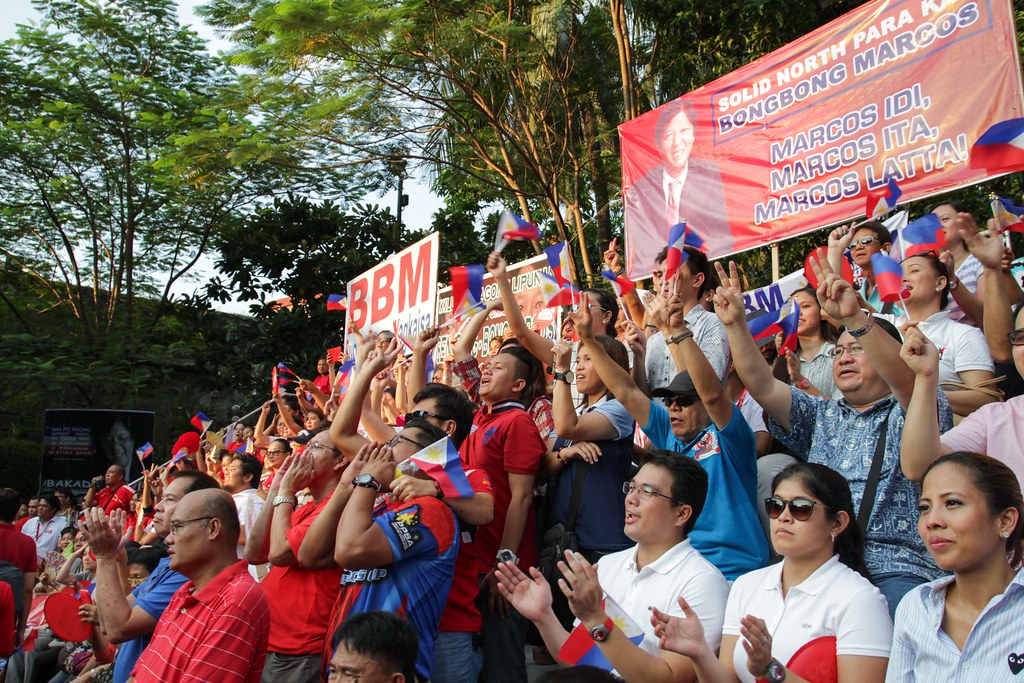
The 2025 Philippine midterm elections, held on May 12, are more than a routine contest for Senate and House seats; the vote is widely seen as a referendum on President Ferdinand Marcos Jr.’s administration. It takes place amid a high-profile rift between Marcos and Vice President Sara Duterte, former allies who are now leading rival factions. Duterte, the daughter of former President Rodrigo Duterte—currently in detention at The Hague awaiting trial over alleged extrajudicial killings during his controversial war on drugs—is simultaneously running for mayor in this election. The election will determine the future alignment of the Philippines between the United States or China, a pivotal decision as Southeast Asia braces for intensifying US-China competition on trade and beyond.
President Marcos’ coalition champions economic liberalization, infrastructure expansion, and investor-friendly reforms. Backed by centrist parties, Marcos’ allies aim to advance key initiatives such as the Maharlika Investment Fund—the nation’s first sovereign wealth fund aimed at mobilizing public funds for infrastructure. In contrast, Vice President Sara Duterte’s camp, rooted in nationalist and populist blocs, pushes for a more protectionist economic model. Her endorsed candidates favor tighter oversight of foreign investors and greater state intervention in sectors like energy, land, and media.
The elections come amidst modest economic growth and external pressures. The Philippine economy expanded by 5.4% in Q1 2025, primarily fueled by a sharp increase in public spending, which rose by 18.7% as the government accelerated infrastructure expenditures ahead of the 45-day spending ban before the midterm election. However, core economic issues such as inflation and food security loom large in voters’ minds, with the current administration rushing to cash in late-stage favors.
The Marcos administration’s last-minute rollout of a ₱20/kilo rice program—originally promised during the 2022 campaign—has dropped prices for consumers, but farmer groups argue that the benefits come at their expense. The administration imposed a price cap and authorized the sale of subsidized National Food Authority (NFA) rice at significantly lower prices. Simultaneously, tariffs on imported rice were reduced from 35% to 15%, squeezing farmers’ margins further, alongside delays in government inputs such as fertilizer and seedlings. Local producers now sell below their production costs—an unwilling sacrifice for the short-term election fortunes of the Marcos administration.
On the global front, the Philippines has remained uniquely shielded from the impact of the new U.S. import tariffs. On one hand, it stands in contrast to regional peers like Vietnam and Thailand, whose export-oriented industrial bases have left them more exposed. The Philippines relies more heavily on services, agriculture, and remittances, rendering it less vulnerable to external trade shocks. On the other, its longstanding alignment with the U.S. pays dividends in a relatively lower 17% rate on critical exports and broad tariff exemptions in high-value sectors like semiconductors and electronics—areas where it stands to gain as global firms seek to reroute production from China and Vietnam.
This election puts the status quo of close U.S. alignment into the spotlight, as China takes center stage in national discourse. President Marcos has leaned into a hawkish stance, denouncing Chinese incursions in the South China Sea and using Vice President Sara Duterte’s silence to draw a contrast with his own pro-U.S. posture on defense. Yet, the landscape is more complex than a simple reaffirmation of old alliances. China remains a key economic player and a potential trade partner. With over 1.7 million Filipinos employed in the thriving business process outsourcing sector and overseas remittances accounting for 9% of GDP, Manila is keenly aware of the economic opportunities tied to Beijing—especially as global trade patterns shift and power dynamics reshuffle.
The outcome of the 2025 midterm elections will define the trajectory for the remainder of President Marcos’ term and beyond. Voters now get a chance to voice their preferences, determining Philippines’ economic future at home and beyond.
Image credits: Allan Kidlat Gomez
Zeynep Selen Akpinar
Selen is an undergraduate student at the University of Toronto, double majoring in Economics and Peace, Conflict & Justice. Originally from Istanbul, Turkey, and an aspiring policymaker, student journalism appears as a throughline in her interdisciplinary academic background. Her undergraduate thesis is on the political economy of the media and competition policy.
 Sino-Southeast Initiative