
Out of three decades of political and economic volatility came a shift in Chinese economic policy in 1978, bringing about a transition into the market economy China is today. The first 15 years of China’s 1978 reforms is a unique story, achieving fundamental economic changes unseen in its authoritarian hierarchical counterparts, without the destruction of existing political system experienced later by the Eastern European states, defying expectations of mutual exclusiveness between economic reforms and authoritarian survival. The impacts of this critical transition remain as China gains economic prominence, and the lessons on incentives it impart is ever more relevant as China attempts another transition emphasizing government guided industrial policy.
The role of institutions in this unique blend of political resilience and economic change is of central interest. Institutions, defined as “humanly devised constraints that shape political and economic interactions”, were central to the economic anaemia and volatility of the first 30 years of the republic, as well as the growth and relative stability of post-reform China. The changing and the unchanging factors in Chinese political institutions brought allocative and productive efficiency boosts during the reforms, capturing the latent potential of the economy and reversing the sluggish Total Factor Productivity (TFP) growth under Mao, seeing the national annual output grow at an average rate of nearly 10 percent from 1978 to 1993.
During the first 15 years of the reforms, a recalibration of incentives within the existing Chinese political institutions brought local initiatives for growth, while the existing incentives for the survival of Chinese political institutions regulated the reforms, cumulating into a gradualist reform approach critical to the successful transformation. Chinese political institutions will be dissected on two levels, the formal and the informal. On formal institutions, the decentralized relations of the central government with local officals, enterprise, and household will be examined, outlining the economic and political incentives brought by the promotions of policy and special programs in conjunction with changes in the assessment criterion for official promotion. On informal institution, the cadre patronage system and its regulation effect on economic reform will be explored, illustrating the political and economic incentives for the inhibition and stimulation of reforms.
Formal Institutional Modification: Rebuilding the Incentive Structure
The People’s Republic of China (PRC) under the Chinese Communist Party (CCP) is built upon an authoritarian and hierarchical formal political structure, remaining largely unchanged since 1949. Each level of authoritative entities answers to their immediate superior, with basic level organizations (低级) reporting to township level (乡级), then county (县级), prefecture (地级), provincial (省级) and the central government (中央). This structure, although theoretically concentrates power to the centre, has great diversification potential in decision making with each level enjoying autonomy provided that the demands and constraints set by their immediate superiors are observed. Thus, the mode of conduct in local level entities depends heavily on what and how the demands and constraints are set by the central authority, making central decisions reverberate throughout the country with a multiplier effect through each level.
The pre-reform central authority ruled increasingly in details, with Soviet style 5-Year-Plans dictating both provincial objectives in terms of industrial and agricultural growth, and provincial operation in terms of revenue and spending, leaving little in local economic incentives. The overarching demands effectively assured a central decision and fiscal monopoly, leaving local officials politically incentivized for central policy execution, inducing growing demands from their inferiors and hence systematic failure. The two major failures of the pre-reform era, The Great Leap Forward and The Cultural Revolution, can both be understood as central attempts to micromanage the localities, one created commune as the direct unit of management for individuals, the other actively deconstructed the formal political structure for further and more direct control of localities by Mao.
The wide conflagration done on the formal hierarchy during the cultural revolution both necessitated reforms for regime survival and yielded a clean slate on which the formal hierarchy can be restored with recalibrated incentives. Departing from an overreaching approach, the early reform central government set a more general objective of economic growth while gradually relaxed political and economic constraints, allowing for local policy experimentation and initiatives. The early reforms leveraged the features of the hierarchical system, effectively decentralized the fiscal policy, responsibilities and decision-making to the localities, focusing on dispersing economic incentives in the form of revenue sharing and altering political incentives by local competition for growth.
Economic Incentives: Revenue Retention through Contracting
Breaking away from the central planning system, the central government ushered in a period of “decentralization of authority and retention of profits” (放权让利), utilizing contracting systems to pump economic incentives throughout the hierarchy, from local government to enterprises to households.
Governmentally, “fiscal contracting” (财政承包制) was enacted in 1980, allowing provincial revenue retention. Provincial governments entered into long term contracts with the central government under fiscal contracting, remitting or receiving a set amount or percentage of the provincial revenue, allowing a significant portion of provincial government to retain marginal revenue in full. The newfound budgetary autonomy encouraged the direct organization and indirect support for local income generating activities, with local officials receiving large cash bonuses for the fulfillment of targets and indicators, ensuring governmental support for local entrepreneurship. Fiscal contracting released the majority of the total government budgetary revenue to the sub-national level while still maintaining the central government’s ability for fiscal extraction and transfer among the provinces, delivering economic incentives to local governments within the existing hierarchical system.
Much like governmental fiscal decentralization, economic incentivization occulted among the State-Owned-Enterprises (SOEs) effectively through contracting, more specifically the implementation of the 1981 Dual Track System (DTS) in conjunction with the 1979 Tax for Profit” (利改税) system. Firms in the DTS operates on both a plan and a market track, fulfilling a planned production quota at set prices according to the contract, and selling the excess at market prices. The central government then in turn extracts revenue with a 10-55 percent income tax rate according to the size of the enterprise, allowing the retention of surplus profit. In the same vein as contractual profit retention for the provincial governments, the DTS effectively raised the marginal revenue retention rate of enterprises so long as they produce over the planed amount, while using the “Tax for Profit” system to maintain central revenue extraction, introducing economic incentives under the existing hierarchical system. Despite revenue and profit erosion from market competition, SOE managers were allowed to keep 50 percent or more of the profit increased over the base figure, incentivizing efficiency gains that dampened the market impact on SOEs.
Contracting extended economic incentives to the household, the basic level of locality, with the Household Responsibility System (HRS). HRS decollectivized farming, allowing the household to make planting decisions and sell crops at a higher price once the low-priced quota corps have been sold to the state. The mechanism works exactly like the governmental and enterprise contracting, with allowance of surplus retention creating higher marginal revenue. The impact of contracting on TFP is very visible in an agrarian China with the HRS estimated to have raised agricultural output by 49 percent, demonstrating most directly the effectiveness and local penetration of economic incentives brough by decentralization.
Political Incentives: A Shift in Assessment Criterion
Unlike economic incentives, formal political incentives were omnipresent since pre-reform, requiring recalibration rather than restructuring. During reform, method of incentivization remained unchanged with career survival and advancement on the line, but the criterion for evaluating local officials changed from party loyalty and policy execution to an inter-province competition for economic growth outcomes, an ideological shift from cronyism to technocracy.
Under the evaluation criterion, provincial official’s promotion and termination presented a strong positive correlation with the provincial economic growth rate, demonstrating the heavy weight the central government placed on economic growth indicators in assessing individual officials. This competency-based approach is accompanied by a reestablishment of formal promotional path, identifying, attracting and supplying young, educated and capable officials to the formal political institutions, feeding the demand of new blood necessitated by the high turnover rate. From 1982-84, the political incentive recalibration saw the fast-tracking promotion of a crop of young officials talented in local economic management, subsequently taking over the elders as the third and fourth generation of leaders.
To earn political reward, local officials had to leverage the newly acquired fiscal autonomy, working creatively under the partially relaxed constraints to outshine other provinces. The resulting effect was an explosion of local experimentation, with the central government adopting successful experiments nationally, strengthening both the formal hierarchical institutions with the uptake of talents and the national economic performance with their effective economic policies. This incentive structure produced some of the most effective economics programs and most effective central leaders, such as the aforementioned HRS in boosting agricultural output and efficiency which brought Zhao Ziyang from Sichuan and Wan Li from Anhui to the central government.
The case of Special Economic Zones (SEZs) demonstrates the effect of political incentive recalibration on local economic experimentation best. The initial four SEZs were initiated by local officials in Guangdong and Fujian with central government approval for free market and trade experimentations, all coastal port cities easily accessible by investors from the economically prosperous Hong Kong, Taiwan and Southeast Asia. SEZs played into the location and human capital strength of the coastal provinces, proving a success in raising both local and central government revenue, while propelling exports to grow by 4 times and FDI to grow by 61 times from 1980 to 90. Local success led to central government adoption, first establishing 14 additional SEZs and further proliferating thereafter, prompting awards of promotions within and beyond the provincial level to those provincial officials involved.
Informal Institution Adaptation: Regulating the Reforms
Parallel to the formal institutional hierarchy is a system of informal institutions of political loyalty, a clientelist CCP cadre patronage system that saw individual leaders rewarding their patrons with investment projects and promotional opportunities, and patrons propelling individual leaders to higher office within the hierarchy, thus building their powerbase within the cadre patronage system by establishing mutual political loyalties. Multiple leaders have built extensive powerbase since the inception of the CCP in 1921, creating a check and balance of power between the leaders during regular times, producing relative societal and economic stability when the informal institutions were in political equilibrium.
The cultural revolution saw the extremes of the cadre patronage system, with Mao’s continuous pursuit of informal personal loyalty boiling over into demands of political radicalism and power exclusivity, inflicting severe damage to the cadre patronage system with the purging of prominent leaders and their patrons throughout the hierarchy, including reform-era power centres of Deng Xiaoping, Chen Yun and Li Xiannian. Post cultural revolution, the cadre patronage system equilibrium was immediately rebuilt with the restoration of side-lined officials to ensure regime stability, then expanded further with the establishments of new patronage recourses to ensure future regime viability, adapting the cadre patronage system in the face of new challenges brought by reforms.
The adapted cadre patronage system acted in effect as a regulator of reforms, with political incentives dampening overzealous reforms that could potentially cause major disruption to patronage resources, while utilizing economic incentives to maintain a sufficient level of local flexibility to stimulate reform necessary to regime survival. The result was a gradualist approach to the reforms, building up the cadre patronage system’s tolerance to reforms while increasing the predictability and stability of the macroeconomic conditions, creating the crucial environment for China’s unique blend of authoritarian resiliency and economic success.
Political Incentives: Regime Stability and Continuity
Economic reform and opening exposes the clientelist Cadre system to significant threats. One, market competition would erase the central government’s control over pricing, allowing market forces to erode the monopoly profits of inefficient SOEs, reducing supply of rents and hence making existing political incentives less attractive. Two, introduction of autonomous income generating entities would allow private economic and political capital accumulation, creating alternate power centers not under central control hence threatening the existing cadre patronage system. The two political consequences presents a potential short-term disruption to the rebuilding of the cadre patronage system, challenging the survival of the regime in its immediate authoritarian and hierarchical form.
In response to the challenges, the central authorities utilized political incentives through the cadre patronage system to moderate the reforms. The more conservative power centers within the hierarchy leveraged their personal network and loyalty to shut down any policy, program or individual they deemed to be overzealous in terms of reforms. Chen Yun, most notably, had the support of military and political leaders in Ye Jianying and Li Xiannian, and the respect of the reformist leaders, giving him the ultimate authority over economic matters. He advocated for the continuation of planning as the dominant mode of the Chinese economy, opposed the accelerating proliferations of reform programs in HRS and resolutely rejecting attempts of full marketization, privatization and foreign opening, successfully delaying full privatization and the joining of WTO to after his death in the second 15 years of the reform.
Contrary to the inhibition of reforms, threats of regime survival also created immediate political incentives for change at the highest level. In wake of the 1976 Tiananmen Incident and a historically high budget deficit, the informal power centres recognized the necessity of market forces and economic incentives in finding a path that balances the yields in economic outcomes to patronage resource degradation. The same leaders who objected to rapid reforms, such as Chen Yun, were instrumental in promoting and implementing the more gradualist, more localized and more agricultural reforms that brought success. Such an approach avoided the political and economic shock of rapid institutional change, while reaping the most gains in capturing the latent potential in agriculture where rents to the central government is already low, guiding 1978–93 into a period of “reform without losers.”
Economic Incentives: Extending Patronage Recourses
Despite the significant artificial delay in large-scale changes, the limited reforms still allowed for immediate opportunities in economic incentive creation through the informal cadre patronage system. The allowance of markets and budgetary autonomy at the local level gave officials flexibility in exchanging political favours to entrepreneurial endeavours for economic gains, whether that’s through official endorsements or low-cost loans, aligning the local economic incentives for officials with the reforms. The process of revenue extraction by local officials also expanded the cadre patronage system by carving out new patronage resources and stabilizing the system by inducting potentially competitive autonomous economic entities into the cadre patronage, eroding future political threats to the system posed by reforms.
The rise of Township and Village Enterprises (TVEs) illustrates this mechanism of economic incentives in producing reform results and reducing threats. TVEs links local government directly with individual entrepreneurship, collectively owned and highly agile, rapidly forming and entering into the market in the localities. TVEs propelled growth in the nonstate sector in early reform, accounting for four-fifth of the nonstate section in terms of output by the end of the first 15 years, growing 20 percentage point on average higher annually than the stagnating state sector, with most of the difference accounted by the higher TFP of TVEs.
TVEs’ rise in early reform is inseparable to informal economic incentives with decentralization encouraging the direct organization and indirect support by local officials for TVEs in two ways. First, the economic incentives demonstrated in Section 2.1 pushed local governments to pursue income generating ventures using their informal political capital, supporting TVEs for its direct effect on local economic performances. Second, the collectively (local government) owned nature of TVEs gave local officials a monopoly over property rights, inducing profit sharing in exchange for the legitimization of pseudo-collective entrepreneurship. Private entrepreneurs often collaborated with local officials to maintain a publicly owned facade for their ventures, together with local officials’ own ventures made the vast majority of new marketized businesses under government control. The twin economic incentives made TVEs both a channel through which private venture flourished without property rights, and a tool through which private entrepreneurship was incorporated into the cadre patronage, achieving a dual effect of economic growth and cadre patronage strengthening unique to China.
Political Institutions and Economic Outcomes: A Lesson on Incentives
The first 15 years of “Reform and Opening-Up” existed in the shadow of pre-reform China, exhibiting more continuity than iconoclasm in terms of political leadership and institutional structure, seeking to maximize economic outcome with minimal political disruption. This aim resulted in the sustaining, leveraging and strengthening of the existing formal and informal political institutions, translating into a gradualist approach of economic reform through the maintenance of a stable and predictable macroeconomic environment and the introduction of microeconomic incentives. The reforms fundamentally changed the modus operandi of local institutions and officials, aligning their interests with the reforms by reshaping political incentives and harnessing the untapped economic incentives, making localities the foremost driver of economic growth from 1978 to 1993.
While the intentionality of the gradualist approach to reforms is debatable, the effectiveness of the reforms is not. The rapid economic growth outcomes in the first 15 years of the reforms were demonstrated to be within the capacities of the authoritarian hierarchical institutions of the PRC, with said institutions acting largely complementarily rather than substitutionally to economic performance. The Chinese experience further showed the importance of fundamental factors such as incentives, market forces and predictability in capturing latent economic efficiency, paving way for the much more transformative economic and political changes (in outcome) during the second 15 years from 1993 to 2008.
Just as the first 15 years of “Reform and Opening-Up” grew out of the pre-reform planned economy, the revival of central government guidance in the 2020s will be bound to grow out of the largely market-led economy, aiming to extract global competitiveness on critical areas of global competition beyond market capacity. As China attempts to defy expectations again in combining market efficiency and government intervention, incentives will remain a dictating factor in the successful guidance of industries and arrangement of resources for outsized results.
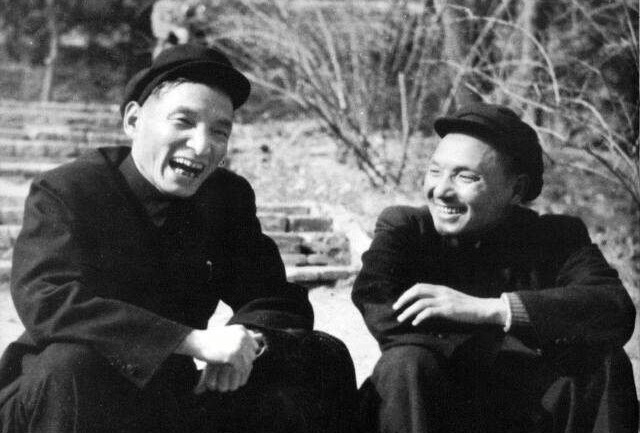
Image credits: 侯波, Public Domain
Ian Wan
Ian, a Beijing native, will be joining J.P. Morgan’s Global Corporate Banking division later this year. He brings experience from Tencent (腾讯), Mackenzie Investments and academic institutions across China and Canada, holding a deep interest in the Chinese economy, markets, and society. Ian enjoys tutoring and teaching undergraduates at the University of Toronto’s Department of Economics. Ian loves auctions and barbecues.
 Sino-Southeast Initiative