
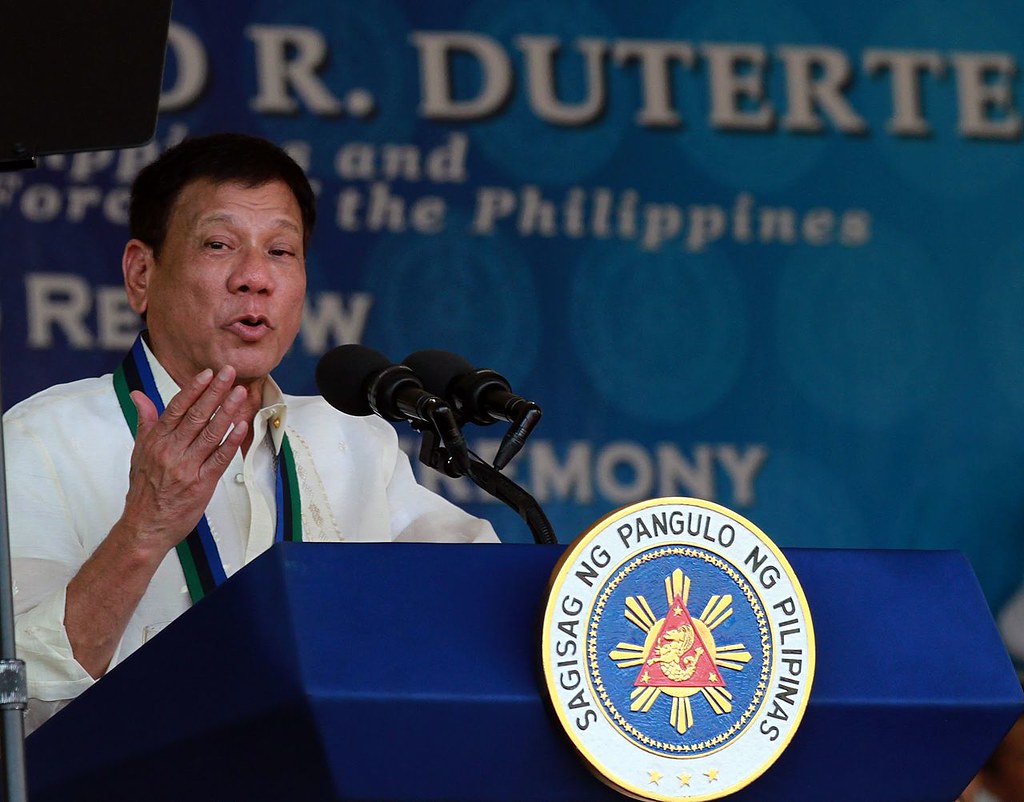
The escalating rivalry between former President Rodrigo Duterte and incumbent President Ferdinand Marcos Jr. has evolved into a defining moment for Philippine politics and foreign policy. As the country grapples with the fallout of Duterte’s arrest and deepening political polarization ahead of the 2028 presidential race, the contest between the Duterte and Marcos factions reflects broader questions about the Philippines’ strategic alignment between the United States and China. With dynastic politics, national security, and foreign influence converging, the outcome of this internal power struggle will play a critical role in shaping the country’s future trajectory in an increasingly contested Indo-Pacific region.
After former Philippine President Rodrigo Duterte was arrested in Manila on March 11 and subsequently taken into custody by the International Criminal Court (ICC), the Duterte political faction and its supporters have organized motorcades, prayer rallies, and public demonstrations to voice their protests. Duterte, a controversial yet enduringly popular figure, spearheaded a violent anti-drug campaign that resulted in thousands of extrajudicial killings during his 2016 – 2022 term in office. This development unfolded amid a politically charged atmosphere preceding the May 12 midterm elections, where rival factions from the Marcos and Duterte dynasties contended to fill over 18,200 government offices, including twelve of the twenty-four Senate seats and all 317 seats in the House of Representatives, both of which are instrumental in determining the trajectory of national policy.
But this is not just a legal reckoning—it is a full-blown political war. Once allied during the 2022 general election, the Marcos and Duterte families are now locked in a high-stakes battle for control over the Philippine political narrative. The rupture between President Ferdinand “Bongbong” Marcos Jr. and former President Duterte has rapidly escalated into a defining conflict ahead of the midterms, with foreign policy, dynastic pride, and national identity all hanging in the balance.
The short-lived partnership between Marcos Jr. and Sara Duterte in the 2022 presidential elections is a prime example of where the current tensions lie. Term-limited in 2022, Rodrigo Duterte had passed the torch to his daughter Sara, who won the vice presidency alongside Marcos Jr. This alliance was initially seen as a marriage of convenience between northern and southern power bases, uniting two populist dynasties to consolidate political control. However, tensions soon emerged. Disagreements over appointments and allegations of financial mismanagement—particularly Sara Duterte’s use of confidential and intelligence funds for a Southeast Asian educational bloc—contributed to a widening rift. Initially united on the campaign trail, the two camps quickly diverged over political control, access to state resources, and contrasting visions for the country’s foreign policy orientation.
By 2024, the political feud had turned deeply personal and public. Sara Duterte drew national condemnation for threatening, via livestream, to assassinate President Marcos Jr. and his family, including House Speaker Martin Romualdez, the first cousin of Marcos. In response, an impeachment drive was launched by Marcos’s eldest son, Representative Sandro Marcos, who framed the vice president’s remarks as unfit for someone in high office. This familial clash has since become a proxy for broader ideological and policy disputes, especially with regard to foreign policy.
As the feud intensifies, it mirrors—and influences—the nation’s foreign policy orientation amid growing tensions between China and the United States.
While the leadership of Rodrigo Duterte saw elevated ties with China, the Marcos administration has moved to strengthen the country’s longstanding partnership with the United States. This contest between the Marcos and Duterte factions exemplifies the impact the China–US rivalry is having on Southeast Asia: the rising trend of domestic polarization over foreign policy in Indo-Pacific swing states. This development highlights the imperative for the United States–and the broader coalition of democratic allies it leads–to more carefully navigate how its international engagements shape the internal political environments of key allies and partners in the region.
With three years remaining in President Marcos Jr.’s term, the midterm elections serve as a critical “litmus test” of the administration’s popularity, especially as Beijing’s acts have become increasingly assertive in the South China Sea disputes. Should President Marcos Jr. succeed in consolidating domestic political support, it is likely that his administration would maintain—if not intensify—cooperation with the United States and key regional allies, including Australia, Japan, and South Korea, in response to China’s growing assertiveness in the South China Sea. Conversely, if the Duterte faction is able to mobilize broader public backing and sustain political momentum leading into the 2028 presidential election, the prospect of a second Sara Duterte (vice) presidency could signal a reorientation of Philippine foreign policy toward closer alignment with Beijing.
Keeping it in the Family
The escalating rivalry between the Marcos and Duterte families reflects the enduring nature of dynastic politics in the Philippines, where elite families maintain vast regional networks of patronage, clientelism, and coercive influence to compete for national power. Ferdinand Marcos Jr., son of the ousted dictator Ferdinand Marcos Sr., who was removed from power during the 1986 People Power Revolution, successfully restored his family’s political standing decades later. Despite years in exile, the Marcoses retained significant influence, wealth, and loyal support, particularly in northern provinces such as the Ilocos Region, Cordillera Administrative Region, and the Cagayan Valley. Marcos Jr.’s landslide victory in the 2022 election marked the full political comeback of the family. His alliance with the outgoing President Duterte initially raised concerns in Washington, as it suggested the possible continuation of Duterte’s China-friendly and US-skeptical foreign policy stance.
Alleviating these concerns in Washington, Marcos Jr. has sought to restore the international standing of his family and the Philippine state by reversing many of his predecessor’s controversial policies. He has distanced himself from Duterte-era authoritarian tactics, particularly the state-sponsored violence against suspected criminals and Duterte’s confrontational stance toward civil society and media institutions. In response to rising tensions in the South China Sea, Marcos shifted the Philippines’ foreign policy back toward its traditional security partners.
From Beijing’s perspective, this shift was provocative. Chinese officials have condemned Marcos’s rhetoric, especially his invocation of the 2016 arbitral ruling and the United Nations Convention on the Law of the Sea (UNCLOS) during his address at the Shangri-La Dialogue. In statements issued by the Ministry of Foreign Affairs, China has accused the Philippines of “frequent trespassing,” “maritime provocations,” and of violating bilateral understandings and the Declaration on the Conduct of Parties in the South China Sea (DOC). Moreover, Beijing views Manila’s alignment with the United States as part of a broader pattern of “bloc confrontation,” blaming external powers for stoking regional instability. As a result, China has questioned whether foreign policy under Marcos truly serves the Philippines’ national interest or simply does “the bidding of the United States.” These tensions have reinforced Beijing’s narrative that it is acting with restraint and responsibility, while portraying the Philippines as a destabilizing actor manipulated by outside powers.
Amid external state influences and questioning, the May 2025 midterm elections unfolded under conditions typical of Philippine politics: incumbents leveraging state resources, command votes (bloc voting controlled by local political patrons), and regional warlord alliances to bolster their electoral advantage. Marcos Jr. was widely expected to perform well. Historically, midterm elections have favoured sitting presidents, owing in part to the Philippines’ permissive campaign finance rules and entrenched patronage networks. In 2019, then-President Duterte exemplified this by reportedly threatening local officials with inclusion on his so-called “narcopoliticians” list—an implicit death sentence—if they failed to support administration candidates. The result: a Senate sweep with no opposition winners, a first in modern Philippine history.
Yet despite these structural advantages, the 2025 midterms did not deliver a decisive victory for Marcos. His allied candidates underperformed, while the detained Duterte managed to maintain his appeal, winning the mayoral race in his home city. Compounding this uncertainty, opposition liberals also staged a modest resurgence, suggesting that the electorate remains volatile and disenchanted with both major dynasties.
The Age Old Question: US or China?
During Rodrigo Duterte’s presidency, the Philippines shifted away from its historically strong ties with the United States, which had been anchored in the 1951 Mutual Defense Treaty that formalized their long-standing military alliance. While the formal alliance remained intact, Duterte frequently criticized it and sought closer relations with China. In contrast to the prevailing pro-US, anti-China sentiment among Filipinos, he downplayed Beijing’s provocations in the South China Sea and actively pursued Chinese investment. His repeated threats to terminate the Visiting Forces Agreement and suspend joint military drills with the US alarmed the country’s defense and security establishment, which remained firmly aligned with Washington.
On the other end, Marcos Jr. criticized Duterte’s connections to controversial figures, notably Pastor Apollo Quiboloy, a former Duterte ally currently detained on sex and human trafficking charges. He condemned the Duterte faction’s support for the Philippine Offshore Gaming Operators (POGOs), online casinos that primarily target players in mainland China, where gambling is illegal. These operators have increasingly been linked to criminal activities, including telephone scams, human trafficking, and sexual harassment.
Moreover, Marcos Jr. has positioned himself as a nationalist defender against Chinese encroachments, accusing Duterte-aligned candidates of being proxies for Beijing. “None of them claps for China and is even happy whenever we are being water cannoned, our Coast Guard rammed, fishermen blocked, their catches stolen, and our islands retaken as their own territory,” he proclaimed, referencing the Duterte government’s muted response to China’s aggressive maneuvers in the South China Sea.
This toughened rhetoric coincides with a broader campaign to counter Chinese influence operations in the Philippines. Over the past months, Philippine intelligence agencies have arrested several Chinese nationals on espionage charges, apprehending individuals allegedly using drones and military-grade cameras disguised as civilian CCTV to conduct surveillance on sensitive military installations. Legislative inquiries have also targeted suspected pro-China propagandists, highlighting Manila’s intensifying crackdown on Beijing’s covert operations. Security officials suggest these apprehensions represent only “the tip of the iceberg” in terms of forthcoming suppression operations.
Thus, the federal election of Ferdinand Marcos Jr. in 2022 heralded a full restoration of the US-Philippine alliance. Marcos swiftly abandoned Duterte’s China-leaning policies and enthusiastically embraced Washington. In 2023, the two countries expanded the Enhanced Defense Cooperation Agreement (EDCA), a cornerstone of US strategy in the Indo-Pacific, especially south of Taiwan. This momentum carried into 2024 with the inaugural US-Japan-Philippines trilateral summit in Washington, which unveiled initiatives such as the Luzon Economic Corridor and reiterated the commitments of both the Biden and Trump administrations to the Mutual Defense Treaty.
Despite some economic friction—such as the Trump administration’s imposition of a 17 percent tariff on Philippine goods as part of its global reciprocal tariff policy, which has since been suspended in favor of a 10 percent baseline rate—security ties between the US and the Philippines have remained robust. The visit of US Defense Secretary Pete Hegseth to Manila in March further solidified military cooperation, culminating in the sale of 20 F-16 fighter jets to the Philippine Air Force.
Beyond Washington, Marcos has broadened the Philippines’ security partnerships with other regional, Washington-aligned allies. He signed a reciprocal access agreement with Japan, elevated defense cooperation with Australia, and acquired India’s BrahMos cruise missile system, collectively strengthening the country’s deterrence posture. Manila also joined a new quadrilateral security initiative, informally dubbed “the Squad,” and consented to hosting US intermediate-range ballistic missiles—moves that have further strained relations with Beijing.
Indeed, Manila’s rapport with Beijing has deteriorated to its lowest ebb in years. Marcos has openly challenged China’s expansive claims in the South China Sea and urged ASEAN nations to adopt a firmer collective stance on maritime security. In retaliation, China has escalated coercive maritime tactics, including water cannon deployments and ramming incidents near disputed features like the Second Thomas Shoal, turning encounters at sea into near-routine flashpoints.
Chinese officials now frequently accuse the Philippines of fomenting regional tensions, interfering in Taiwan primarily by allowing expanded U.S. military access to bases near the Taiwan Strait, and violating an alleged “gentlemen’s agreement” purportedly brokered with Duterte in 2016 to maintain the status quo over Ayungin Shoal. Meanwhile, Beijing-backed disinformation campaigns and covert intelligence operations continue to permeate Philippine society. The Chinese Communist Party’s United Front Work Department has weaponized influence through Chinese-Filipino business groups reliant on trade with China, exploiting socio-economic dependencies to extend Beijing’s reach.
In a symbolic gesture, Xi Jinping’s 2023 welcoming of Duterte to Beijing reaffirmed China’s preference for the former president’s more accommodating policies. Chinese state media lauded Duterte’s “strategic choice” to strengthen Sino-Philippine ties. Following Duterte’s indictment by the ICC in March, Beijing’s foreign ministry implicitly condemned the prosecution and dismissed rumors of Duterte seeking asylum in Hong Kong.
Within the Philippines, this geopolitical contest between Marcos Jr. and the Dutertes has intensified into an acrimonious feud. Since Marcos purged the Dutertes from the National Security Council—a body traditionally including the vice president and former presidents—Duterte-aligned candidates have faced increasing political headwinds, exacerbated by allegations of being Beijing’s proxies amid rising anti-China sentiment.
Beyond electoral politics, Philippine authorities are intensifying efforts to revise antiquated espionage and treason laws to address the evolving, hybrid nature of intelligence operations—particularly the challenges posed by disinformation and covert influence operations. Intelligence sharing with key allies such as the United States and Japan has deepened, enabling Manila to mount a more effective response to Chinese malign influence.
Complementing these challenges is the proliferation of Beijing-sponsored troll farms and social media influencers that disseminate disinformation to fragment Philippine society and undermine consensus on national sovereignty issues. A recent AidData study revealed that up to 10,000 fake social media accounts were operated by China-based elements aiming to sow political division and weaken unified resistance to Chinese maritime assertiveness.
“Game of Thrones”
The future of Philippine foreign policy—particularly its position between the United States and China—will hinge largely on the outcome of its domestic political developments. While international relations theory often treats states as cohesive, rational actors, the reality in many Indo-Pacific countries is more fragmented. In practice, foreign policy is shaped not only by national interests but also by the preferences, alliances, and incentives of competing domestic factions. In Southeast Asia, this has led to a pattern of hedging, where states maintain relationships with multiple powers to maximize strategic flexibility. As global competition intensifies in a multipolar context, these domestic dynamics take on greater significance.
The dominance of political dynasties continues to influence governance, with recent studies showing that around 80 percent of candidates in the 2025 elections are linked to entrenched family networks. Critics such as Opposition Senator De Lima argue that this system fosters impunity, corruption, and a persistent divide between the political elite and the broader population. At the same time, public frustration with the ongoing rivalry between the country’s most powerful families appears to be growing.
As the country navigates this volatile political landscape, the direction of its foreign alignment may ultimately depend less on abstract national interest than on which faction prevails in the domestic contest for power.
Image credits: Wikimedia Commons / Prachatai via Flickr
Alice Quan
Alice is a student at the University of Toronto specializing in international security, with a particular focus on military and intelligence communities. She has worked with the G7 and G20 Research Groups and is currently conducting research for the Plakhov Group while also serving as an editor for academic journals. Additionally, she collaborates with her professor on the International Issues Discussion Series. Outside of academia, Alice enjoys playing badminton and making bad jokes.
 Sino-Southeast Initiative