
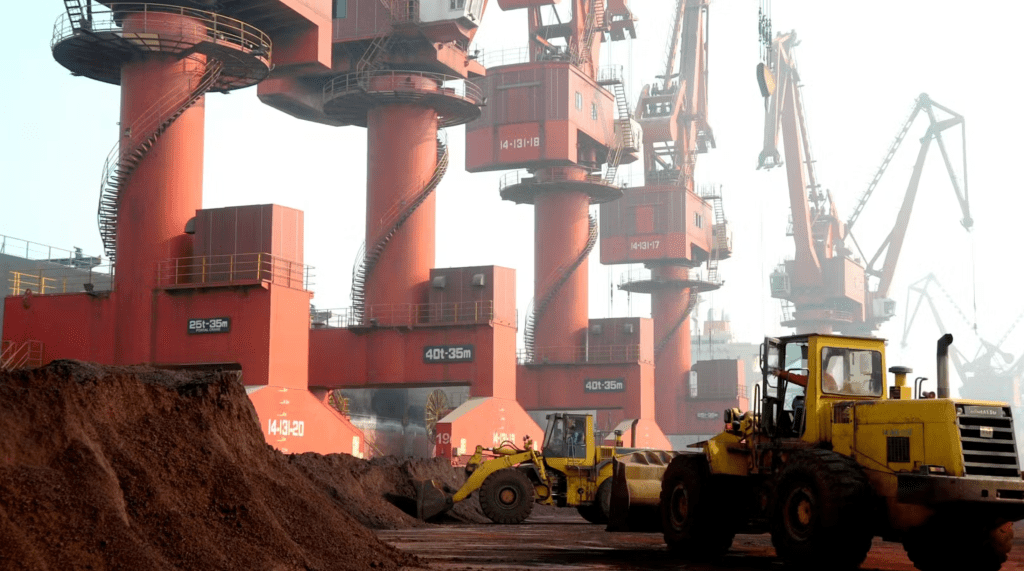
On April 4, 2025, China’s Ministry of Commerce imposed new licensing requirements on exports of seven rare earth elements (REEs) and their associated products, including permanent magnets. While not an outright ban, this move adds regulatory friction to the global supply of critical materials such as samarium, gadolinium, terbium, dysprosium, lutetium, scandium, and yttrium—inputs integral to advanced technologies spanning defense, aerospace, renewable energy, and consumer electronics.
These licensing rules are widely interpreted as a calibrated political response to the United States’ latest round of tariff increases on Chinese imports, part of an intensifying trade and technology confrontation between the two superpowers. Although the export controls are technically non-discriminatory and apply to all countries, the timing, scope, and strategic context indicate that they are directed primarily at the United States and its allies, which remain deeply reliant on Chinese rare earths.
Rare Earths and National Security Dependencies
Rare earth elements, particularly the heavier varieties (HREEs), are critical inputs in defense and dual-use technologies. Their distinctive magnetic, thermal, and conductive properties make them indispensable in the manufacture of precision-guided munitions, satellite systems, jet engines, radar systems, hypersonics, and stealth technologies.
China’s current control over approximately 60 percent of global rare earth production and 90 percent of processing stems from a calculated long-term strategy. By overpaying for acquisitions and centralizing midstream processing within its borders, Beijing has cornered a critical segment of the global value chain. Recent examples include Shenghe Resources’ 2025 acquisition of Australia-based Peak Rare Earths’ Tanzanian project at a 200 percent premium—a move indicative of the extent to which Chinese firms will go to maintain global influence.
The implications of this dominance are profound. Rare earths such as neodymium, praseodymium, dysprosium, and terbium are essential to a vast array of military platforms including F-35 fighter jets, Arleigh Burke–class destroyers, and Virginia-class submarines, each of which relies on thousands of pounds of REEs. Civilian applications range from medical imaging technologies and electric vehicles to smartphones and wind turbines. This cross-sector dependence makes any disruption in rare earth supply chains deeply consequential.
Crucially, China’s dominance extends beyond raw material extraction. While it produces the vast majority of REEs globally, it also controls nearly the entire capacity for separating and refining heavy rare earths—processes that are technologically demanding, environmentally intensive, and capital-heavy. As of 2025, China remains the only country capable of refining heavy REEs at scale, controlling approximately 99% of global separation and oxide production. This end-to-end command of the supply chain grants Beijing both economic leverage and strategic insulation.
Supply Chain Risk: US Industry Exposure
The United States remains heavily exposed to these supply-side vulnerabilities. Despite having abundant REE reserves—particularly at Mountain Pass in California—decades of offshoring and underinvestment have left the US dependent on Chinese refining and manufacturing. MP Materials, which operates the Mountain Pass mine, ships nearly all of its output to China for final separation and magnet production. The facility produces light REE (LREE) concentrates, such as neodymium-praseodymium (NdPr) oxide, but lacks in-house capabilities for HREE refinement.
Other domestic ventures remain in early stages. USA Rare Earth’s Round Top project in Texas has begun pilot production of dysprosium and terbium oxides, but its full commercial ramp-up is not expected until 2027. Phoenix Tailings, a Massachusetts-based startup, currently processes about 40 tons annually and aims to scale to 4,000 tons by 2027 through magnet recycling and refining. These volumes remain marginal compared to Chinese output, which exceeds 300,000 tons of NdFeB (neodymium-iron-boron) magnets annually.
Moreover, no US-based firm has yet achieved commercial-scale heavy REE separation. The technical complexity of the solvent extraction process, combined with stringent environmental regulations, has deterred investment and innovation. As a result, critical defense contractors—such as Lockheed Martin, RTX (formerly Raytheon), Northrop Grumman, and Boeing—remain reliant on a fragile international supply chain with a Chinese bottleneck at its core.
International Alternatives
Outside the United States, a handful of countries have begun scaling rare earth production, though few have reached commercial maturity. Australia’s Lynas Rare Earths remains the largest non-Chinese producer and is constructing a US-funded separation facility in Texas to process both light and heavy REEs. However, its raw materials are sourced from Mount Weld in Western Australia and shipped for partial processing in Malaysia, where it has faced local political resistance.
Brazil’s Serra Verde project has entered initial production, focusing on dysprosium and terbium, but still relies on Chinese facilities for final separation. In Vietnam and South Africa, promising geological deposits are hindered by a lack of infrastructure and capital. Myanmar and Laos, nominally outside of China, serve as de facto extensions of its supply network due to Chinese ownership and refining dependency.
The European Union has launched its own critical raw materials strategy, emphasizing the development of strategic partnerships with resource-rich states and the scaling of magnet recycling. However, most efforts remain in the planning phase. Japan and South Korea possess niche processing capabilities, but face similar upstream dependence and limited output capacity.
Ultimately, China’s rare earth dominance is not merely a function of geology but the result of sustained industrial policy. Through subsidies, state-guided investment, and lax environmental standards, China has systematically undercut global competitors and constructed a vertically integrated supply chain that remains resilient to short-term disruption. Moreover, the 2023 export ban on REE processing technology has made replication of this model more difficult for foreign rivals.
Policy Response and Long-Term Risks
In the wake of China’s 2025 licensing measures, US policymakers face renewed pressure to close the strategic gap in critical mineral supply chains. Yet the challenges are formidable. Domestic separation and magnet production require years of investment, permitting reform, and workforce development. A full end-to-end supply chain—from mine to magnet—will require years of investment, decades of sustained coordination across federal agencies, private industry, and international allies.
Defense acquisition policies may also require revision. Traditional cost-optimization frameworks have favored sourcing from global suppliers, but the current strategic environment demands a shift toward resilience and redundancy. The Pentagon’s 2024 Defense Industrial Base Strategy acknowledged this tension, calling for greater vertical integration and onshoring in critical sectors, but implementation remains uneven. This is in line with a broader geopolitical reorientation of supply chains, where security considerations—rather than cost-efficiency alone—are becoming a central organizing principle across sectors.
One promising development is the emerging bipartisan consensus around critical mineral security. Congressional support for expanding the National Defense Stockpile, streamlining environmental reviews for REE projects, and funding early-stage R&D has grown in recent months. However, such efforts will take time to bear fruit. Until domestic processing capacity is fully operational, the US remains vulnerable to continued supply disruptions and coercive leverage from Beijing.
Beyond Economics: Rare Earths as a Geostrategic Tool
China’s latest licensing move reflects a broader strategic shift: the use of economic instruments as tools of geopolitical signaling and coercion. By targeting materials with low substitutability and high military relevance, Beijing aims to impose real costs on US defense readiness and industrial competitiveness. Importantly, this is done without resorting to conventional escalation, enabling China to exercise leverage while maintaining plausible deniability.
This tactic is not new. In 2010, China temporarily halted REE exports to Japan during a territorial dispute, causing prices to spike and exposing global vulnerabilities. However, Beijing’s 2025 move is more sophisticated. By introducing administrative licensing rather than imposing an outright ban, it complicates attribution, diffuses international pushback, and allows Beijing to calibrate pressure on a case-by-case basis.
Such actions reinforce a key lesson of great power competition in the 21st century: geopolitical power increasingly flows through chokepoints in supply chains, not just through arms or alliances. In a world where materials like dysprosium and neodymium enable technological superiority, control over their production becomes a source of strategic influence.
Conclusion: The Logic of Scarcity
China’s April 2025 export licensing requirements for rare earths represent more than a tit-for-tat trade maneuver. They constitute a strategic use of industrial leverage to contest US technological and military primacy. By constraining access to inputs essential for defense innovation and deterrence, Beijing signals its capacity—and willingness—to impose asymmetric costs in response to economic or geopolitical pressure.
For the United States, the episode underscores the fragility of current industrial ecosystems and the limits of a just-in-time, globally distributed manufacturing model in an era of rivalry. While Washington and Beijing have struck arrangements to maintain a flow of raw materials—blunting some immediate risks to U.S. industry—many allies, particularly in Europe, remain exposed without similar guarantees. This uneven access risks fracturing allied supply chain resilience, leaving partners more susceptible to Chinese coercion even as the U.S. begins to secure partial insulation.
The solution will not come from short-term substitutes or emergency stockpiles alone. What is needed is a sustained, whole-of-government approach to rebuilding critical supply chains, supported by targeted alliances, industrial policy, and technological innovation. The age of strategic denial is underway. In it, control over the raw materials of modern power—metals, minerals, and magnets—may matter as much as missiles or markets. Rare earths, once relegated to obscure corners of commodity markets, are now at the center of a new geoeconomic frontier.
Image credits: Reuters
Alice Quan
Alice is a student at the University of Toronto specializing in international security, with a particular focus on military and intelligence communities. She has worked with the G7 and G20 Research Groups and is currently conducting research for the Plakhov Group while also serving as an editor for academic journals. Additionally, she collaborates with her professor on the International Issues Discussion Series. Outside of academia, Alice enjoys playing badminton and making bad jokes.
 Sino-Southeast Initiative