
Modern Chinese censorship and surveillance do not rely on overt coercion but instead operate by constantly reminding citizens that what they say online is never private. While violence through physical coercion is rare, knowledge of its possibility is enough to instill caution. Living under such an unspoken threat fosters a constant state of uncertainty, where the absence of explicit rules or directives compels individuals to engage in self-censorship as a cautious and rational means of self-preservation.
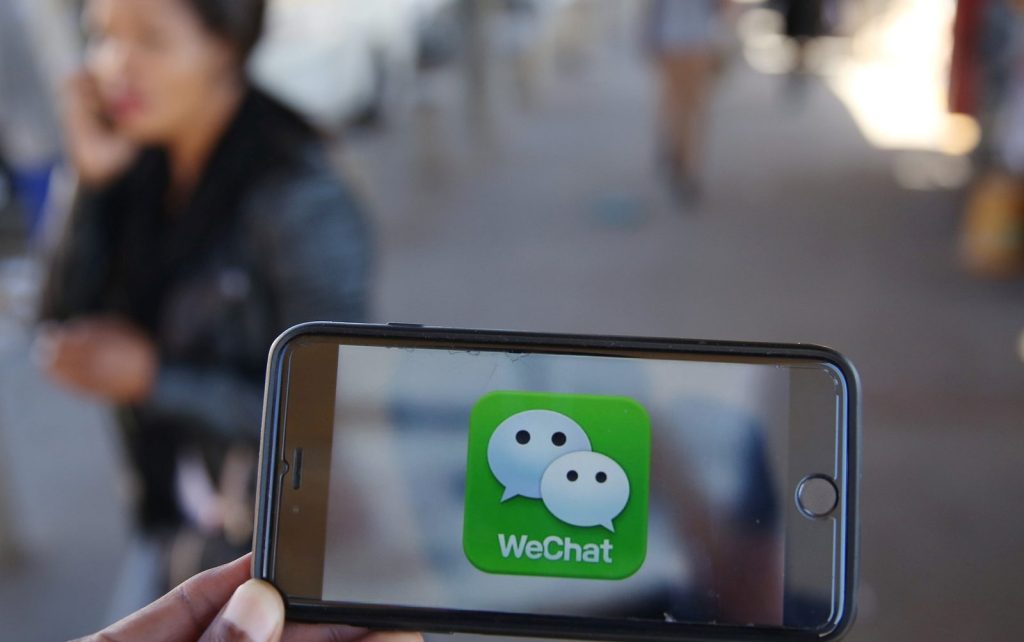
Online blogging, private messaging, payment and even mini-games: one app developed by Tencent Holdings in 2011 encompasses it all. WeChat is deeply rooted in Chinese interactions both on and offline. Boasting over 1.2B users in a country with a population of 1.4B, it has become an essential and irreplaceable aspect of everyday interaction. While this demonstrates China’s success in developing its social media ecosystem, the integration of such platforms into nearly every aspect of a citizen’s life has also laid the groundwork for its thriving surveillance and censorship apparatus–illustrated by WeChat’s monitoring of private text, which persists despite international criticism. To illustrate, the opposition against this system is particularly strong in the United States, where the White House has cited cyberattacks on the Office of Personnel Management as a justification for retaliation, such as a $100M project in support of anti-censorship technology aimed at helping Chinese netizens circumvent the firewall. Yet despite these attempts, China’s ability to conjure a narrative of national protection, whilst utilizing the international community and profiting from institutionalized fear within its citizens, has led to a robust apparatus of modern surveillance and censorship that continues to prevail today. This is because China’s censorship system functions less as an overt restriction on speech and more as a decentralized mechanism of behavioural governance, one that sustains compliance through ambiguity and self-regulation.
Freedom of Speech but not of Consequence: Censorship as a Form of Protection
What is often overlooked in the long list of litanies against the lack of freedom of expression in China is the fact that its own constitution–specifically Article 35–does in fact guarantee the freedoms of speech and the press. While a seemingly contradictory statement by the government considering the known reality pertaining to the prevalence of heavy censorship, it is important to note that the workings of filtering in the daily lives of citizens online in China is not directly done by the Chinese Communist Party (CCP) itself.
To illustrate, there are three layers to the filtering web for Chinese internet censorship. The first is overseen by the Ministry of Information Industry (MII), which creates policies about what is to be censored with minimal input from government and public security institutions. Second, the physical access to the internet is provided by nine state-licensed Internet Access Providers (IAP) to which an individual can connect their router, both of which come with their own ‘filtering’ capabilities. The third step targets Internet Content Providers (ICPs), organizations or individuals who provide publicly available content, such as news, entertainment, or commercial websites. In order for ICPs to obtain and keep an operation license, they must take a “Public Pledge on Self-discipline for the Chinese Internet Industry” that obligates them to censor content based on a list provided by the MII (such as topics about borders and oppositions to Mao Zedong Thought). Their compliance, therefore, puts the responsibility and liability of speech violations on the companies themselves, particularly since such lists are ambiguous and the interpretations and methods of censorship are left for companies to decode by themselves. This ambiguity is important as it leads companies to lean towards the side of caution when it comes to interpreting whether something is a threat to national security, as the responsibility of information control has been pushed onto them.
In addition to the lists, China has been creating a narrative that any censorship or rights violations in this regard are for the betterment of national security. For instance, legislation such as the Cybersecurity Law (2017) was created to “safeguard national cyberspace sovereignty” and contains vague terms such as the ban on speech that “must not incite subversion of national sovereignty… incite separatism, [and] break national unity.” This means that citizens must determine for themselves whether what they say–both online and offline–might be interpreted as a threat to “national unity.” As a result, many choose to self-censor, even in the absence of direct government coercion, because it is the safest option. This phenomenon is known as the chilling effect, where individuals modify their behaviour because they know they are being surveilled and fear potential consequences—not only detention, but also public punishments such as televised confessions, exemplified by the case of former National Energy Administration director Liu Tienen.
Self-censorship as a deliberate outcome of China’s monitoring scheme serves two functions. For one, it disciplines individual behaviour and reinforces the legitimacy of the state’s claim to safeguard unity against internal dissent and external influence. Second, it allows Chinese censorship to operate less as an assault on freedom of expression and more as an instrument of security, maintaining public order through psychological compliance in companies and the individual rather than violent coercive suppression.
This is a working reality that cannot exist in countries like the United States, whose citizens generally are well versed in their rights and freedoms and have robust protections regarding their free speech, such as the First Amendment. Furthermore, the rule of law in the US, where the constitution remains above all else, is not as practiced in China where everything is subordinate to the party, including the constitution and the judiciary. Through this overhanging threat of conviction, Chinese citizens and companies, despite holding formal Article 35 rights, have to decode areas of ambiguity about what will or will not be considered a threat to national unity and security. Therefore, censorship is not deemed an invasive or restrictive force, but rather a necessity for protecting “Chinese unity.” By creating this guise of protection, China has successfully made self-censorship into a rational choice rather than an irrational infringement on rights. It thus reduces the need for overt repression and reinforces a sense of collective responsibility aligned with the Party’s narrative of ‘protection.’ Most importantly, China has managed to achieve this without depriving its citizens of social media; instead, it has developed a platform that is dynamic yet tightly controlled. Such a reality is therefore less harsh than a covert ban on expression and lowers the probability of domestic unrest.
How the International Community Fortifies China’s Censorship and Surveillance Apparatus
Since emerging as a major cyber power over the past few decades, it is unsurprising that China has made cyber sovereignty a central priority amid the global rise of digitization.
Although social media may be viewed as a form of liberating technology due to its ability to break geographical constraints on discourse and knowledge, this line of reasoning is largely supported by a Western narrative of a global and open internet. In reality, this system has disproportionately benefited the United States, which continues to dominate technological standards, international norms, and ideological discourse. Consequently, the Chinese government seeks to resist the influence of Western ideologies online and thus advocates for sovereign cyber control–subsequently reinforcing their censorship apparatus. Nevertheless, this does not refute evidence of pervasive Chinese surveillance on international users in order to strengthen their censorship capabilities. Research conducted by the Citizen Lab has shown that files and images shared by WeChat users outside of China are subject to political monitoring, with the collected content used to train and refine the algorithms that censor communication within China. While this may stem from the unawareness of foreign users, the international community is not innocent of being active accomplices to aiding China’s censorship and surveillance regime in other ways.
One form of aid by international corporations is through their own users, by giving data to the CCP. For instance, in 2007, Yahoo would provide Chinese authorities with information to track down and convict Tiananmen Square dissident reporter Shi Tao. According to court documents, Chinese authorities received an IP address from the corporation, which exposed and tied Shi Tao to works published on dissident websites in the United States. This is significant as security online often entails the expectation of privacy and protection of personal information from malicious actors. China’s security regime that targets dissenters and critics who pose a risk to their ‘national unity’ thrives off of such breaches that reveal these individuals. Therefore, Yahoo is not only eroding users’ security and trust but also simultaneously enforcing China’s censorship and surveillance state.
An additional method employed is through the development of new technology that concedes to the demands of the CCP. One such case can be seen with Google and their complicity through the secret Project Dragonfly: one that planned to engineer a censored version of its search engine to deploy in China that would blacklist topics such as human rights, democracy and religion. When this was revealed through a whistleblower employee in 2018, floods of criticism and concerns arose as logistics showed that hundreds of employees had been working on this engine for over a year, and that it was expected to be launched within weeks, with pending approval from Beijing officials. Google attempted to calm the backlash by claiming that it was simply in an “exploration phase” but by July 2019 the project was announced to be terminated. However, despite never coming into fruition, this hidden scheme by major companies such as Google shows how international actors are willing to strengthen and comply with the ‘national security’ scheme of censorship in China for profits.
However, international complicity or aid is not limited to the leakage of information and development of new search engines; it can also appear in the form of trade. To illustrate, the Global North (such as the United States and Canada) has been exporting surveillance technologies to China since the 1970s, with the United States in particular benefiting from selling warfare and security products since the 1940s. This is possible because, despite their reputation as a surveillance and censorship-heavy state, China has established itself in this sector as simply a trade partner. Western countries like Canada and the United States are therefore willing to disregard the political tensions and pressure that come with selling surveillance technology to such a state, because such acts are defensible as legitimate exercises of their business within a globalized market. This highlights how for-profit organizations abroad are heightening the suppressive capabilities of China’s surveillance and censorship apparatus.
Conclusion
While violations of human rights are widely condemned, China’s cybersecurity apparatus has nonetheless persisted for decades. However, beyond external support—whether intentional or inadvertent—its endurance can also be attributed to the fact that modern Chinese surveillance and media control no longer rely on overt coercion. Instead, they are sustained through citizens’ conscious and rational adoption of self-censorship.
While social media can serve as a tool that allows those traditionally excluded from mainstream media due to geographical isolation a platform of expression, it also enables nations to extend their reach deeper into citizens’ lives than ever before, while bypassing user awareness, as seen with China’s extensive use of WeChat.
Precisely because of how far-reaching social media such as WeChat can be, it accelerates and exacerbates the grasp and reach of state monitoring. This creates a reality of constant surveillance and an inherent understanding amongst citizens that speaking out may not be an option. The CCP, therefore, does not need to use covert force and constantly create spectacles of punishment because citizens will obey and remain compliant in advance before needing to be disciplined. The CCP has effectively turned its surveillance and censorship regime into one that is sustainable and self-running as it functions by the compliance of citizens and corporations. This turns them into active agents of control, and blurs the boundaries between state, society and the individual, hence making this security apparatus more pervasive and robust.
Cybersecurity in an increasingly datafied world has become a new front in which individuals ranging from incumbents, active dissidents, and the average citizen can become victims without their knowledge until it is too late. However, beyond the extraction of intel, information warfare also extends to the infiltration of opinion, knowledge and discourse. This is what has led to the rise in the necessity and importance of security in this domain. To accomplish this, many nations employ strategies–such as China’s narrative of national unity– that are reflective of their national imperatives. Therefore, as a point of reflection, modern international security is no longer solely overt demonstrations of military, political or economic power, but rather a more discrete battle over the control of information mobility that raises concern about the safety of personal data, as well as the reliability of the information that is being presented online.
Image credits: CC0 public domain
Erica Ruoxin Zhang
Erica Ruoxin Zhang is a 1st year Humanities student at the University of Toronto St. George with a membership to Woodsworth College from White Rock, British Columbia. She is currently Vice Director for UTMUN UNESCO, formally a writer for her high school newspaper, and has placed in essay competitions such as the John Locke Institute Essay Competition and the Royal Commonwealth Society Writing and Speaking Contest.
 Sino-Southeast Initiative