
Malaysia’s growing tilt toward non-Western partners reflects less a natural alignment with China than the cumulative effects of American neglect, protectionism, and transactional diplomacy. Despite deep security cooperation, shared interests in the South China Sea, and critical economic interdependence, especially in semiconductors, US policy has weakened a partnership that is strategically vital to the Indo-Pacific order. Renewed, principled engagement with Kuala Lumpur is therefore essential to preserve regional stability, uphold maritime norms, and prevent the erosion of American influence in Southeast Asia.
The United States’ “Pivot to Asia” policy, initiated in 2012, has led to increased engagement with many Asian nations, with a notable exception in Malaysia. This is despite Malaysia’s longstanding security cooperation with the West, consistent resistance to Chinese encroachment in the South China Sea, and vocal support for democratic institutions and a rules-based international order. With Malaysia’s announcement as a BRICS partner country in 2024 and its steadfast ties with China, the country is increasingly being perceived as China-leaning. This was reinforced by bilateral visits to China by both Prime Minister Anwar Ibrahim and the monarch in recent years, as well as reciprocal visits by Chinese Premier Li Qiang and President Xi Jinping to Malaysia in 2025.
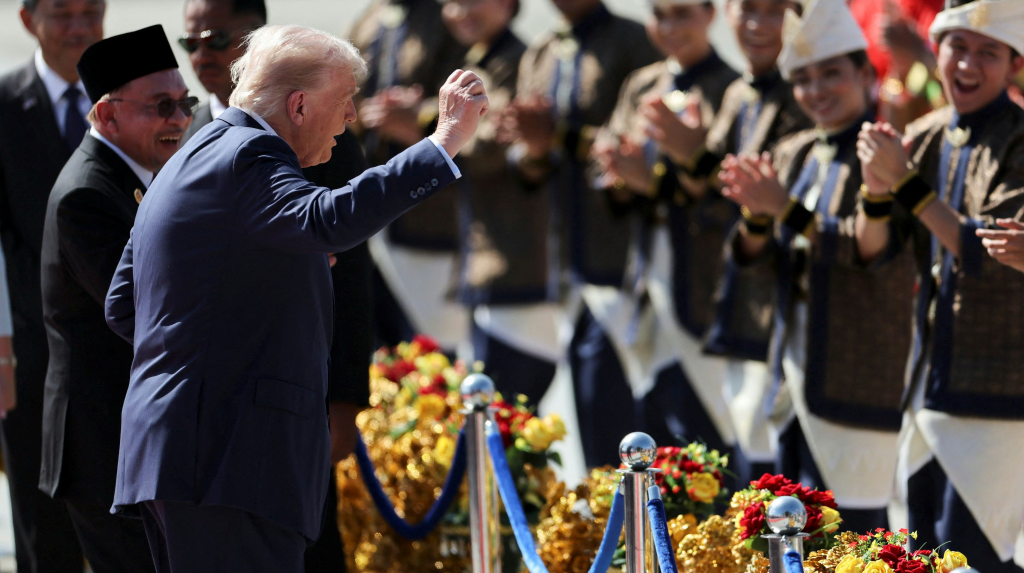
President Barack Obama visited Malaysia over a decade ago to elevate bilateral ties to a Comprehensive Partnership and propose the now-defunct Trans-Pacific Partnership, a multilateral trade deal. As a small, trade-oriented economy with economic development as a priority for the government, the dissolution of the TPP and increasing American protectionism marked the diminishing of closer bilateral engagements. Indeed, the most recent visit by President Trump to Kuala Lumpur in October saw the signing of an agreement on reciprocal trade viewed by many to be one-sided and damaging to Malaysian sovereignty.
With a 19% tariff placed on most exports to the US, and the need to adopt US trade restrictions, including export controls and sanctions regimes applied to third countries, it may prove challenging to maintain neutrality going forward. Though the US is a vital trading partner involved in key industries, so too are Malaysia’s regional neighbors, including China, which is its largest trading partner and a significant source of investments. It is difficult to see how Malaysia would comply with trade restrictions on China, should they be imposed, given how increasingly important they have become.
Other bilateral engagements by US officials in recent years include a visit by Treasury Department sanctions officials under the Biden administration who came to reprimand Malaysia for its ineffectiveness in dismantling offshore oil transfers of US-sanctioned Iranian-linked tankers. With the current Trump administration’s transactional approach to allies and enemies alike, the days of principled, long-term partnerships that once underpinned US engagement in Southeast Asia appear to be over. Moreover, a United States that is more dismissive of military alliances and less valuing of regional partners risks overlooking the clear benefits of developing these ties.
Indeed, ignoring Malaysia within the American Indo-Pacific framework should not be in the United States’ interests. As with the Philippines and Vietnam, countries the US has been courting heavily of late, Malaysia is a claimant of the South China Sea at odds with China. The Malaysian states of Sabah and Sarawak, located on the island of Borneo, directly border the disputed waters and form the southernmost link of the first island chain. Crucially, the Malaysian government has consistently maintained its claim over its exclusive economic zone off the shores of Malaysian Borneo, albeit in a more measured manner than its neighbors. To reinforce regional stability and assert international maritime norms, the United States should extend robust diplomatic support to Malaysia—much like it has done with the Philippines and Vietnam—empowering Kuala Lumpur to firmly defend its claims in the South China Sea while counterbalancing Beijing’s regional ambitions.
Despite the lack of positive diplomatic engagements in recent years, collaboration in the security realm holds a long and valued history. As an open economy, there is an implicit understanding that the US policy of countervailing Chinese encroachment in the South China Sea aligns with Malaysian interests for a free and open Indo-Pacific. Accordingly, defense cooperation between the US and Malaysia has quietly helped develop Malaysia’s maritime capabilities. Over the years, this has developed into an institutionalized arrangement ranging from counter-terrorist operations under SEARCCT to participation in joint military exercises. Knowledge of this has largely remained absent from the public. Former defense minister Najib Razak noted the defense arrangement as being an “all too well-kept secret”. That such military cooperation could occur since the 1980s without controversy among a populace often disapproving of the US military speaks to its embedded nature, allowing for long-term sustainable cooperation. Yet a prevailing lack of political will on either side inhibits the development of the existing bilateral relationship, which may eventually risk decoupling altogether.
More alarmingly, the current Trump administration appears unaware of its long-term ties with Malaysia and the importance the country holds in US Indo-Pacific policy. The US president’s nomination of Nick Adams, a conservative political commentator, as the next ambassador to Malaysia illustrates the problems arising from such neglect. Given the already sensitive nature of relations due to the US backing of Israel in its war in Gaza, the choice of an outspoken public persona with a history of unabated support for Israel has worsened America’s reputation in the country. This controversy highlights the Trump administration’s failure to assess the implications of such an appointment on bilateral ties. Had the nomination come from the State Department, the backlash would likely have been avoided, given minimal media scrutiny of a professional appointment. American diplomacy would have been in more capable hands, a necessity given Malaysia’s increasing disenchantment with the US.
An obvious disinterest in cultivating US-Malaysia ties has inadvertently led to the Southeast Asian nation seeking a closer alignment with non-Western powers, including China and Russia. The latter is gaining increasing clout in Malaysian foreign policy as both the Malaysian Prime Minister Anwar Ibrahim and the Monarch have met with Russia’s President Vladimir Putin in Russia on various occasions since the war in Ukraine. Unlike China, Russia is not a large trading partner of Malaysia, nor is it a prominent defense supplier for the country. Yet despite this, closer ties are being sought after to likely hedge against diminishing trade with a protectionist United States.
Closer Malaysia-China ties have been perceived to be at the expense of Malaysia-US ties. With the lack of effort on Washington’s part to court Malaysia’s favor, it is easy to see how this would naturally prevail. If the United States is not mindful, her negligence could result in a loss of standing with a key regional partner. There is no doubt that the relationship between the two countries is a comprehensive partnership in all but name. Sharing a similar geopolitical stance on the South China Sea, a long history of military cooperation, and an established trading relationship, there is little reason for these bilateral ties to be ignored for any longer.
Image credits: Heute.at
The author has requested to remain anonymous.
 Sino-Southeast Initiative