
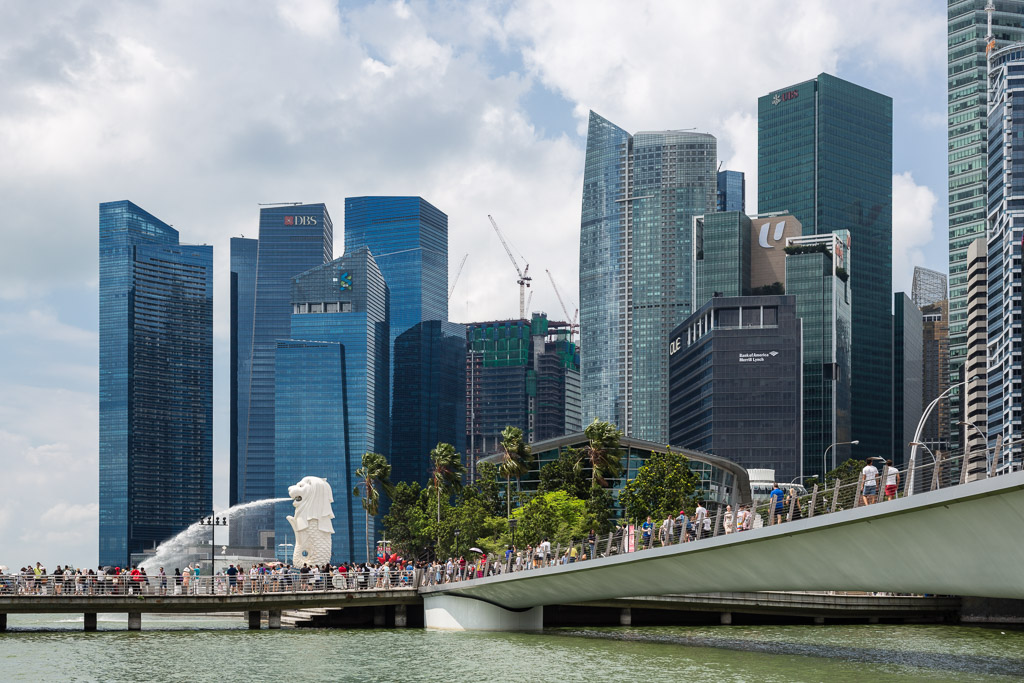
For decades we have lived under the assumption that fintech innovation belongs to the West. San Francisco, New York, and London dominate our interpretation of global finance and technology. When new models of payments and financial infrastructure are created, we have always instinctively looked towards these cities for leadership. But now, this exact instinct is becoming increasingly outdated. As the key indicators of successful fintech shift from brand prestige to regulatory efficiency and the ability to scale, the world’s most influential fintech capitals are no longer necessarily in the West. Instead, they are increasingly taking shape in the Indo-Pacific, with cities like Singapore emerging most prominently among a new generation of global fintech capitals.
The Making of a Fintech Capital
Singapore possesses an immensely rich history as a financial center. Its origins as a hub extend back to its colonial period, when the British East India Company established its first trading post in 1819. This initial foundation was reinforced by what many consider one of the most strategically advantageous island locations in the Indo-Pacific. Recognizing its significant potential, the British established major ports and military bases throughout the colonial era.
As trade and shipping traffic intensified over the decades, Singapore’s post-independence government recognized an opportunity to leverage this positioning to its advantage. Under the guidance of Dutch economist, Dr Albert Winsemius, the Asian Dollar Market (ADM) was opened in 1968. Operating in the timezone gap between European and American financial markets, the ADM acted as a much needed alternative market that provided Singapore with an initial spot on the global financial map. This momentum would continue to progress through developments such as the establishment of the Stock Exchange of Singapore in 1973, which collectively laid a strong foundation for the country’s fintech ecosystem.
On the other hand, the concept of fintech (or rather financial technology) is still relatively young, at least when compared to Singapore’s financial history. There are two main components to the “invention” of fintech: the concept itself and the term. Historians commonly trace the origins of fintech to devices like the Pantelegraph and Fedwire, created in the 1860s and 1920s respectively, though there is still debate over what actually constituted true fintech. In today’s sense, and for the purposes of this article, fintech refers to startups and platforms that deliver digital or app-based financial services created after the late 1990s.
The first instances of fintech in Singapore are usually dated to the mid-2010s, when the government launched the Smart Nation initiative, accompanied by the Monetary Authority of Singapore’s (MAS) efforts to support technology development. Since then, Singapore has grown substantially into a major hub for fintech in the Indo-Pacific and is now on track to directly compete with, and even (maybe) outpace, those in the West.
Singapore’s Competitive Model
This trajectory is not accidental, rather it results from deliberate policy choices that set Singapore apart from the West. For one, Singapore’s fintech ecosystem places strong emphasis on swift regulation and state-backed experimentation. The MAS operates a multi-track regulatory sandbox, a test environment where companies can trial new financial products and technologies with real users under controlled conditions. The MAS sets limits and safeguards while closely supervising tests to ensure the protection of customers and the broader financial system. Efforts to improve the sandbox framework are made per annum, speeding up market testing. For instance, in certain versions of the sandbox (Sandbox Express), eligible firms can begin market testing within 21 days of applying.
Through this framework, Singapore has streamlined a process where regulation is both efficient and accurate, using actual tested data from customers while maintaining maximum safety and proper regulations. This contrasts with other fintech hubs where multiple departments share regulatory responsibility and are often caught in lengthy bureaucratic cycles, which makes the process for startups and firms painfully inefficient and time-consuming.
In addition, the Singaporean government has made it abundantly clear that it values and seeks to grow its fintech capabilities through numerous directly backed government projects. Started in 2015, the ‘Financial Sector Technology and Innovation Scheme’ (FSTI) has funded hundreds of projects across three phases of grants. The most recent, FSTI 3.0 which is funded by $112M USD for the next three years, holds six focus areas with categories such as Environmental, Social, and Governance, and aims to promote the implementation of artificial intelligence into fintech companies.
The previous waves of FSTI have also proven to be successful; In 2020, the initiative strengthened Singapore’s capabilities in sustainable finance and helped support those struggling financially during the pandemic. As of now, the FSTI has funded around 1,500 fintech-related projects since its establishment. Conversely, Western governments have largely left fintech development to market forces, with minimal direct funding or coordinated national strategies comparable to Singapore’s massive public investment.
On top of what is essentially directly backed government venture capital for fintech startups and projects, Singapore has also experimented with national initiatives of its own. Most prominently, Singpass, a nationalized service for digital identity for Singaporeans, includes support for multiple digital ID cards and even business profiles. Singpass eliminates multiple usernames and passwords for millions of people and promotes a fully integrated system that saves time for everyday tasks and provides a smoother overall process. It is also combined with other state-led rails like PayNow for instant payments, which creates a digitised ecosystem that actively encourages firms to build on rather than recreate from scratch. This state-coordinated model stands in sharp contrast to the West’s market-driven approach.
Singapore’s commitment to fintech development goes beyond infrastructure as well, where it has actively expanded its fintech ecosystem. Launched in 2016, the Singapore FinTech Festival (SFF) has grown into the world’s largest fintech event, attracting over 60,000 visitors from more than 130 countries in 2024. The festival generates billions of dollars from investments and partnerships per year, and is seen as a key platform where Western capital can connect with Asia.
Challenging Western Dominance
Singapore’s structured approach raises an inevitable question: can its uniquely modernised structure outperform the West’s decentralized innovation model? Although rankings for the top fintech capitals of the world vary by source, Los Angeles (LA) consistently ranks in the top five. As the second-largest city in the US, this is no surprise, as it is an extremely attractive hub surrounded by some of the world’s top universities, the biggest names in tech (Silicon Valley), and strong global connectivity for the fintech industry. LAfintech thrives on the West Coast, with total venture capital estimated at $1.2 billion USD across over 72 deals in 2024 alone.
Fintech companies in LA are some of the most prominent to have been created in the last few years, with platforms like Robinhood and Affirm’s BNPL being key examples. In addition, LA’s ties to Hollywood, with online creators collaborating with huge media companies such as Disney, give LA a competitive edge in user-centric design, as the city is especially good at attracting consumers due to pop culture influence.
However, LA is frankly not as “magical” as it may seem for fintech. It faces strict regulatory hurdles from overlapping federal agencies including the US Securities and Exchange Commission (SEC), alongside California’s Department of Financial Protection and Innovation, which causes licensing wait times to be between 12 and 18 months (although this statistic has slightly improved). Singapore’s MAS counters this with its sandbox which outcompetes LA’s wait time, being roughly 18 times faster.
Furthermore, LA is arguably politically unstable as a major city in the US and has experienced abrupt regulatory crackdowns, specifically those observed from the SEC after the 2024 elections. New regulations have forced startups into costly compliance measures, which add more volatility to the overall process and ultimately subject LA’s fintech sector to dampened growth rates. While the Second Trump Administration continues to attempt to create a more favorable environment through policies like the AI “Develop First, Regulate Later” Policy, which has directed federal agencies to loosen regulations on both fintech and tech firms, state authorities still retain the ability to impose stricter regulations that can undermine these federal efforts. In comparison to these obstacles, Singapore’s framework offers fintech firms the speed, certainty, and continuity that Los Angeles cannot match.
Paris, another city that ranks just ahead of Singapore as a top fintech capital, presents both advantages and familiar obstacles. As part of the European Union’s (EU) single market system, Paris grants firms the capability to scale across over 25 countries without reapplying for licenses, a framework that substantially accelerates cross-border expansion.
The city also hosts Station F, one of the world’s largest startup campuses, which has incubated over 1,000 startups with government backing. Yet Paris continues to suffer from regulatory inefficiencies, reminiscent of Los Angeles. Licensing procedures regularly extend 6 to 12 months amid bureaucratic paperwork, while French labor laws impose rigorous costs on hiring and strict barriers for employee termination. For early-stage fintech startups, this is especially difficult to navigate. Furthermore, the absence of a centralized European financial market further fragments access to capital, which forces startups to navigate multiple jurisdictions and regulatory frameworks.
Singapore’s regulatory superiority is clear. While hundreds of government organizations in the US become stuck in debates that delay legislation, and the EU struggles to achieve consensus among 27 member states on frameworks like PSD3 or crypto regulations (a process that takes years), Singapore’s centralized approach leads to swift, coherent policymaking.
However, regulatory efficiency alone does not guarantee success. The West still maintains its advantages: San Francisco’s tech-finance ecosystem holds massive amounts of venture capital flows, while established markets like New York and London offer deep talent pools and scale that Singapore has yet to replicate. These structural advantages continue to sustain Western dominance despite shortcomings in regulation processes.
Nonetheless, the Indo-Pacific economy is experiencing unprecedented growth. Singapore captured 84% of Southeast Asia’s fintech funding last year, with deal sizes averaging $15 million USD. Regional economic growth is projected at approximately 4.4% as demand continues to grow for financial services like cross-border payments, precisely the services that Singapore’s financial infrastructure is positioned to deliver. Yet Singapore’s rise cannot be understood without the context of its surrounding nations. Its most revealing comparison is not with Western capitals, but with its historical rival across the South China Sea.
Asia’s Fintech Capitals Diverge
Over the last few years, Singapore has consistently been ranked as Asia’s premier fintech hub, as well as holding a top ten global ranking. Arguably, its main competitor, Hong Kong (also a former British Colony), has been able to closely match Singapore’s ranking, however this parallel no longer holds. What was once a head-to-head rivalry has evolved into a functional division, as Hong Kong now leans to be firmly positioned as the gateway to China and Singapore emerging as the Indo-Pacific’s neutral platform for fintech.
Hong Kong’s strengths remain strong for those focused on China. Through the 2025 expansion of the Wealth Management Connect scheme and a resurgent IPO market, which raised over HK$259 billion in late 2025, it remains the top choice for firms needing direct access to Mainland China. Yet, as US-China trade tensions continue with very few signs of improvement, Western firms could be forced into adopting a new strategy, one that should involve Singapore. In terms of a first glance, Singapore is clearly one of the best alternative choices not only for its superior fintech and banking capabilities, but for its distance from geopolitical conflict. Western firms seeking separation from Washington-Beijing tensions could lean to favor Singapore as a regional base for ASEAN fintech expansion.
Furthermore, a significant factor that favors Singapore aside from political tension is Western investors’ perception of Hong Kong’s legal environment. As fintech fundamentally relies on particularly sensitive financial data, the potential for Chinese government reach and cybersecurity has made Western boards uneasy. As Hong Kong becomes increasingly integrated with China, critics have seen less reason to invest in startups and new businesses, as the general Western view remains that tighter security laws “drain the lifeblood of any vibrant market.”
The balance between Singapore and Hong Kong as Asia’s leading fintech capital is not necessarily a zero-sum game. However, as Western investors seek to tap into ASEAN’s rapidly growing economy, they are increasingly choosing Singapore, which provides a substantial strategic advantage for the nation not only as a fintech capital, but as a major global trade hub. Although Hong Kong continues to be a dominant asset management hub (for example, it topped IPO charts among global stock exchanges last year), it is increasingly seen as more exposed to geopolitical risk than Singapore.
Fintech hubs in Asia are not solely dependent on Western investment, and both Singapore and Hong Kong continue to benefit from strong intra-ASEAN economic activity. However, as Western investors continue to increase their engagement in the region, Singapore is increasingly well positioned to capture that capital. This advantage extends beyond Asia itself, as Singapore’s neutrality and regulatory stability could allow it to compete on the same level with established fintech hubs in the West as well.
What Comes Next?
Whether Singapore can truly outcompete established Western fintech hubs is far from certain. While Southeast Asia experiences some of the world’s fastest economic growth, despite facing challenges like tariffs and lower external demand, and while Singapore has arguably created an exceptionally favorable environment for fintech development, significant obstacles still remain.
It is apparent that Western fintech hubs retain significant advantages such as larger capital markets, consumer bases, and an overall stronger financial ecosystem. However, by positioning itself as a link between Western capital and Asia’s rapidly expanding economy, Singapore can simultaneously complement and challenge established Western fintech hubs. Its success will likely depend less on direct competition and more on its ability to strategically leverage itself as an intermediary, which will help it build an enduring position in the fintech landscape. Just as Singapore’s geographic location once made it a critical maritime crossroad in trade a hundred years ago, its role as a bridge between Asia and the West offers a similar advantage today – one that proves that strategic positioning will always retain its importance, especially in the world of business.
Image credits: CC / Martin Junius
Jacob Tam
Jacob Tam is an undergraduate student at the University of Toronto from Victoria, BC. He holds extensive experience in writing and public speaking and was ranked among the top 15 debaters in British Columbia last year. He currently serves as a Committee Director for the University of Toronto Model United Nations Conference (UTMUN) and Tournament Staff with the UofT Students’ Pre-Law Association. Tam is a Bachelor of Commerce candidate at Rotman Commerce and part of the Munk One program at the Munk School of Global Affairs and Public Policy.
 Sino-Southeast Initiative