
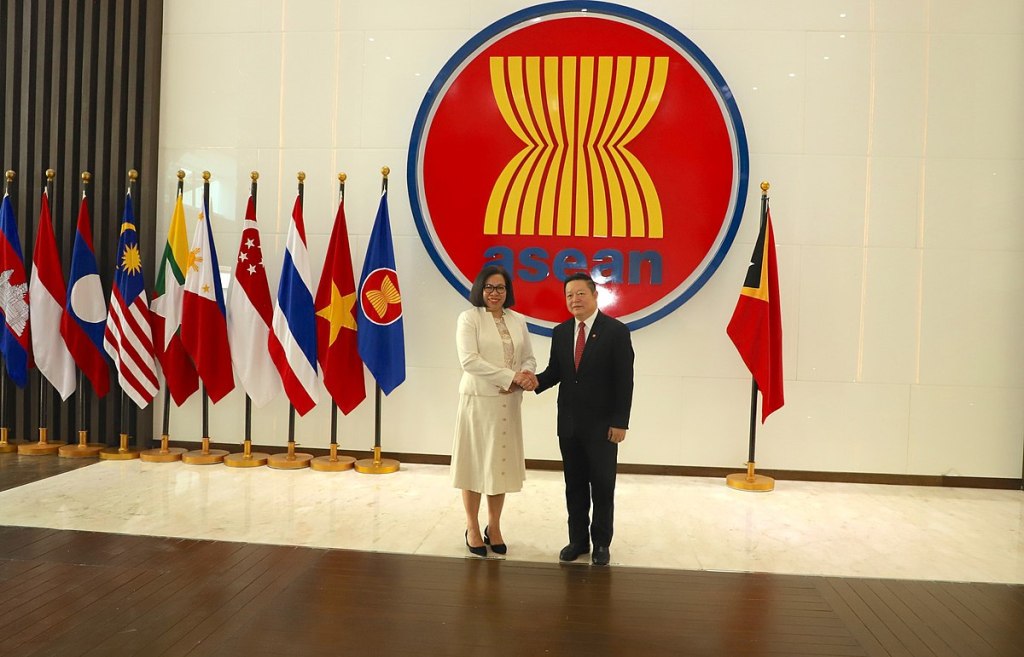
ASEAN is at a pivotal geopolitical crossroads – global powers such as the US and China jostle for influence in Southeast Asia, with the organization often finding itself on the short end of the stick. Timor-Leste stands at the heart of it all, where the nation is on the brink of becoming a member of ASEAN and shifting the region’s balance of power. The move to accession not only unlocks the economic potential of a country in its infancy but also amplifies an outspoken voice in a bloc known for quiet diplomacy.
Returning from the Association of Southeast Asian Nations (ASEAN) Future Forum in March 2025, Timor-Leste President José Ramos-Horta announced that the country’s path to ASEAN membership is nearing completion, with membership expected at the end of the year. The recent ASEAN Summit in Kuala Lumpur indicated a step in the right direction for the world’s 4th youngest nation, as Malaysia, the current chair of ASEAN, has reaffirmed the possibility of admitting Timor-Leste in October’s 47th ASEAN Summit. Having not admitted any new members since Cambodia, Vietnam, Laos and Myanmar in the late 1990s, the organization prepares itself for a new actor amidst a crucial juncture in maintaining regional relevance.
Admitted into the bloc in principle in 2022, Timor-Leste’s membership application represents an urgent call for ASEAN to begin demonstrating its touted centrality in Southeast Asia. Analysts have increasingly cast doubt on ASEAN’s central role as a political and economic actor in the region, with major global powers seeking to circumvent the consensus-based organization’s position via bilateral means. At the recent Shangri-La Dialogue, United States Defence Secretary Pete Hegseth has called for increased US deployment and the re-securitisation of the Quad as a deterrent against China. Both Labour Party governments in Australia and the United Kingdom are also doubling down on the significance of AUKUS in ensuring regional security. Likewise, ASEAN member states are diversifying their affiliations. Members such as Malaysia and Thailand have partnered up with China-led BRICS. On the contrary, the Philippines has begun taking an uncompromising stance against China’s stake in the South China Sea under President Ferdinand Marcos Jr, such as allowing the US to position additional military systems on its borders.
Timor-Leste has inevitably been caught amongst these shifting power dynamics. Recent developments in Timor-Leste’s membership coincided with the nation’s establishment of a bilateral Comprehensive Strategic Partnership with China alongside the expression of interest in conducting joint military exercises. It could be argued that the continued exclusion of Timor-Leste would be antithetical to ASEAN’s goal of collectivising the power of Southeast Asia through multilateral activity, and China’s increasing influence over Timor-Leste has reinforced the bloc’s resolve to remove any hurdles obstructing membership. Timor-Leste’s accession to ASEAN could pave its way to join the multilateral Regional Comprehensive Economic Partnership (RCEP) free trade agreement, along with many other joint initiatives that ASEAN has with China and the EU. In addition, Timor-Leste’s membership in the Pacific Islands Forum (PIF), an increasingly significant organization in the US-China contest for influence in the region, could serve as a gateway for ASEAN nations. ASEAN members such as Singapore have received observer status for the PIF 2022, while ASEAN signed a memorandum of understanding with their Pacific counterpart in 2023, which indicates a revived interest for ASEAN to exert itself to a greater extent in the region.
Economically, there may never be a better time for Timor-Leste’s accession into ASEAN. Concerns over an overdrawn budget have been a longstanding issue for the nascent economy, especially when expenditures have been heavily reliant on its sovereign wealth fund linked to petroleum exports. A joint venture with Australian firms over the development of the Greater Sunrise LNG fields plays a key role in sustaining the fund, given that major developers such as China and the Gulf States have been silent over Timor-Leste’s invitations for a joint venture. The issue lies with the location of gas processing, as Timor-Leste’s intent towards onshore processing has been met with speculation over the country’s industrial capacity, and an increased push by its Australian partners to process the product offshore in Darwin. Albeit being offered incentives such as a larger share of the profits to abandon onshore development, President Ramos-Horta remains keen on utilising the Greater Sunrise Project as a launchpad for Timorese industrial development.
ASEAN membership could help back up Timor-Leste’s case for onshore processing. Admission of a relatively economically underdeveloped member is not a novel concept to the organization, given that the newly admitted countries of Cambodia, Laos, Myanmar and Vietnam (CMLV) in the 1990s also experienced similar circumstances of poverty and a lack of economic infrastructure. The Initiative for ASEAN Integration (IAI) was set up to channel funds from donations and wealthier ASEAN nations for capacity building in CMLV, seeing evident success as Vietnam’s industrial economy continues to boom, while Cambodia’s exports to ASEAN have quintupled in shares. Timor-Leste will not find itself short of help within the organization, given countries such as Indonesia, Malaysia and Brunei have had a historical stake in LNG processing and will more than be expected to provide much-needed technical and manpower assistance in developing onshore processing capabilities. Malaysia, in particular, has been the staunchest advocate for Timorese ASEAN membership this year, with the organization’s chair negotiating for the relaxation of membership requirements and expediting the membership vote. Should membership be achieved soon, Timor-Leste’s economic prospects would look far more compelling.
It is also worth considering how Timor-Leste might fit into the political landscape of ASEAN. Indeed, the organization would be admitting its most vocal member thus far, with President Ramos-Horta boasting an impressive track record of human rights activism in Timor-Leste, even earning him the Nobel Peace Prize. He has been critical of the military junta in Myanmar, calling for ASEAN to include the resistant National Unity Government (NUG) and ethnic militias in peace talks, as well as criticising the organization’s inaction regarding undemocratic activity throughout the bloc, coming in stark contrast to ASEAN’s preference for non-interference. Much may remain the same, given that Timor-Leste’s presence has long been felt with its participation in the bloc’s activity as an observer state over the past three years. However, as pressure mounts on ASEAN to act on the human rights abuses conducted by the junta post-earthquake in March, such as doubling down on the crackdown of ethnic strongholds and the withholding of aid, it may be time for Timor-Leste’s calls to finally be heard by other members.
Image credits: Ministry of Foreign Affairs and Cooperation of Timor-Leste, Public Domain
Yang Ming
Yang Ming is a Law & Social Science (Politics & International Relations) student at the University of New South Wales Sydney. He was formerly part of the Malaysian National Debate Team and a Foreign Policy Research Assistant at Bait Al-Amanah, Malaysia.
 Sino-Southeast Initiative