
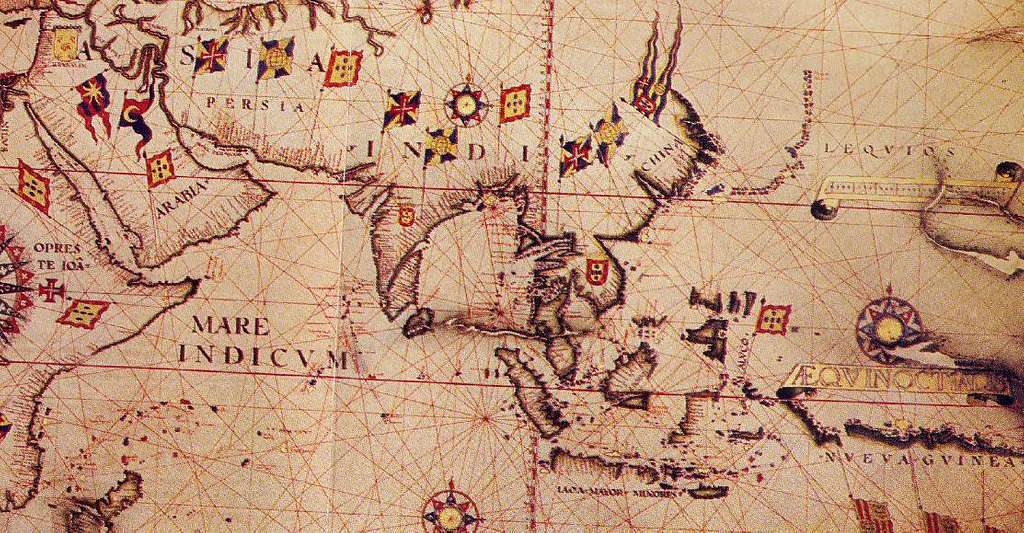
As China deepens its strategic footprint through vertical port development and energy corridors, India counters with a horizontally expansive maritime network rooted in historical connectivity. Both powers have increasingly prioritized the Indian Ocean as a geopolitical landscape, where ancient trade routes meet modern rivalries.
In their ancient maritime treatises, “Bahr al-Hindi” is what Arab navigators used to refer to the Indian Ocean. The Indian Ocean and its adjacent waters stretch from west to east, encompassing the Red Sea, the Arabian Sea, the Bay of Bengal, the Java Sea, and ultimately the southern reaches of the South China Sea. Within this vast geography, the violence and famine afflicting the Horn of Africa; the geopolitical tensions of the Middle East; the simmering cauldron between Pakistan, India and its neighboring states; the strategic rivalry between China and India; and the efforts of the United States, the United Kingdom, France, Russia, and even Japan to exert influence in the region have all challenged the balance of power in Asia. As Fareed Zakaria describes in The Post-American World, the Indian Ocean has emerged as a pivotal arena in the post-Cold War geopolitical landscape, shaped by the rise of regional powers and the recalibration of global influence.
Today, India has become the fourth-largest energy consumer in the world, following the United States, China, and Japan. Over 90% of its energy needs—and 90% of its crude oil—are supplied via the Arabian Sea and the Persian Gulf. By 2025, India is expected to surpass Japan in economic development, displacing it as the third-largest importer of crude oil after the United States and China. India must meet the demands of a population that, by the mid-2020s, will make it the second most populous country in the world. Accordingly, its coal imports from Mozambique, located in the southwestern Indian Ocean, have increased significantly—adding to pre-existing imports from South Africa, Indonesia, and Australia. In the near future, Indian tankers are likely to transport large volumes of liquefied natural gas across the western half of the Indian Ocean, including from Qatar, Malaysia, Indonesia, and Iran, even as far as southern Africa.
Yet, China precedes India in this trajectory. Between 1995 and 2005, China’s crude oil demand doubled, and it is expected to double again in the coming decade. By the latter half of 2020, China was importing 7.3 million barrels of crude oil per day, primarily from Saudi Arabia. Over 85% of the oil transported across the Indian Ocean and through the Straits of Malacca and Hormuz is destined for China. Beijing remains skeptical about securing its energy needs via overland routes through Central Asia, Pakistan, and Myanmar, or through alternative maritime routes such as the Pacific. The insatiable appetite of China, Japan, and South Korea for Persian Gulf oil has transformed the Strait of Malacca into a vital artery for nearly half of global oil flows and about a quarter of total global trade.
Today, as in the past, several powerful nations are vying for dominance over oceanic waters. While China seeks to expand its influence vertically—southward toward warmer waters—India aims to extend its reach horizontally, eastward and westward, toward the frontiers of British India’s Saint Victoria, parallel to the Indian Ocean. Chinese President Hu Jintao has described his country’s vulnerability in maritime affairs as the “Malacca Dilemma,” emphasizing the need to find alternatives to the strategically fragile Strait of Malacca for oil imports.
China has thus endeavored to reduce its dependence on the Malacca Strait as its sole energy transit route. The development of oil transport ports and energy infrastructure—roads and pipelines leading northward into China’s heartland—is part of Beijing’s broader strategy to maintain its grip on Taiwan while redirecting its energy transit routes toward the Indian Ocean. A key element of China’s military strategy in the Indian Ocean, known as the “String of Pearls,” includes the construction of a major port in Gwadar, Pakistan, potentially accompanied by a naval base in the Arabian Sea, through which Chinese vessels pass the Strait of Hormuz. China may also develop another port in Pasni, 75 miles east of Gwadar, connecting it via a long highway. Additionally China has already invested heavily in Sri Lanka’s Hambantota Port on the southern coast, which now serves as a strategic refueling station and logistics hub for Chinese vessels. The port’s long-term lease to China has sparked international debate over debt diplomacy and strategic control. In Chittagong Port in the Bay of Bengal, Chinese companies have been actively involved in developing container terminal infrastructure. Myanmar, too, has received billions of dollars in Chinese investment.
Beijing is simultaneously enhancing its commercial posture and expanding its naval bases along the Indian Ocean rim. China has initiated the construction of roads, waterways, and pipelines from the Bay of Bengal to Yunnan Province, and is developing operational facilities on the Coco Islands in the Bay of Bengal. Several of these ports are geographically closer to China’s central and western cities than to Beijing or Shanghai. These ports, connected via north-south roads and railways, will economically facilitate China’s access to the ocean. China’s railway network appears to be expanding westward, potentially reaching Afghanistan—a country rich in copper reserves. However, caution is warranted in evaluating China’s actions in the region. Beijing’s plans for expanding its influence in the Indian Ocean remain opaque. While some in Washington remain patient regarding the “String of Pearls” strategy, China rarely seeks full control. Unlike its approach in Singapore, where China operates through commercial partnerships without direct control, in Gwadar it has established facilities that suggest a more assertive strategic presence, including potential military and logistical infrastructure.
While China asserts its presence, India is actively pursuing regional influence from the Middle East to Southeast Asia. Admiral Sureesh Mehta’s 2021 visit to the western Gulf states—where trade with India is flourishing, including with Iran and Iraq—underscores this ambition. It is often overlooked that India has maintained close economic and cultural ties with the Arabs and Iran in the Persian Gulf for centuries. Approximately 3.5 million Indians work in Gulf countries, remitting over $4 billion annually to India.
Although New Delhi is not pleased to divert resources to counter China, it is currently cooperating closely with the United States and Japan to confront the China–Pakistan alliance. India’s primary objective is to consolidate its dominant presence in the Indian Ocean. According to Forbes, American analysts Daniel Stacy and Alastair Gill note that India’s incremental steps toward deeper cooperation with Japan and the U.S. are a response to China’s rapid regional advances. For China, deepening its influence in the South China Sea is untenable without expanding its presence in the Indian Ocean. If the Malacca Strait were blocked—by the U.S. and its allies, for instance—Beijing’s access to Middle Eastern and African oil would be severely compromised.
This is precisely why China has expanded its influence across all Sri Lankan ports along the Indian Ocean and is intensifying cooperation with Pakistan to establish an alternative corridor to the Middle East and Africa via the China–Pakistan Economic Corridor (CPEC). Concurrently, China is leveraging economic collaboration with Pakistan to compel India to accept its growing regional presence. India, for its part, is also enhancing its influence and military capabilities in the region. During a joint naval exercise with the U.S. and Japan in 2020, regional observers witnessed New Delhi’s efforts to project power in response to the China–Pakistan alliance. Notably, this exercise coincided with India’s border tensions with China near Bhutan.
Sino–Indian relations have long been strained due to protracted territorial disputes and China’s implementation of CPEC through Pakistan. These tensions led India to decline China’s formal invitation to the Belt and Road Forum held in Beijing in late May of this year. Amid escalating tensions in the Maldives, Reuters reported the deployment of 11 Chinese destroyers to the eastern Indian Ocean. According to regional media, this naval group included a 30,000-ton Chinese vessel and several support ships. While Reuters did not explicitly link the deployment to the Maldivian crisis, it is noteworthy that Maldivian President Abdulla Yameen has expressed interest in joining China’s Belt and Road Initiative. India, which maintains close ties with the Maldives—located just 400 kilometers away—has made significant efforts to counter Chinese influence there.
As defense analyst Thomas Barnett asserts, “the Indian Ocean needs strategic stability more than anything else.” He notes that the United States, the United Kingdom, France, Russia, China, India, Pakistan, and Israel—all nuclear powers—maintain a presence in this ocean. The Indian Ocean is where the U.S.–China rivalry in the Pacific continues, intersecting with regional competition between China and India, and the U.S.-led war on terror in the Middle East, including effort to contain Iran. This has culminated in a broad, multidimensional competition between India and China—two traditional actors in the Indian Ocean—leading to the formulation of maritime-centric strategies. Although these strategies are primarily driven by economic imperatives, they have increasingly extended into military and security domains. As one final reflection it is worth recalling that the Indian Ocean has long been a theater of global power projection. Long before European colonial dominance, it served as a vibrant corridor of trade, diplomacy, and rivalry among empires from East Africa to Southeast Asia. Today’s strategic contest between China and India echoes those historical rhythms, albeit with modern tools and ambitions.
Image credits: Wikimedia Commons
Mohammadreza Mohammadi
Mohammadreza is a PhD candidate in International Relations at Tehran University of Science and Research, Iran. With a dedicated focus on the Middle East since 2015, he has authored and translated over 10 books and published more than 15 scholarly articles in his field. His expertise encompasses issues related to the Middle East, the Persian Gulf, crisis studies and Iran Issues. Currently, he serves as a university lecturer, Vice President of the Center for Future Research of the Islamic World (IIWFS), and Associate Editor of the scientific journal Fundamental and Applied Studies of the Islamic World.
 Sino-Southeast Initiative