
China’s drive to dominate the green-tech and AI supply chains has turned Indonesia into one of the world’s leading producers of nickel. Industrial growth has brought jobs and improved local infrastructure, but it has also accelerated deforestation, excreted waste into rivers, and harmed the livelihood of traditional communities. The transformation of Indonesia’s archipelagos into the frontier of resource extraction in the next technological revolution reveals the hidden environmental costs of Beijing’s rise.
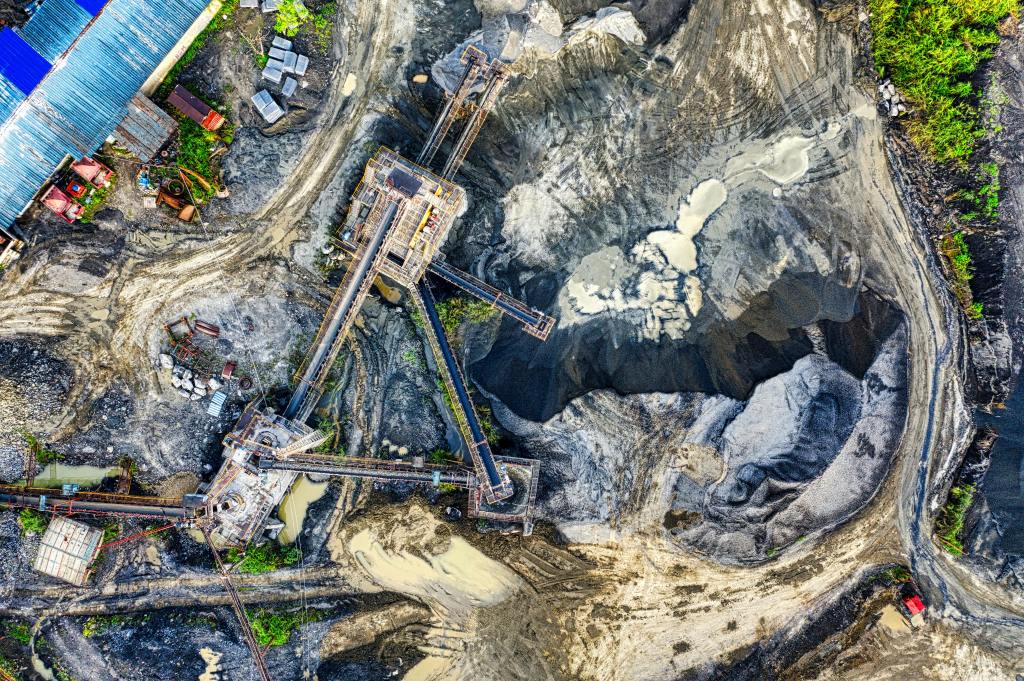
The photo above is not of a rust-belt factory town in America’s Midwest but instead the once unblemished archipelagos of Indonesia. Traditionally known for their beautiful tropical islands and diverse natural environments depicted in travel brochures, Indonesia’s islands have undergone a stark transformation. In the past two years, these archipelagos have seen exponential industrial development from billions of foreign direct investment from China, which has established nickel plants across Indonesia. By 2024, these Chinese investments in nickel mining, extraction, and processing led Indonesia to produce over 2.2 million metric tons of nickel, accounting for 50% of the global supply, establishing Indonesia as one of the top contenders for the nickel capital of the world.
These transformative investments reshaping Indonesia’s landscape can be attributed to China’s push to secure global green tech dominance and its participation in the global Artificial Intelligence (AI) race with the US. As Chinese companies boost production of Electric Vehicles (EVs) to meet rising demand and combat American firms, Indonesia has been selected as the hub for processing and extracting raw nickel from the earth to be used in EV battery components. Additionally, the global AI race with the US and China’s national goals of establishing a central AI base independent from American operations has caused a demand shock in the AI supply chain, leading to increased production for associated raw materials. Together, these central drivers exemplify one country’s shift toward a green, more revolutionized nation but at the costs of another.
Local Environmental Impacts of Nickel Expansion Projects
In villages and small towns throughout the archipelagos, nickel is not a part of everyday life. The majority of Indonesians on these islands make a living through traditional industries like fishing, agriculture, and forestry, which depend on the preservation of the environment. For example, the economy of Sulawesi Island is primarily known for its agricultural exports of cacao, shrimp farming, collection of commercial timber, tourism, and controlled state-operated resource extraction sites. However, the rapid industrialization that has been occurring has fundamentally and in an uncontrolled manner altered the landscape of the islands. Nickel processing plants have rapidly sprung up across the archipelagos to replace the lush tropical forests. Nickel refining plants have excreted waste into local rivers and coastal waters, harming the livelihood of traditional fishing communities. For instance, on Sulawesi, locals have reported declining shrimp harvests and contaminated wells whose decline has removed some of the basic necessities of individuals and thrown them into economic uncertainty.
However, the blame for environmental degradation and the destruction of the livelihoods of marginalized locals cannot be shifted to one country. Instead, it is the partnership of a nation that wishes to see rapid economic development and one that wishes to establish a strong economic partnership to compete against its global adversaries, whose short-term goals have thrown the long-term repercussions out of consideration.
Although the majority of the physical extraction of Indonesia’s nickel industry is state-owned, Chinese investors are estimated to control a staggering 75% of Indonesia’s refining capacity through joint ventures and investments. Sulawesi Island, home to one of the largest nickel plants in the world, the Sorowako Mine, has become one of the epicenters of these efforts. For instance, the Chinese company Zhejiang Huayou Cobalt Co., Ltd is seeking to expand Sulawesi’s existing state-owned nickel mines by investing $1.8 billion to build a High Pressure Acid-Leach (HPAL) plant to refine key materials for EV batteries. For mines like Sorowako, which already encompass areas greater than 175,000 American football fields, this continued growth will push Sulawesi’s environmental capacity beyond repair. And as similar expansion projects are replicated across thousands of other islands, the cumulative effects will only exacerbate the local environmental impacts.
Isolated Positive Economic Spillovers and Domestic Tensions
Despite clear environmental decline, these large investments, such as the one by Zhejiang Huayou Cobalt Co., have undoubtedly resulted in positive spillovers in Indonesia’s economy through developed mining towns, better infrastructure for workers and locals, and the creation of jobs. Particularly, Sulawesi has seen economic growth that far exceeds the Indonesian national average, with increased economic activity for all related services and industries that are tied to mining, creating a cushion of comfort and sustained GDP growth amid global tariff concerns. In addition, although the exact figures of jobs created by Chinese mines are uncertain, from 2020 to 2024, over 36,000 jobs were added to the Indonesia Weda Bay Industrial Park (IWIP), where several major Chinese firms engage in their mining activities. In the face of Indonesia’s labor force that is outpacing its job creation, employment opportunities in the mining industry have improved the livelihoods of many.
Local Indonesian government officials are praising Chinese investors for bringing in capital that the West promised but never delivered on, but this has only resulted in the deepening of polarized views within Indonesia. Those related to the mining industry welcome more foreign investments and see development as an opportunity to develop the archipelagos into one of the industrial capitals of the world. However, for locals who depend on the land and work in traditional industries to make a living, the deterioration of the environment far outweighs the economic benefits derived by a smaller portion of the populace. Although it seems evident that Indonesia must begin to regulate the mining of nickel to preserve the livelihoods of locals while controlling development to still offer economic opportunities, the country’s position in the center of the global supply chain for EV and AI makes this unlikely.
Indonesia’s Key Role in China’s Strategic Global Supply Chain Expansion
In the height of the global trade war with the US and China engaging in a series of retaliatory trade wars, Donald Trump’s ongoing imposition of 50% tariffs on basic commodities such as steel and aluminum in June, and with the current boom of AI infrastructure investment, the crux of the global supply chain rests on who controls the supply for basic commodities like nickel. Beijing has placed itself in a strategic position as it has secured an uninterrupted flow of nickel supply from Indonesia, allowing it to surpass Western bottlenecks and innovate to separate itself from the Western tariff-ridden supply chain. This strategic investment not only creates self-sufficiency for China but also establishes geopolitical leverage as the Indonesians see the US as taking a step back from engaging in Southeast Asian geopolitics. Particularly, with US government officials largely disregarding ASEAN and engaging in extensive protectionism.
The Chinese dominance of nickel-processing through Indonesia has reshaped global trade flows by squeezing Western and even some domestic competition in Jakarta out of the picture. In addition, China’s cheap production has dragged down global prices of nickel, in a strategy that reflects hyper-scaling the production of commodities to control the global supply and gain leverage over international partners instead of diplomatic means. For Indonesia, the main challenge is to translate today’s mining windfall into sustainable growth before its environments are exhausted. The rest of the world will focus on the green and digital revolutions that seem to be converging, but this time with their front lines not Silicon Valley but the nickel-stained shores of Southeast Asia. Who emerges from this global trade war as the country benefiting most from the green-tech and AI revolutions will depend on who has the most leverage via control of the global supply chain for commodities such as nickel. However, the future remains uncertain and will largely depend on how geopolitics unravel in the coming years.
What we do know is that China’s green tech expansion has delivered what Western climate policy often promised but failed to achieve: scale, speed, and global reach. But it has also revealed the dark side of the energy transition in which the quest for clean power depends on dirty extraction. Thus, for Indonesia, the nickel boom is a double-edged sword. It has brought jobs and much-needed economic growth, but also deforestation, displacement, and dependency. The true cost of the green tech and AI revolution will not be measured in carbon savings and end products alone, but in the social and environmental scars left behind in places like Sulawesi Island. Whether Indonesia’s future is one of sustainable prosperity or ecological fragility will depend on how the next technological revolution plays out.
Image credits: CC / Tom Fisk
Joshua An
Joshua An is an undergraduate student at the University of Toronto studying economics and political science. His current research interests focus on the socioeconomic dimensions of the global supply chain and international trade. Joshua’s experiences in banking, corporate law, and the Korean government have allowed him to examine these issues from diverse perspectives. Joshua currently leads a non-profit on campus.
 Sino-Southeast Initiative