
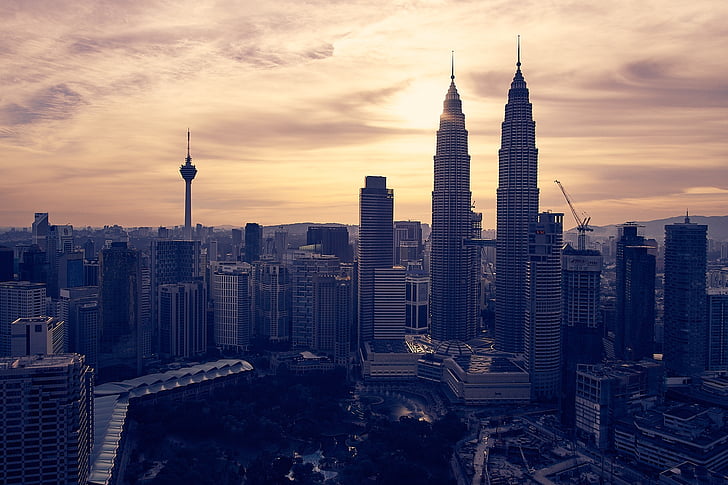
While all eyes in the AI boom are centered on innovation and competition between American and Chinese firms, capital is quietly flowing into the infrastructure that underpins this long-term growth trajectory. Malaysia’s growing role as a key player in the middle of the AI stack, with its environment conducive to business due to its reliable infrastructure and manufacturing capabilities, has positioned this Southeast Asian country to be a core destination for these capital flows. As foreign investment continues and capital accumulates in Malaysia, global supply chains will be reshaped, determining the foundations for the next phase of the AI industry.
The trajectory of modern AI development is often framed in terms of the rapid advancement of U.S. tech giants and their Chinese counterparts. However, the real bottlenecks for the industry’s future lie far away from the tech hubs of Silicon Valley and China’s Greater Bay Area (GBA) and in the physical layers that make it all possible. As start-ups, multinational companies, and even countries begin scaling their operations, demand for output and storage, especially in the physical layers associated with packaging and testing, data-centers, wafer-processing, and fabrication inputs have become increasingly important. At the same time, rising geopolitical tensions have shifted capital away from innovation and towards supply chains that offer reliability and continuity. It is at the end of these capital flows that Malaysia has emerged as a prime destination.
Malaysia’s Role in the Middle of the Stack
In the five-layer AI cake that Nvidia CEO Jensen Huang describes, physical infrastructure is a core layer that must be built and operated for any progress to be achieved on any front of AI. This core infrastructure layer is responsible for manufacturing, assembling, and testing, while also acting as a bridge between chip design and AI’s application for consumers. As 2025 was characterized by groundbreaking billions of dollars in new technologies, 2026 will be the year where infrastructure and delivery will become the core bottleneck for the industry.
It is in these pressure points of the existing AI supply chain where Malaysia has begun asserting itself as a key player through its unique advantages. Malaysia’s economic environment, with its abundant land, competitive energy costs, and strong government support for technological initiatives, makes it a critical hub for semiconductor assembly and testing. The Southeast Asian country’s core potential as a key player in the global AI supply chain is enhanced by the high demand for infrastructure and data centers, which far exceeds the ability of key players like the U.S., China, and Taiwan to cater to the entire global market.
Recent capital flows to Malaysia help exemplify the country’s growing share of the AI cake. In early December 2025, Intel announced an investment of $208 million USD in Malaysia to expand its assembly and testing operations, reinforcing the country’s role in the AI infrastructure space. This investment takes advantage of Malaysia’s strong ecosystem of skilled labor, suppliers, amiable government policies for businesses, and industrial facilities, allowing global firms to scale quickly and churn out output on their investment. This diversification and conducive environment for AI infrastructure is what the overheating AI industry must do to avoid a potential bubble burst.
In addition to its role in the infrastructure layer, Malaysia has also attracted major investments from tech giants such as Google, Nvidia, Microsoft, and Huawei as a key destination to develop data centers. Predominantly driven by high AI demand and the limited capacity of data centers in Singapore, the Malaysian cities of Johor and Cyberjaya are attracting billions of foreign investments. For instance, in 2024, Google invested over $2 billion USD each to break ground and create new data centers in the Johor and Selangor region, with completion of the project expected in early 2026.
This trend of hyperscalers is likely to continue through 2026, given the tumultuous and often heated political environments of these major players. As Malaysia does not impose reciprocal sanctions or face stringent regulations for exporting, long-term planning for multinational firms is not overcomplicated in this business-friendly environment. Malaysia’s somewhat neutral geopolitical stance with stable relations with the U.S. and frequent business engagement with China allows for companies from both sides of the AI race to engage and integrate their supply chains without becoming entangled in a power vacuum. Thus, Malaysia’s integration into the supply chain represents a step towards a diversified, reliable source of supply and infrastructure for both sides of the AI race. As organizations and investors continue to search for safe, sustainable development that can house multi-year projects, Malaysia’s role in the middle of the AI stack is likely to cement, if not grow, into a larger role in the global network.
Economic Benefits for Malaysia
These substantial capital flows and their benefits, however, have not been exclusive to multinational or prestigious domestic firms involved in the AI supply chain. Instead, what we observe in the surrounding vicinity of these physical plants is a fundamental shift echoing throughout the local economy. The most prominent areas where these effects are observable are in the state of Penang. Penang, Malaysia’s electronics manufacturing hub, and its local economy have consistently outperformed the national average, with the GDP per capita in 2024 far exceeding the national level by roughly 5000 USD. Although this figure may seem insignificant, when compared to the fact that the average worker in Malaysia earns between 17,000 and 22,000 USD in a year, the stark difference with Penang highlights how technology-driven investment has pulled the state ahead of the broader economy.
The flow of domestic and foreign labor tells a similar story. As of late 2025, Penang’s migration rate was 22.4%, placing it second to Kuala Lumpur at 37.7%, indicating a significant level of movement into the region rather than migration elsewhere. Much of this migration pattern has been driven by the increasing need for skilled and semi-skilled labor to operate these multinational data centers and the physical plants associated with manufacturing and testing. Additionally, as Penang’s non-citizen population has grown to over 10%, slightly higher than the national average, by the end of 2024, this indicates that the state is not only retaining domestic talent but may also be attracting foreign skilled labor as well.
Most recently, these positive economic spillovers were captured by Google’s first data center projects in Malaysia. Aside from the $2 billion USD investment for the project infrastructure, Google’s initiative in Selangor is projected to generate over $3.2 billion USD in economic benefits for the country while creating more than 26,000 jobs by 2030. The growth experienced by Malaysia thus far is only the beginning. With more companies from Singapore, China, and the U.S. continually investing and expanding their operations into Malaysia, the country has positioned itself as an accessible destination for AI infrastructure. In the coming years, as emphasis on stable growth increases, the spillovers influencing Malaysia will also continue to grow, allowing the country to propel itself forward, its economy expanding beyond the AI infrastructure space while turning into a hub for rising talent.
Capital Flows to Reduce Risk and Increase Stability
This broader shift towards Southeast Asia in general not only exemplifies the search for cheaper land and energy costs, but is characterized by reliability and attempts by global players to shield themselves from the intense geopolitical climate that they are presently experiencing. The U.S. and China — the two leading AI players — are both increasingly volatile and, at times, unstable environments, leading companies to seek out environments that nurture stable supply chains. A prime example is the escalating tariff conflict as a result of Trump’s protectionist trade policy with tariffs and retaliatory tariffs, while China controls physical capabilities through export controls, but tends to lack the attraction of capital and the global pull that American semiconductor companies seem to have.
Thus, as a geopolitically neutral third player, Southeast Asian countries with the political stability to cater to the global needs of the AI industry can help these multinational corporations diversify their supply chains and meet high demands. These business-friendly and stable conditions position Malaysia not only to receive diverted capital flows from the U.S. and China but also position it as a foundational growth engine for where multinational firms can divert their operations to hedge political risk.
What the Future Entails
If 2025 was the year characterized by investment in the AI industry, then 2026 will be a cooling period where the AI economy depends not on the advancement of technology, the fastest chip, or the most efficient models, but instead on the ability to deliver and meet strategic commitments through physical infrastructure. With global expansion and the need for environments conducive to strong development in the AI industry, large corporations will begin to turn to countries in Asia for help. As our technologies advance, more countries that have these preconditions for success, like Thailand, Indonesia, and other Southeast Asian countries, often ignored against the backdrop of the U.S. and China, will begin or continue to play larger roles in the global AI industry. Therefore, as Malaysia has situated itself as a key player in the industry through its infrastructure support and data center building, other countries will follow its successful template, bringing us one step closer toward a truly global supply chain for AI.
Image credits: CC / PickPik
Joshua An
Joshua An is an undergraduate student at the University of Toronto studying economics and political science. His current research interests focus on the socioeconomic dimensions of the global supply chain and international trade. Joshua’s experiences in banking, corporate law, and the Korean government have allowed him to examine these issues from diverse perspectives. Joshua currently leads a non-profit on campus.
 Sino-Southeast Initiative