
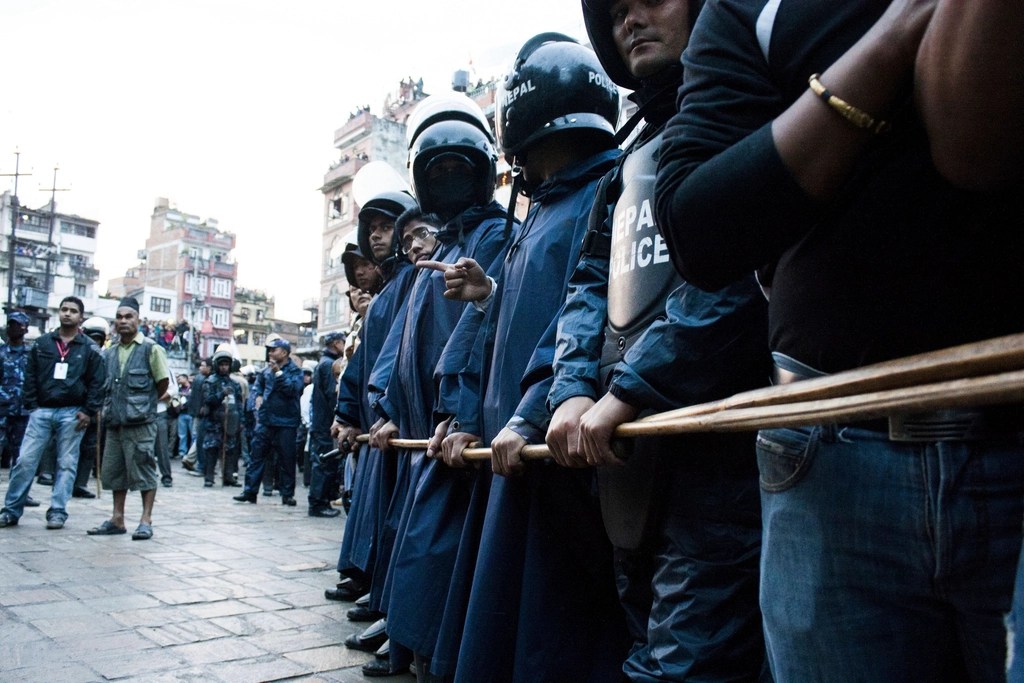
For decades, dissidents and activists in Southeast Asia have found reprieve and refuge within Thailand’s borders, which once served as a shield against persecution and unlawful silencing. Yet a single coup in 2014 enabled Thai General Prayuth Chan-ocha’s rise and consolidation of power, who tore this veil down with the development of a transnational ‘Swap Mart’. This ‘Mart’ between Thailand and its neighbors turns people and their voices, rather than goods and currency, into objects of exchange at the cost of human life. The emergence of such a system has turned what once was a haven for those seeking refuge into an international hub for transnational repression. With mechanisms of silencing no longer constrained by geography or distance, this contemporary ‘Golden Age’ of repression continues to erode the prospects of safety, security and justice.
Despite bearing no binding obligation to the 1951 UN Convention Relating to the Status of Refugees, Thailand has historically served as a safe haven for those escaping war and political repression in countries throughout Southeast Asia. Yet, simultaneously, Thailand’s geography renders such a role unsurprising. Geographically, Thailand shares a border with many countries that have experienced significant political and social unrest—such as Cambodia, Myanmar, Laos, Vietnam, and China—from which tens of thousands have crossed into the country in search of safety since the 1970s.
However, following the 2014 military coup that brought General Prayuth Chan-ocha to power, Thailand’s informal system of protection has deteriorated into one characterized by surveillance, coercion and refoulement. This shift reflects a new national imperative to prioritize diplomatic relations with neighbouring governments known for their repressive practices, including Cambodia, Myanmar and China. Within this framework, political exiles from these states are increasingly reclassified as “security threats” whose presence is seen as jeopardizing Thailand’s international relationships.
Such a movement is further intensified by globalization, which has opened new pathways to repress individuals beyond sovereign geographical borders through technological advancements in surveillance. Transnational repression—cross-border coercion and violence against dissidents and activists—is therefore no longer limited to a bilateral relationship between a country and its exiled dissidents; instead, it has become a mechanism of mutual exchange among governments seeking to consolidate domestic authority while strengthening ties with like-minded neighbouring powers. Within this emerging market for repression, Thailand has transitioned from a refuge for Southeast Asian political exiles into a central hub that facilitates transnational repression for its surrounding states, both authoritarian and democratic. Consequently, repression as a governing tool now travels farther and operates with greater ease, contributing to a marked increase in cases in Southeast Asia.
The Center of the Web: Repression as a Product to Trade and Foster Relations
China, Cambodia, Vietnam, Laos and Malaysia share a common link to Thailand as trade partners. Formally, this relationship is one for conventional goods such as fruits, rubber or electronics. However, there is a rise in increasingly informal exchanges of repression. With this new commodity, people and their voices, rather than agricultural produce or manufactured goods, are negotiated, transferred, and sacrificed in the pursuit of political cooperation.
The Thai government’s official foreign policy emphasizes the cultivation of positive bilateral and multilateral relationships with fellow members of the Association of Southeast Asian Nations (ASEAN), including with governments widely documented for their engagement in transnational repression campaigns. The mechanisms for this exchange are institutionalized by the lack of national legal protection for urban refugees as well as opaque migration practices. To address the first mechanism, the United Nations High Commissioner for Refugees (UNHCR) does classify urban refugees, but these statuses are not recognized by the Thai government. Thus, the urban-based refugees are left to be processed by the Thai government, who consequently are often deported or refouled as a national security threat according to their National Security Plan or as violators of the 1979 Immigration Act. The second mechanism is facilitated by Thailand’s dual track system when responding to asylum seekers and refugees. The first is a routine one conforming to the UNHCR; the second is a “special lane” for politically sensitive individuals. The country then brings these cases up to the prime minister or the deputy prime minister to decide on deportation, extradition or entry. Such a process is opaque and lacks oversight, as at this level, decisions can be made based on information in both formal channels for Interpol notices and informal channels that operate on reciprocity, where special requests from different states are made regarding the status of individuals of interest.
Indeed, not all exiles are innocent political dissidents—some may be criminals using asylum as cover. Therefore, the framing of extradition as a form of counterterrorism and security measure can be considered just. The problem, however, lies not in the legitimacy of the extradition itself but in the absence of a transparent due process, informal politicized criminalization and the collective tolerance of abusive requests across nations. As one of the most powerful states in Southeast Asia, this shift is concerning for those escaping persecution in the continental region, as it reduces possible mobility pathways and renders them vulnerable regardless of where escape is sought.
One illustrative case can be seen in the killing of Bounsuan Kitiyano, a 56-year-old Lao human rights defender who was a refugee recognized by the Office of the UN High Commissioner for Refugees. On May 17th, 2023, Kitiyano was shot dead in a Northeastern border town in Thailand.
As a member of the Thailand-based “Free Lao” network and an active participant in peaceful protests outside the Lao Embassy in Bangkok, these activities ultimately made Kitiyano a target for Lao authorities, forcing him to flee prosecution from Laos to Thailand, which functioned as his haven for many years until his death. His case underscores the growing precarity of Thailand’s role as a haven for political exile that is further reflected in a broader regional pattern marked by an increase in killings, enforced disappearances, and harassment of dissidents across Thailand and its neighbouring states since 2014.
In 2019, for instance, two Thai activists critical of the post-coup government were found dead and mutilated in the Mekong River after fleeing to Laos; this case remains unresolved. In 2021, a prominent Malaysian transgender entrepreneur was arrested in Thailand after being targeted for forced repatriation. Similarly, in 2022, a Cambodian dissident who fled to Thailand received threatening letters for months before being attacked by unidentified men in 2023. Together, these cases highlight the expanding coercive reach of repression across borders and regimes.
Such targeting of political exiles in neighbouring Southeast Asian countries can be attributed to the increasing prevalence of quid-pro-quo arrangements between Thailand and its partners (or otherwise referred to as ‘swap mart’ arrangements) following the 2014 coup. Under these informal arrangements, states cooperate in the surveillance, detention, or transfer of dissidents in exchange for reciprocal treatment of their own critics abroad. According to the Human Rights Watch, these practices have disproportionately affected foreign nationals seeking refugee protection in Thailand, as well as citizens living in exile throughout ASEAN member states and China. This has led repression to no longer function just as a security practice, but also as a means to solidify political relations and exchange.
It is worth noting that Thailand’s role in these practices is sometimes defended by citing its status as a non-signatory to the 1951 UN Convention Relating to the Status of Refugees. It retains broad discretion in determining how foreign nationals and asylum seekers within its territory are treated. However, this argument obscures the extent to which transnational repression practices violate Thailand’s binding obligations under international human rights law. Acts associated with these arrangements—including surveillance, refoulement, enforced disappearance, and psychological or physical harm—contravene multiple provisions of the International Covenant on Civil and Political Rights (ICCPR), to which Thailand is bound. These include protections against inhuman or degrading treatment and guarantees of personal security and freedom of expression, which apply regardless of an individual’s refugee status. Moreover, this act of repression stands in direct violation of Thailand’s own domestic legislation. Article 13 of the Act on Prevention and Suppression of Torture and Enforced Disappearances explicitly prohibits state authorities from expelling an individual to another state where there are “substantial grounds for believing that the person would be in danger.”
Taken together, these developments suggest that Thailand has increasingly transitioned from a site of refuge into a hazardous hub within a regional network of repression. Transnational repression is transformed into a tradable instrument—one that facilitates diplomatic cooperation, deters dissent, and consolidates domestic power. By becoming an embedded feature of regional relations, it propels operations across borders with increasing efficiency and diminishing accountability.
The Ecosystem Beyond: A Rise of Transnational Repression
Transnational repression is not a new means for states to target and silence dissidents, activists, journalists or other individuals of interest abroad. What distinguishes the contemporary moment, however, is the way in which such practices have become embedded within systems of mutual political benefit. In Thailand’s case, the routinization of transnational repression—facilitated through reciprocal arrangements with neighbouring states—has fostered an environment of impunity and open suppression. This has effectively eroded the ability of persecuted individuals to flee or seek safety elsewhere in the region. Rather than offering protection, neighbouring states increasingly reproduce the same risks, contributing to a rise in attacks across borders. According to the United Nations, at least 150 cases of transnational repression were documented in Southeast Asia in 2025, with a confirmed minimum of 142 cases occurring in Thailand alone.
However, this paper’s focus on Southeast Asia is chosen due to the unique shift of using transnational repression as a product of trade; the trend of increased cross-border coercion and violence is not confined to Southeast Asia. Rather, it has expanded into a global phenomenon wherein 2025 has been described as the ‘Golden Age’ for transnational repression. According to the Freedom House, between 2014 and 2024, it occurred in 103 host states worldwide. While some can arguably be attributed to the growing impunity of such acts (as illustrated by the Mekong River case), another aspect is the rising digitization and technological development. Advances in spyware, digital surveillance and data interception have lowered the financial and political cost of repression abroad by extending their coercive reach and reinforcing the ability to deny, detach and distance themselves from the act.
The consequences of this technological shift are starkly illustrated by the case of Canadian permanent resident and Saudi dissident Omar Abdulaziz. Abdulaziz’s phone was infected with NSO Group’s Pegasus spyware, which allowed Saudi authorities to intercept his communication and monitor his activities. This surveillance ultimately contributed to the death of his colleague as their activities and personal conversations were intercepted. This highlights how digital intelligence tools have transformed transnational repression into an act capable not only of distant intimidation but also a means to lethally target activists regardless of their location. State sovereignty is also a question here, as these tools allow exercises of coercive power beyond legal jurisdictions.
To illustrate, some of Asia’s largest powers, such as India and China, have increasingly demonstrated a willingness to utilize these practices even at the risk of diplomatic fallout. One illustrative example is the assassination of a prominent Sikh activist leader, Hardeep Sign Nijjar, in Canada. Nijjar was well known for being an outspoken advocate for creating an independent Sikh state in India’s Punjab region, and was thus labelled a terrorist by the Indian government. In 2023, the Canadian government publicly accused India of being responsible for his death. This is a significant decision as open accusations of another government being responsible for the assassination—a major security incident—of one’s own citizens is bound to sour relations.
Together, these cases emphasize how the rapid pace of technological innovation and the erosion of legal constraints have culminated in an environment where distance no longer guarantees safety. Once targeted, an individual can not rely on geographical separation to find relative safety, emphasizing the transformation of political exile into a sentence of prolonged vulnerability and precarity. As repression becomes less costly and more normalized across the globe, it gives rise to not only a human rights crisis but a spiralling international security challenge.
Conclusion: The Surge of Silence
In Thailand’s case, particularly since neighbouring governments are actively working together to repress and silence, it creates an environment of impunity. This is reflected in the assailants who physically carry out attacks or killings, such as in the Mekong River case, who are left unpunished. For both types of governance, participation in this trade is driven by fears of uncontrolled dissidence and sustained through a logic of reciprocity, as seen in Thailand’s reliance on informal request channels.
However, Thailand is not the sole architect of this transnational concern. The power to silence has transcended geographical distance, whilst justice and security seem to fall short across the continents. Mounting allegations of transnational repression reveal a shift toward increasingly sophisticated and effective forms of cross-border coercion that generate a chilling effect on dissidents. As such, it calls into question whether the security of an individual can exist at all in an international system where even murder goes unpunished.
Image credits: Photo from CADTM
Erica Ruoxin Zhang
Erica Zhang is a 1st year Humanities student at the University of Toronto St. George with a membership to Woodsworth College from White Rock, British Columbia. She is currently Vice Director for UTMUN UNESCO, formally a writer for her high school newspaper, and has placed in essay competitions such as the John Locke Institute Essay Competition and the Royal Commonwealth Society Writing and Speaking Contest.
 Sino-Southeast Initiative