
Does a stronger ringgit really hurt Malaysia’s exports? While economic intuition may suggest yes, the data says otherwise. Despite a rising currency, exports hit record highs. Why? Real competitiveness is not about low prices and a weak currency. It’s about technology, supply chains, and global demand, all structural economic factors. Malaysia needs to invest in the structural elements that drive long-term success, rather than relying on weak currencies, to achieve real economic success.
In 2025, the Malaysian ringgit (RM) was Asia’s best-performing currency, appreciated nearly 10% against the US dollar. Whenever the ringgit strengthens, the public is often among the first to feel the “benefits”: travelling abroad becomes cheaper, and spending overseas feels more affordable.
However, Malaysian exporters find little reason to celebrate. Analysts say a stronger ringgit may benefit domestic sectors but squeeze exporters’ margins. Commentaries warn that exports will collapse, factories will shut down, workers will lose their jobs, and the economy will suffer.
But is this fear well-placed? Is the appreciation of the ringgit really a disaster for exporters? The answer is yes, but also no. While creating real pressures for exporters, whether Malaysian trade finds success is more reliant on technology, supply chains, and global demand, all structural economic factors that enhance Malaysia’s non-price competitiveness. Malaysia needs to focus on enhancing these elements to find economic success, rather than relying on low exchange rates.
The Data Tells a Different Story
Malaysia is an export-oriented country. According to World Bank data, Malaysia’s trade volume is about 1.37 times its GDP, suggesting a significant portion of the country’s economic lifeline is tied to overseas markets.
However, most international export trades are priced in US dollars. When the Malaysian ringgit appreciates against the dollar, exporters receive fewer ringgit for the same sale.
For a product selling at 100 USD, if the exchange rate is RM4.80 per dollar, exporters receive RM480. If the ringgit strengthens to RM3.9 per dollar, the same product yields only RM390. On paper, this causes a near 20% drop in revenue. When the ringgit appreciates, exporters immediately lose income in ringgit. So, currency appreciation creates real pressure for exporters.
Yet an important question remains: if a country panics whenever its currency strengthens, is the problem really the exchange rate itself
If appreciation were truly so destructive, exports would have collapsed immediately. But in reality, Malaysia’s data doesn’t look as bleak. In the fourth quarter of 2025, exports repeatedly reached record highs, peaking at RM 153 billion in December.
Moreover, the global wave of artificial intelligence (AI) has swept through the market, driving a significant surge in demand for chips and electronic components. According to the Observatory of Economic Complexity, in 2024, Malaysia became the world’s second-largest exporter of semiconductor devices.
Even if the ringgit appreciates significantly, global buyers will still depend on Malaysia’s electronic products. When the world genuinely needs a product, a few percentage points of exchange-rate movement rarely change purchasing decisions. Hospitals requiring chips for medical equipment, for example, will not halt purchases simply because exchange rates fluctuate.
Therefore, while exchange rates influence exports, they are not the sole determining factor.
Why a Stronger Ringgit Doesn’t Always Hurt Profits
According to the Department of Statistics Malaysia, export prices have experienced negative growth for three consecutive months in the fourth quarter of 2025. In this environment, Malaysian exporters have started using the price reductions to gain more sales.
In theory, these declines seem worrisome. Yet, falling prices do not necessarily imply falling profits. This is because a lot of Malaysia’s exports are ‘import, process and re-export’.
By 2025, according to the Malaysia External Trade Development Corporation, Malaysia’s intermediate goods accounted for 52.4% of its total imports. The meaning is that many export products first import components (intermediate products), assemble or process them domestically, and then re-export the final products. When the Malaysian ringgit appreciates, the imported parts become cheaper, the cost decreases, and the profits will be offset by the lower input costs.
So, appreciation puts pressure on exports, but at the same time reduces production costs. In other words, appreciation does not necessarily automatically translate into losses.
If Malaysia’s competitiveness relies solely on price wars (winning at low prices), then appreciation is certainly a disaster. Industries that rely only on low prices are naturally vulnerable to currency fluctuations. But long-term competitiveness is not built on price alone. The currency movements are only part of the cost calculation.
Firms that possess technology, globally demanded products, intellectual property, or other “non-price competitive” elements are less sensitive to exchange-rate changes. That is because Long-term competitiveness comes from making people willing to buy from a firm even in times of relatively higher prices. In that sense, appreciation can be a net benefit: the World Bank’s research points out that appreciation accelerates industrial upgrading. It puts pressure on outdated business models while also forcing companies to shift toward higher-value-added activities. Pressure can sometimes be a catalyst for change. The real question is whether industries are capable of adapting.
However, the exchange-rate shocks are not distributed evenly across firms. Empirical research on ASEAN exporters finds that small and medium-sized enterprises (SMEs) tend to be more sensitive to exchange-rate appreciation and volatility. Large corporations often possess greater financial resources and better access to hedging instruments, allowing them to manage currency risks more effectively. In contrast, many local SMEs face pressures on their funding chain because SMEs often lack access to hedging instruments and have thinner profit margins. Sudden fluctuations in currency can be fatal for SMEs.
This uneven impact reveals something deeper about Malaysia’s export structure. When competitiveness depends heavily on narrow cost advantages and not long-term competitiveness, even moderate exchange rate appreciation can create significant pressure.
In that sense, the exchange rate itself has never been the only factor determining a country’s fate, but rather a symptom of deeper structural issues. Economies that rely primarily on currency weakness to sustain exports are ultimately building their competitiveness on a fragile foundation.
A Stress Test for Malaysia’s Economy
Exchange rate appreciation acts as a stress test for Malaysia. Industries that rely primarily on low costs are the first to feel the pressure, while firms with technological capabilities or strong supply chain integration remain resilient.
Malaysia’s strong position in the global semiconductor supply chain suggests that parts of its export sector already possess this resilience. Yet appreciation alone will not automatically create stronger industries. It may remove laggards, but building globally competitive firms requires deeper capabilities in technology, productivity, and innovation.
In this light, the debate over the appreciation of the ringgit may be asking the wrong question. Exchange rates fluctuate constantly, but an economy’s underlying competitiveness evolves far more slowly. If a stronger ringgit creates anxiety, it may be less about the currency itself and more about whether the country feels confident in the foundations of its export model.
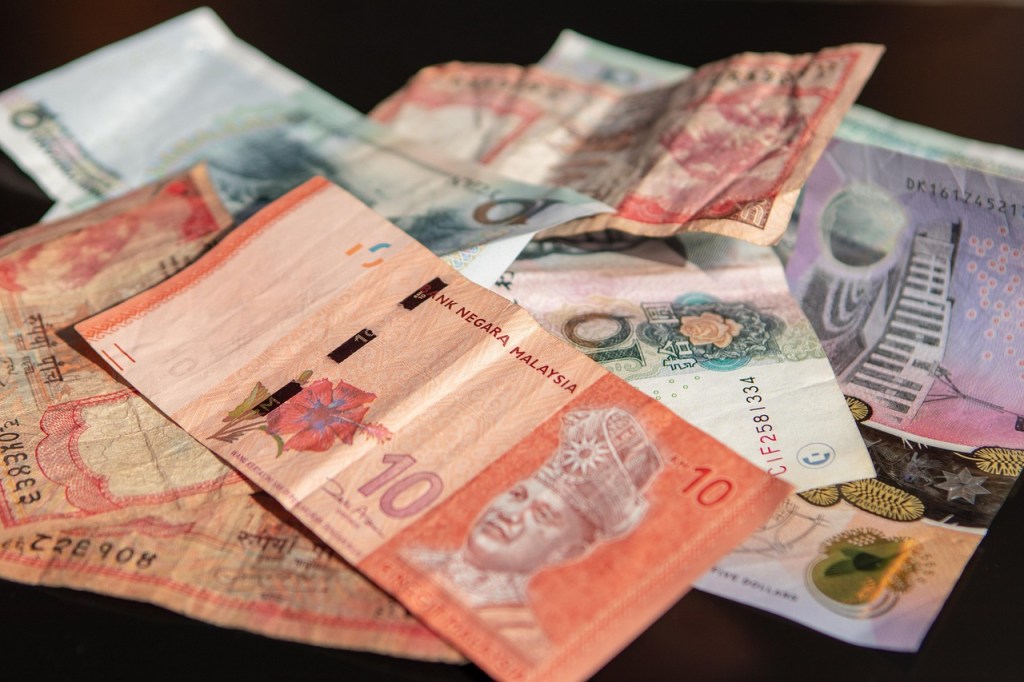
Image credits: Photo from Pixabay
Tee Jia Yang
Tee Jia Yang is an economics student at the University of Nottingham Malaysia with a strong interest in international economics, development economics, finance, and market research. He has gained hands-on experience in literature review, data analysis, budgeting, and financial planning through his role as a Research Assistant with the School of Economics at UNM and as a Finance Intern with Malacca Securities. He is passionate about analyzing market trends and economic issues and is currently preparing articles that will be published in local media outlets.

