
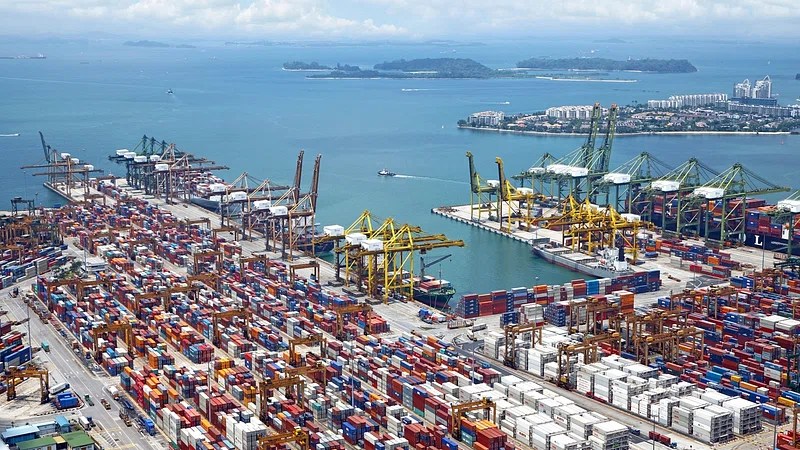
The recent escalation of the conflict in Iran has sent shockwaves throughout global energy markets, but few regions have felt the structural impacts more intensely than Southeast Asia. Following the closure of the Strait of Hormuz, Singapore and Cambodia have been especially affected. Energy vulnerabilities revealed in these countries, one a hyper-developed city and the other a resource endowed economy, exemplify why Southeast Asia is disproportionately exposed to Middle Eastern supply disruptions and what it will take for these regions to build energy resilience.
The Strait of Hormuz, a vital trade route through which 20% of the world’s crude oil and natural gas passes, was abruptly closed by Iranian forces on March 2, 2026. While much of the international focus has been on global stock markets and on Europe’s energy security, Southeast Asian countries have been facing a quieter but far more timely and consequential problem. Immediately after the closure, Singapore’s Jurong Island, the state’s integrated energy and chemicals hub, began drawing down reserves within the first week of the war and has officially cut down production levels to 50%. In Cambodia, domestic diesel prices have risen by 84% to levels not seen since 2022, while regular gasoline prices have risen by 47.5%. By focusing on the responses of Singapore and Cambodia, two distinct yet equally exposed economies, to the energy crisis, this shows how both developed and developing economies are similarly exposed to external energy shocks.
For both Southeast Asian countries, the disruptions are severe. Singapore houses major data centers from some of the world´s largest companies, including Meta, Google, and Microsoft, among others. A potential shortage of energy could mean a global disruption in popular internet services, cripple digital businesses, and lead to significant data loss. For Cambodia, a slowdown in its economic export engines of rice and garment production could lead to the loss of jobs for everyday workers, decreases in GDP growth, and all while the domestic economy continues to face higher prices.
However, these threats to the regional and international markets linked to Singapore and Cambodia do not come as a surprise. For decades, the regional development of Southeast Asia has been built on top of an energy architecture that is structurally exposed, dependent on imports from external partners, while also lacking the capabilities to sustain itself sufficiently through strategic buffers or the ability to refine large-scale energy independently. For one of the wealthiest cities in the world, and one of the most rapidly developing frontier economies, both Southeast Asian countries share integral energy insecurity issues whose problems are echoed among other Asian neighbours.
The Global Energy Freefall and Why Southeast Asia is Feeling the Effects
Following joint U.S. and Israeli airstrikes on Iran that escalated the conflict, oil prices around the world have surged amid concerns over supply disruptions. Financial markets have responded similarly. The growing fear among investors regarding potential inflation and for import-dependent economies has raised prices across all sectors, causing core stock indices like the Nasdaq and Dow Jones to fall by more than 10%. Global energy markets have entered a period of extreme volatility, with drying supply, rising transportation and risks, all while rapidly fluctuating and reactive pricing become the norm across the world.
For Southeast Asia, these effects are felt harder as the region maintains high import dependency on the Middle East relative to peer regions, as most states within ASEAN import refined petroleum products. These products are used across the board within countries for retail, to cultivate agriculture, to fuel factories, and to provide energy for the majority of these economies. As a result, energy imports function as the backbone of several ASEAN economies, making economic stability highly reliant on external supply chains. The Southeast Asian region also lacks the refining capacity to extract and utilize their own sources of crude oil and natural gases, which eliminates the ability to cushion the negative economic impacts, which other countries like the U.S. are able to do. In the case of Singapore, as it sits at the center of one of the most developed financial markets in the world, the global fears of economic collapse and escalation of geopolitical conflict have furthermore caused speculative financial flows to shock the domestic economic conditions.
Singapore’s Energy Insecurity: Efficiency without Resilience
Singapore’s energy issues are closely tied to its success as a hyper-city. Singapore was built on the preconceived notions that global supply chains would remain reliably cheap, with open markets and specialization. There was no domestic drive to develop energy buffers since it was economically more rational to draw its supply from more efficient, low-cost producers elsewhere in the world, but with hindsight, this reliance became a key pressure point undermining the country’s economic resilience. Despite the country holding stockpiles of liquified natural gas (LNG) enough to last a couple of months, roughly 93-95% of the country relies on natural gas for electricity generation, one of the highest ratios in the world, which causes issues in the long term should the conflict continue for longer, as several analysts predict
Aside from the high costs that individuals, families, and communities now face, given the energy uncertainty in the country, the business implications on the Jurong Island petrochemical cluster are more severe. In particular, major corporations in Singapore have operations that are acutely energy-sensitive, given their large dependence on all energy to run, cool, and operate their centers. The semiconductor and AI supply chains have already been under fire recently for their razor thin margins, whose possible shutdown could harm Singapore’s domestic economy through the loss of jobs, economic pause, and stunt further development and investments in the region because of its uncertain future.
The war has shown how risky an investment is in countries that cannot reasonably sustain themselves and are externally dependent. This has created a major structural flaw in the small Southeast Asian nation, as, regardless of how much it technologically develops, Singapore will always be bound by the invisible barrier that is the reliance on external trading partners to power their country. If the country’s reserves are depleted, the central government would intervene through price controls, fuel rationing, and subsidies to contain the negative economic spillovers that would manifest in the form of inflationary pressure.
Cambodia’s Resource Wealth and Energy Insecurity
For Cambodia, its energy vulnerability comes from a different place. Unlike Singapore, Cambodia is not resource-poor and financially sophisticated, but rather the opposite. Cambodia sits above vast hydrocarbon deposits that give it ownership of natural resources beneath its seabed. The main constraint for Cambodia is, however, that they lack the refining infrastructure to properly extract and convert those reserves into usable domestic fuel. This reality causes Cambodia, much like Singapore, to rely on imported energy, which has been severely negatively shocked by the conflict in Iran.
Specifically, Cambodia heavily relies on imported diesel for power generation. This reliance is particularly severe in underdeveloped rural areas whose communities have yet to be fully electrified, meaning that they largely rely on diesel to run their entire electricity needs, including for everyday necessities. This creates a central point of tension as these marginalized and underdeveloped communities are those populations who are the least equipped to deal with such severe price shocks as we have seen across the ASEAN region and around the world. With a minimum wage of 210 USD per month and increasing costs of living, the price shocks from the war in Iran have been directly transmitted into increases in consumer prices.
Accounting for roughly 70% of the country’s merchandise exports, the garment manufacturing sector is by far the sector most directly influenced by the conflict. With increasing costs and the central role of energy, Cambodia’s competitive future in producing these goods for large brands is coming under threat. Unlike data centers in Singapore, garment manufacturing deals can easily change overnight, leading to the loss of contracts, local jobs, and domestic economic stimulation, while slowing Cambodia’s GDP growth as one of the fastest-growing economies in Southeast Asia. The reverberating effects for Cambodia’s specialized economy are too grave, especially as the agricultural sector also faces a similar uncertainty. Cambodia’s rice and rubber exports largely depend on fuel-intensive irrigation processes and transportation. When input costs sharply increase, the margins of small farmers who lack the base to absorb these shocks are harmed the most.
Pathways to Build Genuine Resiliency
Although the policies designed to address the energy insecurity that causes these issues for Singapore, Cambodia, and other ASEAN countries should be done on a tailored basis, they all share a common logic. Countries can no longer afford to purely optimize efficiency in the global network of energy markets, but must instead begin investing in local resilience, which itself means the acceptance of short-term capital expenditures for long-term structural security.
For Singapore, this could mean diversifying LNG imports away from the Gulf to other parts of the world, or developing strategic routes to bypass areas with high geopolitical tensions. For Cambodia, this could mean investing in even modest forms of refining capacity. Cambodia could not only slowly develop autonomy, but its domestic economy, underdeveloped compared to other ASEAN member states, could be propelled forward, more jobs could be created, and domestic economic prosperity could be established. In such a future, Cambodia could itself become a reliable supplier of choice for the ASEAN region.
At present, however, the most beneficial solution for these countries is to invest in the long run through coordinated multilateral approaches. ASEAN is already a region highly integrated economically, politically, and geologically. By leveraging this, richer countries could route some of their capital flows to these countries that have the existing reserves but not the capacity to act on them. By investing in this system of counterdependence among close neighbors, the ASEAN region could not only overcome energy dependency issues but also become a global energy powerhouse when more of the countries in its region are economically integrated and work cohesively. However, whether this is possible in the long-run depends not only on the inclination of which states but on how they respond to the energy crises they face following the war in Iran.
What we do know is that these vulnerabilities are not confined to Singapore and Cambodia but reflect the structural issues of energy dependency across Southeast Asia.
Image credits: CC / RawPixel
Joshua An
Joshua An is an undergraduate student at the University of Toronto studying economics and political science. His current research interests focus on the socioeconomic dimensions of the global supply chain and international trade. Joshua’s experiences in banking, corporate law, and the Korean government have allowed him to examine these issues from diverse perspectives. Joshua currently leads a non-profit on campus.

