
The United States and Israel’s war on Iran and the subsequent closure of the Strait of Hormuz has exposed a multitude of critical vulnerabilities in Asia’s energy infrastructure. Japan and South Korea, which import over 70% of their crude oil from the Middle East, have been hit by significant market decline within just weeks since the start of the conflict. Two of Asia’s most advanced economies are bearing disproportionate economic consequences from a war they did not start, and their security alliance with Washington has paradoxically increased their exposure. The conflict has permanently altered the universal assumption of fairly-priced and reliable Gulf energy, encouraging a greater shift towards diversified supply chains and energy independence.
War and trade have never had a simple relationship. Conflict destroys supply chains but sees defence industries innovate and grow. Conflict closes some markets while forcing others to open. Conflict benefits countries and eradicates others. The economic consequences of war have never been straightforward, and they are rarely confined to the battlefield.
Trade economists have a way of thinking about this known as the gravity model. Trade between two countries grows with the size of their economies and shrinks with the barriers between them. Arguably war is the ultimate barrier; one that raises shipping risks, insurance costs, and spreads poison that seeps into relations across entire regions. Yet the countries that pay the critical price are not always the ones that wage the conflict. More often, they are the ones whose economies are most exposed to what flows through the war zone.
The Strait of Hormuz Crisis
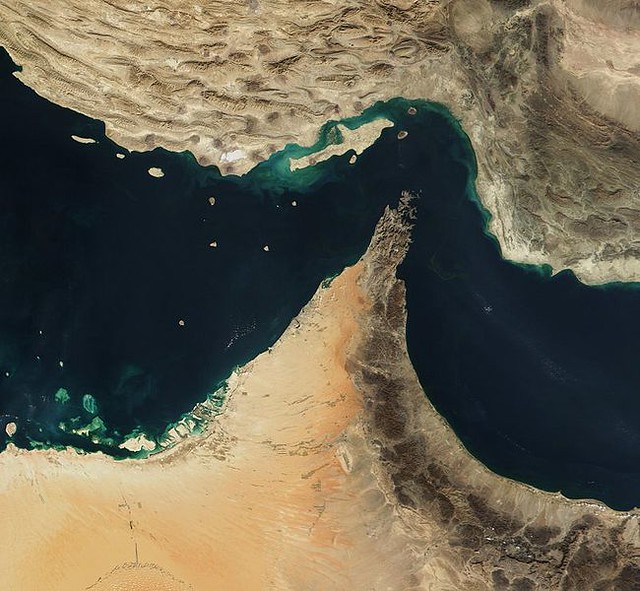
On February 28, 2026, the United States and Israel launched a coordinated attack on Iran, targeting military facilities, nuclear sites, and senior leadership, killing Supreme Leader Ali Khamenei in the opening hours of the campaign. Iran responded immediately, launching waves of missile and drone attacks across the Gulf and moving to close the Strait of Hormuz, a critical waterway through which roughly 20% of the world’s oil and LNG supplies flow.
Iran also established a somewhat targeted system which granted transit rights to vessels from nations such as China and Russia, while cutting off ships associated with the US, Israel, and their Western allies (including much of the Indo-Pacific). The implications of such a blockade are becoming increasingly prevalent, as Iran has not simply employed a military tactic but a form of economic punishment directed at those aligned with Washington. For the nations of Asia, specifically South Korea and Japan, that punishment has imposed a very high price tag.
Decades of Dependence
Asia relies heavily on the Middle East for energy, importing over 60% of its crude oil from the region, totaling 14.74 million barrels per day. These are not new numbers by any means, but rather the product of decades of policy decisions that have prioritised cheaper Gulf energy in place of diversification and energy independence. Since the beginning of the war, an already vulnerable Asia has been hit even harder. This is especially evident in some of Asia’s most advanced economies, such as Japan and South Korea, which are among Asia’s largest importers and source over 70% of their crude oil from the Middle East, making them particularly vulnerable to these impacts.
South Korea has already prepared for the worst, launching a national energy-saving campaign encouraging citizens to take shorter showers and reduce household energy use including laundry. Although many report that no severe impacts have been felt yet, the fact that a G20 economy has asked citizens to shower faster translates to just how quickly the crisis has begun to transition from financial markets into everyday life.
In Japan, fears of shortages are just as worrying, if not worse. Doctors have raised alarms surrounding the risk of medical supply depletion, as fuel-dependent logistics chains struggle to keep hospitals stocked. The agricultural and fishing sectors have been struck as well, with farmers and fishermen increasingly unable to operate their equipment as fuel becomes more costly. One could ask themselves how Japan, the world’s fourth-largest economy, is resorting to rationing.
The scale of the threat posed by the closure of the Strait of Hormuz traces back to a structural weakness analysts have warned about for years: Japan and South Korea are among the most energy dependent economies in the world, with little to no buffer when that supply is threatened. Together, the two countries account for roughly a combined 3.3 million barrels per day moving through the strait, which has now been effectively closed to their ships.
Crude oil is not Japan and South Korea’s only vulnerability. A more pressing concern is Liquid Natural Gas (LNG), where South Korea’s inventory covers only nine days of consumption, with both countries’ operational buffers draining at a fast rate. While Japan and South Korea each hold around 200 days of strategic petroleum reserves for crude oil, no such equivalent buffer exists for gas. Ultimately, both nations have always been aware of this issue, and it is that same gap, not the war itself, that will determine how economically and financially severe the outcome is.
When the Lights Go Off at Samsung
Such a gap remains abstract until priced quantitatively. As usual, the markets moved well before most even realized a full-scale war was actively occurring in the Middle East. On March 4th, South Korea’s KOSPI index suffered its worst say in history, where it dropped over 12% and triggered a temporary trading halt. This was recorded as the largest weekly loss since the financial crisis in 2008, where over four trading days more than $500 billion in market value essentially was wiped off of the board. On the other hand, Japan’s Nikkei fell over 5% in a single session, which stands in contrast to American markets which dropped 1-2%.
In addition, Samsung and SK Hynix, which collectively produce 80% of the world’s high bandwidth memory chips, lost a combined value of more than $200 billion in just days. These are not solely Korean domestic companies, but make up the backbone of an already fragile global AI supply chain, threatening to extend consequences far past Seoul. Most prominently, increasing costs affecting the semiconductor industry pose direct threats to global AI infrastructure.
The damage extends beyond financial markets into the active economy. In Japan, Toyota, Mitsubishi, and Nippon Steel, which all depend on steady fuel to keep factories running, now face potential shortages. Korean Air has declared emergency measures to manage the fuel crisis, while Japanese airlines are increasing surcharges to balance increased input prices.
Both countries also have begun to consider the restriction of exports of refined fuel, a decision that reveals the realistic measures Seoul and Tokyo have taken to stabilize their economy. The ripple effects have even reached aviation markets as far as Australia, where jet fuel from South Korea and China is no longer being exported due to concerns around a reliable supply chain.
By late March, Samsung had started turning off office lights and restricting employee parking based on licence plate numbers. This is not a struggling small to mid size firm cutting costs, but one the most technologically advanced manufacturers on earth. One should be alarmed when a company of such scale and sophistication is rationing its basic electricity usage.
The Cost of an American Alliance
What makes this situation both economically and politically grueling, is the trap it has placed Japan and South Korea in as American allies. Trump told reporters alongside Japanese Prime Minister Sanae Takaichi: “I expect Japan to step up, because we have that kind of relationship. In the case of Japan, I hear they get more than 90% of their oil through the strait, so that’s a great reason to step up.” Trump’s logic is as blunt as it is telling, where he completely disregards the strategy of appealing to shared values or any alliance obligations whatsoever. Instead, he suggests to the leader of a foreign nation already absorbing the economic fallout of the conflict that this very vulnerability is itself reason enough to take on a more active role in a war Washington has chosen to escalate.
The paradox of this alliance has become increasingly more visible, as Seoul and Tokyo have built their security architecture around the US military umbrella. That same protective umbrella now has spread a wave of uneasiness throughout their nations’ entire economy, as neither can easily refuse Washington’s demands without straining the very alliance their regional security depends on.
However, they cannot join the fight in the Gulf for a multitude of reasons, one of the most important being their own constitutional and legal constraints on overseas military engagement. Japan’s constitution, particularly Article 9, sharply limits the Self-Defense Forces’ ability to participate in offensive operations abroad, and any deployment to an active combat theater in the Gulf would demand a politically costly move that Prime Minister Takaichi’s government is unlikely to survive. South Korea faces a similar situation, as its military remains strategically tethered to the Korean Peninsula, where the threat from Pyongyang leaves little room to divert forces to a distant conflict such as the Gulf. The question, then, is not whether the alliance holds, but instead what it costs to maintain.
What Comes Next
As of the end of March, that answer has been answered by billions in emergency spending. South Korean President Lee Jae-myung announced fuel price caps, the first in nearly 30 years, and a 100 trillion won ($68.3 billion) stabilization fund. On the other hand, Japan has released oil from combined strategic stockpiles. However, these are emergency measures, temporary solutions that simply buy time. They do not adequately address the structural issues that two of the world’s most sophisticated industrial economies face from war over twelve thousand kilometres away.
In the aftermath of the war, citizens in Seoul and Tokyo who bore the weight of higher energy prices and rising costs of living will demand an honest accounting from their governments. Diversification of energy supply is no longer a long-term goal, rather it is a national security priority. Both South Korea and Japan must prioritise investment in renewables, nuclear capacity, and alternative LNG supply routes from Australia, the Americas, and Africa. The assumption that Gulf oil will simply return to flow cheaply and reliably through the Strait of Hormuz forever has been permanently altered.
Accountability cannot stop in Tokyo or Seoul. Washington must grapple with the fact that its war has and continues to impose severe energy consequences on its closest allies. Whether an apology, let alone acknowledgement, of such foreign policy implications will ever be recognized by the American administration is certainly a loaded question.
In the meantime, Tokyo and Seoul would be wise not to wait for such a fantasy of a statement. Instead, their energy future must from now be built on decisions where they retain the most control, where assurances do not come from a partner whose interests are extremely volatile. Until such a shift happens, Asia’s energy bill for America’s war will only continue to grow.
Image credits: CC / Flickr
Jacob Tam
Jacob Tam is an undergraduate student at the University of Toronto from Victoria, BC. He holds extensive experience in writing and public speaking and was ranked among the top 15 debaters in British Columbia last year. He currently serves as a Committee Director for the University of Toronto Model United Nations Conference (UTMUN) and Tournament Staff with the UofT Students’ Pre-Law Association. Tam is a Bachelor of Commerce candidate at Rotman Commerce and part of the Munk One program at the Munk School of Global Affairs and Public Policy.

